An employee spotlight is a regular feature that highlights individual team members, sharing their background, role, achievements, and personality with the rest of the organization. These profiles help teams get to know each other beyond work tasks, building stronger relationships and company culture.
For small teams (5-100 employees), employee spotlights are particularly powerful because every person's story matters. Unlike large corporations where individual contributions can feel anonymous, small companies thrive on personal connections and shared purpose.
Why Employee Spotlights Matter for Small Teams
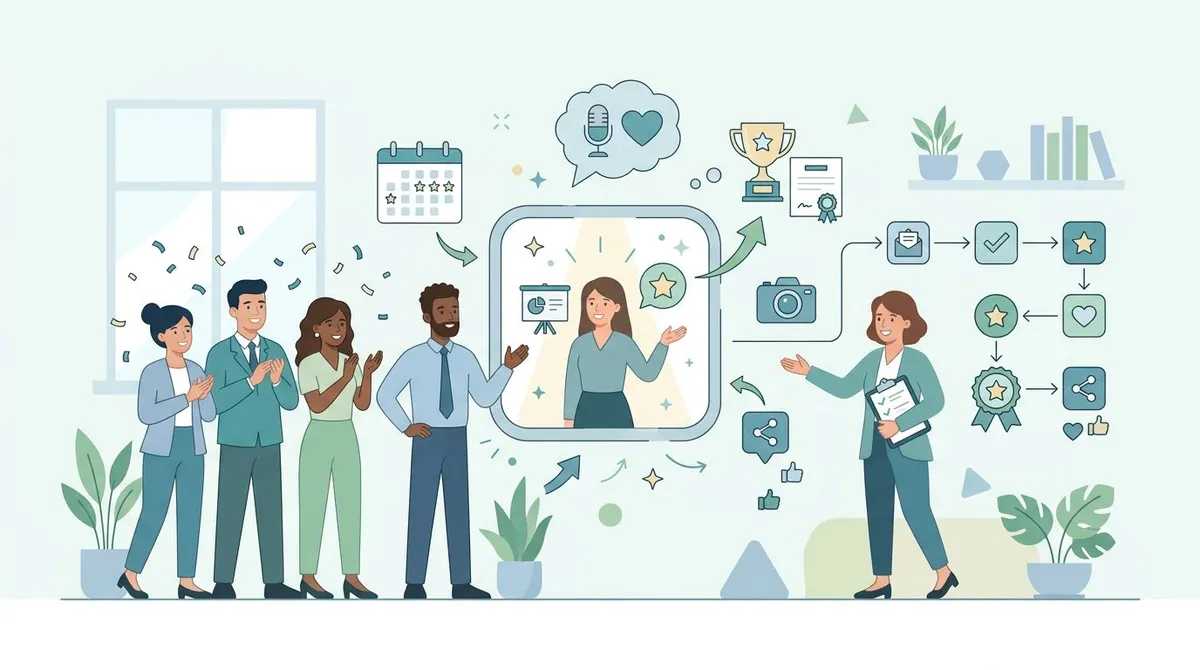
Regular employee spotlights drive measurable improvements in team engagement and culture. Research from Gallup shows that teams with strong interpersonal connections are 12% more productive and 18% more likely to stay with the company.
Small teams see particularly strong results because spotlights solve three common challenges:
Remote Connection: With distributed teams, colleagues might never meet face-to-face. Spotlights provide personal context that makes Slack conversations feel more human.
Cross-Functional Understanding: A spotlight on the marketing designer helps engineers understand what goes into creating a campaign. This appreciation reduces friction and improves collaboration.
Retention Through Recognition: Being featured in a spotlight makes employees feel valued and seen. A 25-person SaaS company in Portland reported 40% lower turnover after implementing monthly spotlights.
According to Harvard Business Review research, companies with strong recognition programs have 31% lower voluntary turnover rates. Employee spotlights provide ongoing recognition that doesn't require budget or complex reward systems.
50+ Employee Spotlight Questions by Category
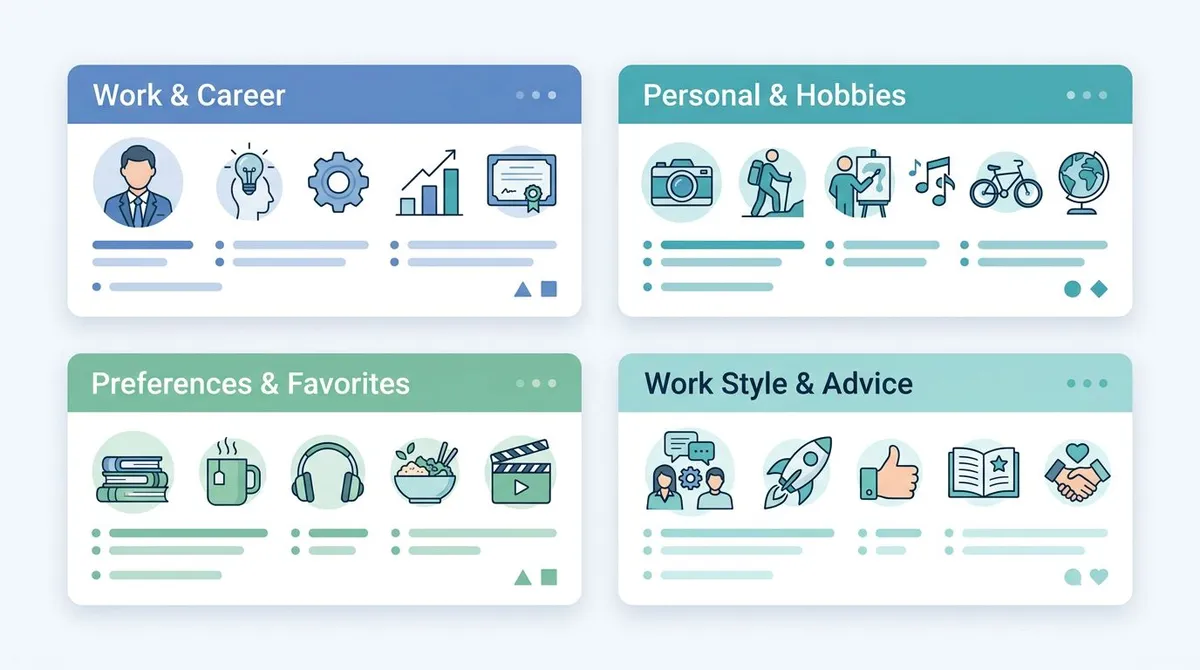
Background and Personal Life
These questions help colleagues understand who someone is outside of work:
- Where are you originally from, and how did you end up here?
- What's your educational background or career path to this role?
- Do you have any pets? Tell us about them!
- What's your favorite way to spend a weekend?
- Are you a morning person or night owl?
- What's the best vacation you've ever taken?
- Do you have any hidden talents or surprising hobbies?
- What's your go-to comfort food?
- Are you more of an introvert or extrovert?
- What's something most people don't know about you?
- Do you have any siblings? What's your birth order?
- What languages do you speak?
Role and Career Journey
These focus on professional background and current responsibilities:
- What does a typical day in your role look like?
- What's the most interesting project you've worked on here?
- How did you get into this field?
- What skills have you developed most since joining the team?
- What's your biggest professional accomplishment?
- What's the most challenging part of your job?
- How do you stay current with industry trends?
- What tools or software can't you live without?
- What advice would you give someone starting in your role?
- What's a common misconception about what you do?
- How has your role evolved since you started?
- What professional goal are you working toward next?
Company Culture and Values
These questions connect individual perspectives to company culture:
- What initially attracted you to this company?
- How would you describe our company culture in three words?
- What's your favorite company tradition or ritual?
- Which company value resonates most with you personally?
- What's the best piece of feedback you've received here?
- How do you contribute to team culture?
- What makes you proud to work here?
- What's something you'd change about how we work?
- Who on the team inspires you and why?
- What's your favorite memory from company events?
- How do you think we could improve as a team?
Fun and Creative Questions
These lighter questions reveal personality and create memorable moments:
- If you could have dinner with anyone (living or dead), who would it be?
- What's your zombie apocalypse survival strategy?
- If you could have any superpower, what would it be?
- What's the worst fashion trend you participated in?
- What's your most-used emoji?
- If you could only eat one cuisine for the rest of your life, what would it be?
- What's your karaoke song?
- Beach vacation or mountain retreat?
- What's your favorite childhood cartoon?
- If you could live anywhere in the world, where would it be?
- What's the strangest job you've ever had?
- What's your unpopular food opinion?
- What movie can you quote from memory?
- What's your spirit animal and why?
- If you could time travel, would you go to the past or future?
- What's the best concert you've ever attended?
- What's your favorite board game or video game?
Employee Spotlight Template (Copy-Paste Ready)
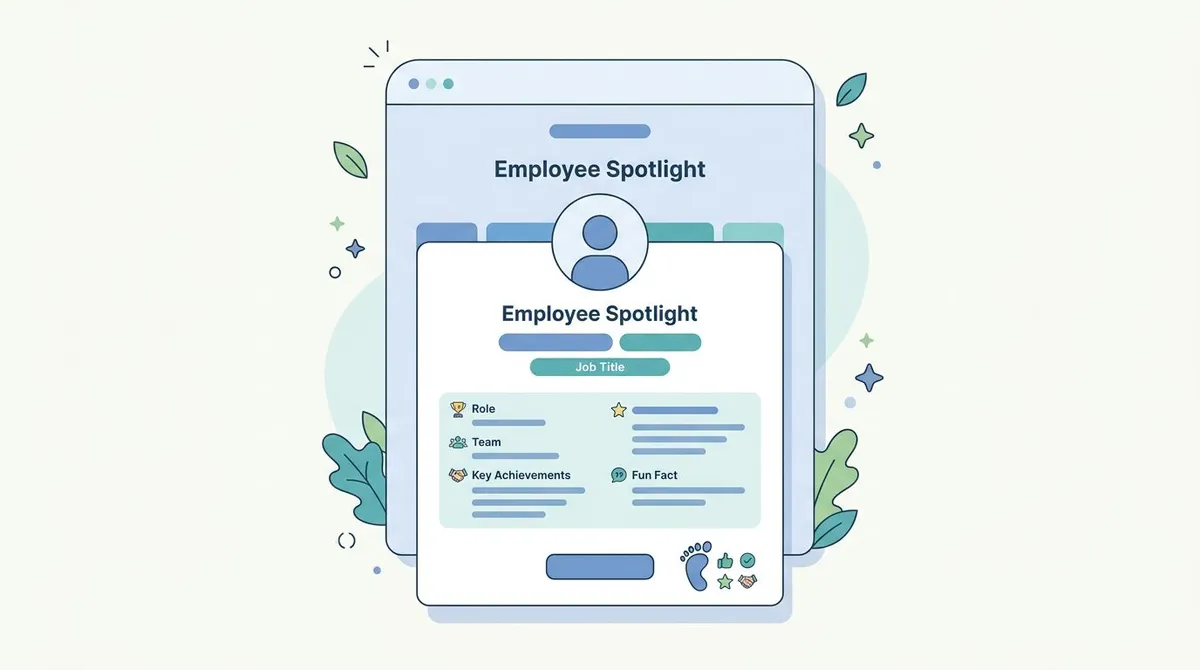
Here's a complete template you can customize and use immediately:
Email/Newsletter Format
Subject: Team Spotlight: [Name] from [Department]
Meet [Name], our [Job Title]
[Include a professional headshot or fun workplace photo]
The Basics
- Role: [Job Title]
- Department: [Department]
- Time with us: [Duration]
- Location: [City, State/Country]
Get to Know [Name]
Q: Tell us about your background and how you ended up here. [Personal story in 2-3 sentences]
Q: What does a typical day look like in your role? [Brief day-in-the-life description]
Q: What's the most interesting project you've worked on recently? [Specific project with outcomes]
Q: What do you love most about working here? [Personal perspective on company culture]
Fun Facts About [Name]
- 🎵 Karaoke song: [Song title]
- 🍕 Go-to comfort food: [Food]
- 🏞️ Dream vacation spot: [Location]
- 🦸 Superpower of choice: [Power and why]
- 🎮 Favorite way to unwind: [Activity]
[Name] in Their Own Words "[Include a quote about their experience, goals, or something fun]"
Want to connect with [Name]? Find them on Slack @[username] or stop by [their workspace/office location].
Next month: We'll be featuring [Next Person] from [Department]. Have someone you'd like to see spotlighted? Reply and let us know!
Slack/Social Media Format
📸 Team Spotlight: [Name] 📸
Meet [Name], our [Job Title] who's been with us for [duration]!
🎯 Daily mission: [One sentence about their role]
💡 Secret talent: [Hidden skill or hobby]
☕ Morning fuel: [Coffee preference/breakfast habit]
🎵 Pump-up song: [Music that gets them going]
"[Include a fun quote or their perspective on the team]"
Say hi to [Name] in the comments! 👋
Company Timeline/Internal Feed Format
🌟 Employee Spotlight: [Name]
[Profile photo]
[Name] has been our [Job Title] for [duration], bringing [key skills/qualities] to the [Department] team.
This week we asked [Name]:
🚀 What project are you most excited about? [Current project or goal]
💭 What's something you've learned recently?
[Professional or personal growth]
🎉 Fun fact about you? [Interesting hobby, background, or personality trait]
Give [Name] some love in the reactions below! 💙
How to Start an Employee Spotlight Program
Step 1: Define Your Goals and Format
Before launching, clarify what you want to achieve:
- Engagement: Help remote team members feel connected
- Recognition: Celebrate individual contributions
- Onboarding: Introduce new hires to the culture
- Retention: Make people feel valued and seen
Choose your primary format:
- Email newsletter (reaches everyone, archived easily)
- Slack channel (casual, encourages interaction)
- Company blog (professional, external visibility)
- Internal timeline (like Tiny Team's Company Timeline)
Step 2: Establish Your Schedule
Monthly spotlights work well for teams of 12-50 people. You'll feature everyone once per year without overwhelming communication channels.
Bi-weekly spotlights suit smaller teams (5-15) where you can cycle through everyone more frequently.
Quarterly spotlights might work for larger teams (50+) or as part of broader recognition programs.
Set a consistent day and time. Many teams do "Spotlight Friday" to end the week on a positive note.
Step 3: Create Your Question Set
Select 6-8 questions from the categories above, balancing professional and personal topics. Use the same questions for consistency, but rotate occasionally to keep content fresh.
For new employees: Focus on background, role expectations, and first impressions. For veterans: Emphasize project achievements, company growth observations, and future goals. For managers: Include leadership philosophy and team development perspectives.
Step 4: Gather Content
Send questions to your spotlight person 1-2 weeks in advance. Include:
- The complete question list
- Photo guidelines (professional headshot + 1-2 casual shots)
- Timeline expectations
- Sample spotlight for reference
Photo tips: Natural lighting, genuine smiles, workspace shots, and action photos work better than stiff corporate headshots.
Step 5: Launch and Iterate
Start with volunteers or team leads to build momentum. After 2-3 spotlights, survey the team:
- Are they reading/engaging with spotlights?
- What questions generate the most interest?
- Would they prefer different formats or frequency?
Track simple metrics: open rates for emails, reactions on Slack, or engagement with timeline posts.
Employee Spotlight Examples and Formats
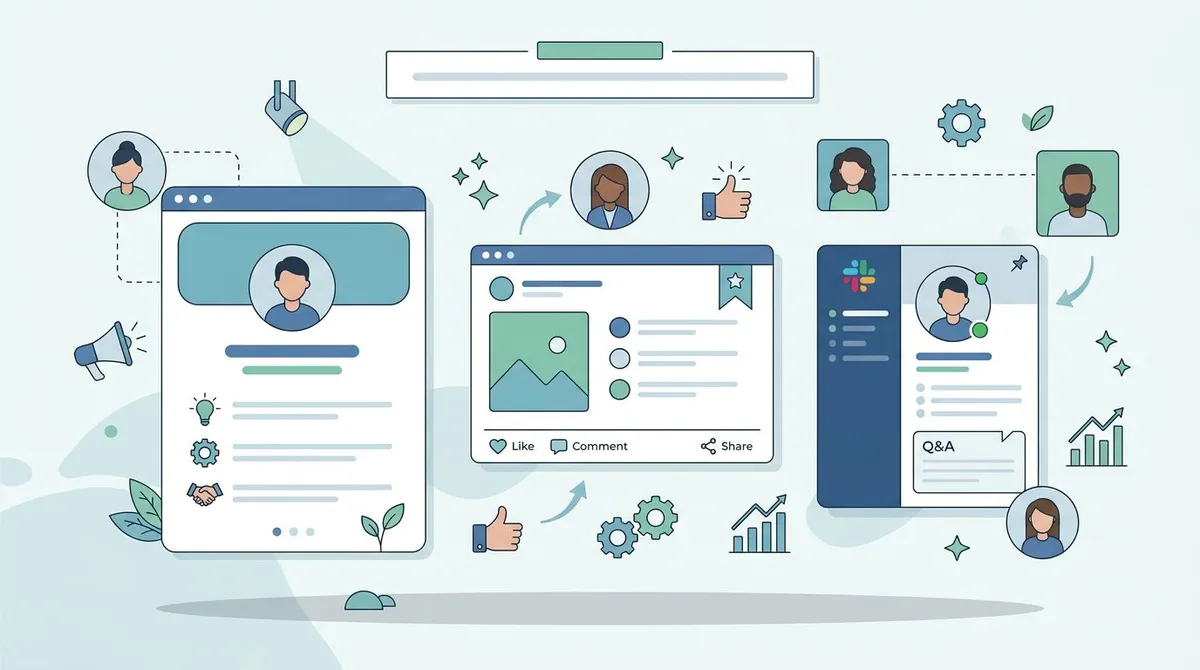
Email Newsletter Example
Remote-First SaaS Company (45 employees)
This company sends monthly spotlights via their internal newsletter, focusing heavily on remote work experience and cross-functional collaboration.
Sample excerpt:
Meet Sarah, our Head of Customer Success
Sarah joined us 18 months ago from a traditional office environment and has become our remote collaboration champion. When asked about her daily routine, she shared: "I start every day with coffee and our team Slack standup at 9 AM. It keeps me connected to everyone's priorities, even though we're spread across six time zones."
Why it works: Addresses remote work challenges directly, shows adaptation and growth.
Slack Channel Example
Creative Agency (22 employees)
This agency posts bi-weekly spotlights in #team-spotlight with heavy use of emojis and casual language that matches their brand voice.
Sample format:
🎨 Creative Spotlight: Marcus 🎨
Our lead designer who turns client chaos into visual magic ✨
🎯 Current obsession: Designing our new client's rebrand ☕ Morning ritual: Oat milk latte + 30 min of design inspiration browsing
🎮 Secret talent: Can solve any Rubik's cube in under 2 minutesDrop your design questions for Marcus below! 👇
Why it works: Matches company personality, encourages team interaction, showcases skills.
Internal Timeline Example
Growing Startup (35 employees)
Using their internal communication platform, this startup creates spotlight posts that feel like social media updates.
Sample post:
Team Member Spotlight 🌟
This week: Jessica from our Product team!
Jessica has been crushing it on our new onboarding flow redesign. When she's not improving user experience, you'll find her training for her next marathon (🏃♀️ goal: sub-4 hours!) or experimenting with sourdough recipes.
"I love how we can iterate quickly here and see immediate impact on user happiness. It's addictive in the best way." - Jessica
Why it works: Connects work achievements to personal interests, includes specific project details.
Best Practices for Engaging Spotlights
Make It Visual
Photos are crucial for engagement. Include:
- One professional photo for formal communications
- 1-2 casual workplace shots showing personality
- Action shots if relevant (presenting, collaborating, etc.)
Poor photos kill engagement faster than boring questions.
Balance Professional and Personal
The best spotlights reveal professional competence alongside personal interests. Aim for 60% work-related content and 40% personal insights.
Avoid oversharing personal details or making anyone uncomfortable with invasive questions about family, finances, or beliefs.
Keep It Consistent
Use the same format, question set, and schedule. Consistency builds anticipation and makes participation feel fair and predictable.
Encourage Interaction
End spotlights with calls to action:
- "Ask Sarah about her customer success tips in #general"
- "Congratulate Marcus on his recent design award"
- "Share your own marathon stories with Jessica"
Address Diversity Thoughtfully
Ensure your spotlight rotation includes people from all departments, seniority levels, and backgrounds. Don't tokenize or over-highlight diversity, but be intentional about representation.
Common Mistakes to Avoid
Skipping shy team members. Some people won't volunteer but appreciate being asked directly. Frame it as team contribution, not personal promotion.
Making it feel mandatory. Spotlights should celebrate people, not create anxiety. Allow people to decline or suggest alternative participation.
Focusing only on star performers. Every role contributes value. Spotlight the reliable team members, not just the loud achievers.
Forgetting follow-up. Reference previous spotlights in team meetings or conversations. "Remember when Marcus mentioned his marathon training? He just finished!"
Using the same questions forever. Refresh your question set every 6 months to keep responses interesting.
Poor photo quality. Blurry or unflattering photos reduce engagement. Help team members take good photos or provide guidelines.
Inconsistent timing. If you promise monthly spotlights, deliver them. Irregular schedules kill momentum.
For teams using comprehensive HR platforms, consider integrating spotlights with your existing employee recognition programs. This creates a cohesive culture strategy rather than isolated initiatives.
Platforms like Tiny Team's Company Timeline feature make sharing employee spotlights natural and discoverable alongside other company updates, creating a living archive of your team's growth and personality.

Measuring Success
Track both quantitative and qualitative metrics to gauge your program's impact:
Engagement Metrics:
- Email open rates for newsletters (target: >80%)
- Slack reactions and comments on spotlight posts
- Internal timeline engagement rates
Culture Metrics:
- Employee satisfaction survey scores related to "feeling valued"
- Cross-team collaboration
- Retention rates (especially for remote employees)
Participation Metrics:
- Response time requesting spotlight participation
- Quality and enthusiasm of responses
- Voluntary mentions of spotlights in other contexts
According to SHRM research, companies with strong recognition programs achieve 23% better business results. While employee spotlights are one element, they contribute meaningfully to overall recognition.
Frequently Asked Questions
How often should we feature employee spotlights?
For teams of 12-50 people, monthly spotlights work well, cycling through everyone annually. Smaller teams (5-15) can do bi-weekly spotlights, while larger teams (50+) might prefer quarterly features to avoid communication overload.
What if someone doesn't want to be featured?
Make participation optional. Some people prefer staying private, and that's perfectly valid. You can offer alternatives like participating in group spotlights, contributing quotes for other features, or helping behind-the-scenes with program coordination.
Should we include salary, personal details, or family information?
Stick to professional background, role responsibilities, and light personal interests. Avoid sensitive topics like compensation, detailed family situations, political views, or financial circumstances. Keep questions fun but respectful.
How do we handle spotlights for remote employees?
Remote spotlights often generate more engagement because they help distributed teams connect personally. Include details about home office setups, remote work tips, local culture from their location, and how they stay connected with the team.
Can employee spotlights help with recruiting?
Absolutely! Public spotlights (on company blogs or social media) showcase your culture to potential candidates. They demonstrate that employees feel valued and comfortable sharing their experience, which signals a positive work environment.
What questions work best for new employees?
Focus on background, excitement about joining, first impressions, and initial goals rather than deep company insights they haven't developed yet. Include questions about their previous experience and what attracted them to your company specifically.
Employee spotlights require minimal investment but generate strong returns in team connection and culture building. Start simple with basic questions and consistent timing, then evolve based on team response.
The goal isn't perfect spotlights — it's regular recognition that helps team members see each other as complete people rather than job functions. This human connection becomes the foundation for stronger collaboration, retention, and culture people want to join.
![Employee Engagement Survey: 50+ Questions [2026]](/_next/image?url=https%3A%2F%2Ffiles.screensnap.pro%2Ftinyteam-blog%2Fg6sqtrdetjz3kvfgrf7l.webp&w=1200&q=75)