Employer branding is how potential candidates perceive your company as a place to work. It's the reputation your business holds in the talent market — from Glassdoor reviews to LinkedIn posts about company culture.
For small teams competing against Fortune 500 companies for the same talent, a strong employer brand isn't just nice-to-have. It's essential. Research from LinkedIn shows that companies with strong employer brands see 50% lower cost-per-hire and 28% less employee turnover. When replacing a single employee costs between 90-200% of their annual salary, these numbers matter.
The good news? You don't need a massive HR budget to build an effective employer brand. Small teams actually have advantages over large corporations: authenticity, agility, and direct access to leadership.
What Is Employer Branding (And Why Small Teams Need It)
Your employer brand is what people say about working at your company when you're not in the room. It encompasses everything from your job postings and interview process to employee testimonials and leadership visibility on social media.
Think of it as your company's reputation as an employer, distinct from your customer-facing brand. While your product brand attracts customers, your employer brand attracts talent.
Why small teams need employer branding more than ever:
Competition is fierce. A 25-person startup and a Fortune 500 company often compete for the same software engineer. Without big-name recognition or massive benefits packages, small companies must differentiate on culture, growth opportunities, and mission.
Talent has options. Remote work opened up the global talent pool, but it also means your local candidates can work for companies anywhere. Your employer brand is what makes them choose you over a remote role at a Silicon Valley unicorn.
First impressions matter. Most job seekers research companies before applying. A strong employer brand turns passive candidates into active applicants and helps active candidates say "yes" when you make an offer.
Cost efficiency. Strong employer brands reduce recruitment costs by increasing organic applications and improving offer acceptance rates. This matters when you don't have a massive recruiting budget.
According to Universum's Talent Attraction research, companies with strong employer brands attract 3.5x more applicants and fill positions 2x faster than those with weak employer brands.
Employer Branding vs Employee Value Proposition
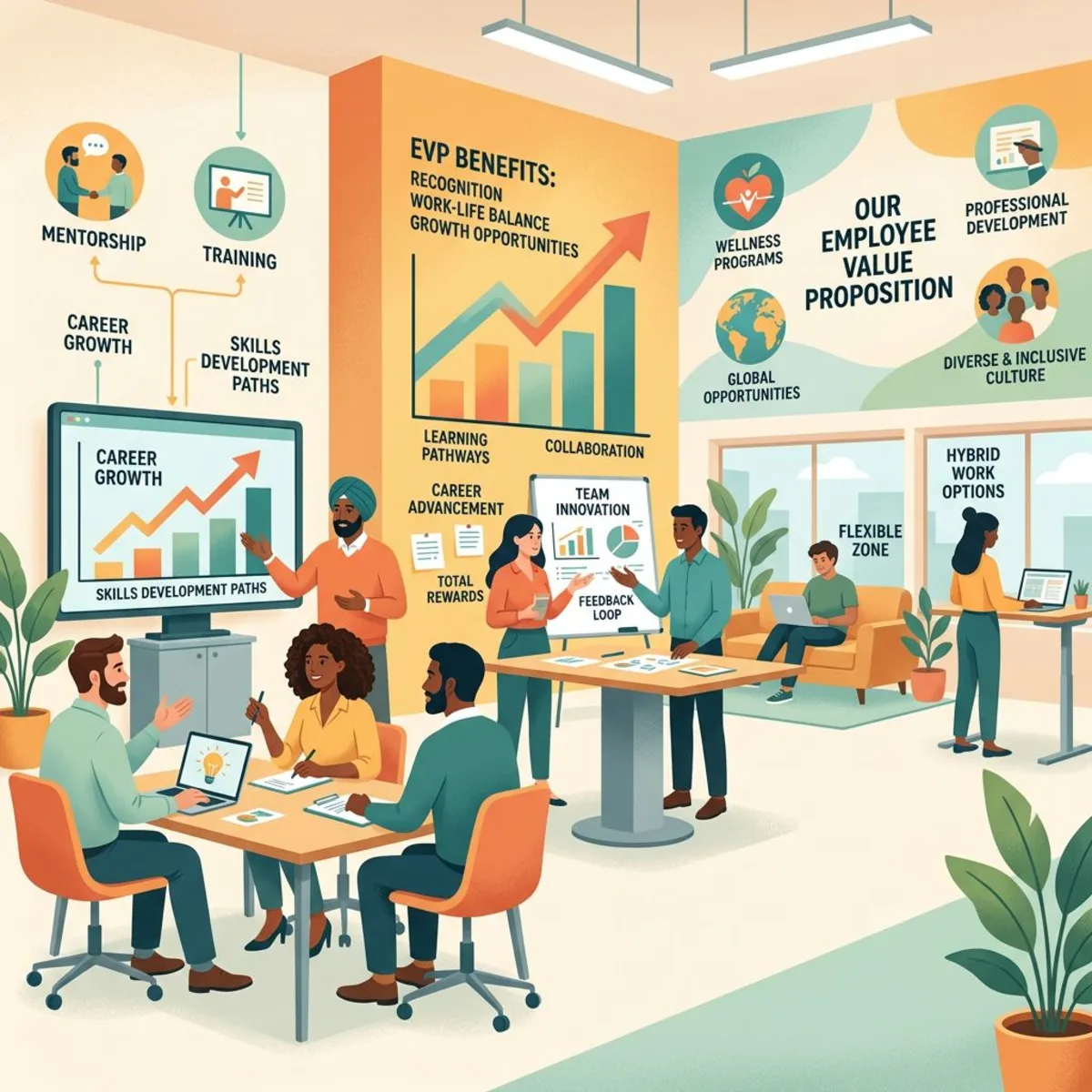
While often used interchangeably, employer branding and Employee Value Proposition (EVP) serve different purposes:
| Employer Branding | Employee Value Proposition |
|---|---|
| What: External perception and reputation | What: The deal you offer employees |
| Focus: How others see you as an employer | Focus: What employees get in return for their contribution |
| Examples: Glassdoor reviews, LinkedIn presence, job postings | Examples: Compensation, benefits, growth opportunities, culture, purpose |
Your EVP is the foundation — the actual experience you provide employees. Your employer brand is how you communicate and demonstrate that EVP to the world.
For example, if your EVP includes "rapid career growth" (because small teams wear many hats), your employer branding might showcase employee promotion stories on LinkedIn or highlight learning opportunities in job postings.
A common mistake small companies make is focusing only on employer branding (the marketing) without first defining a compelling EVP (the product). You can't brand your way out of a poor employee experience.
7 Steps to Build Your Employer Brand From Scratch
Step 1: Define Your Employee Value Proposition (EVP)
Before you can tell the world why they should work for you, you need to understand what you actually offer employees that your competitors don't.
Start with your current employees. Survey or interview your team about what they value most about working at your company. Ask questions like:
- What made you accept this job over others?
- What would you tell a friend about working here?
- What keeps you here when recruiters reach out?
- What's unique about this workplace compared to your previous jobs?
Common small-team advantages to consider:
Direct impact: Employees can see how their work directly affects the business and customers.
Wearing multiple hats: Appeals to people who want variety and rapid skill development.
Access to leadership: Regular interaction with founders and executives.
Speed and agility: Faster decision-making and ability to implement ideas quickly.
Growth opportunities: Rapid promotion potential as the company scales.
Mission-driven work: Closer connection to company purpose and values.
Here's a simple EVP template:
"At [Company], [target employee type] can [primary benefit] while [secondary benefit] in an environment that [cultural differentiator]. Unlike larger companies, we offer [unique small-team advantage]."
Example: "At GreenTech Solutions, environmental engineers can make direct impact on climate change while developing diverse technical skills in an environment that values innovation over bureaucracy. Unlike larger companies, we offer direct mentorship from our founder-CEO and the opportunity to lead major projects within your first year."
Step 2: Audit Your Current Online Reputation
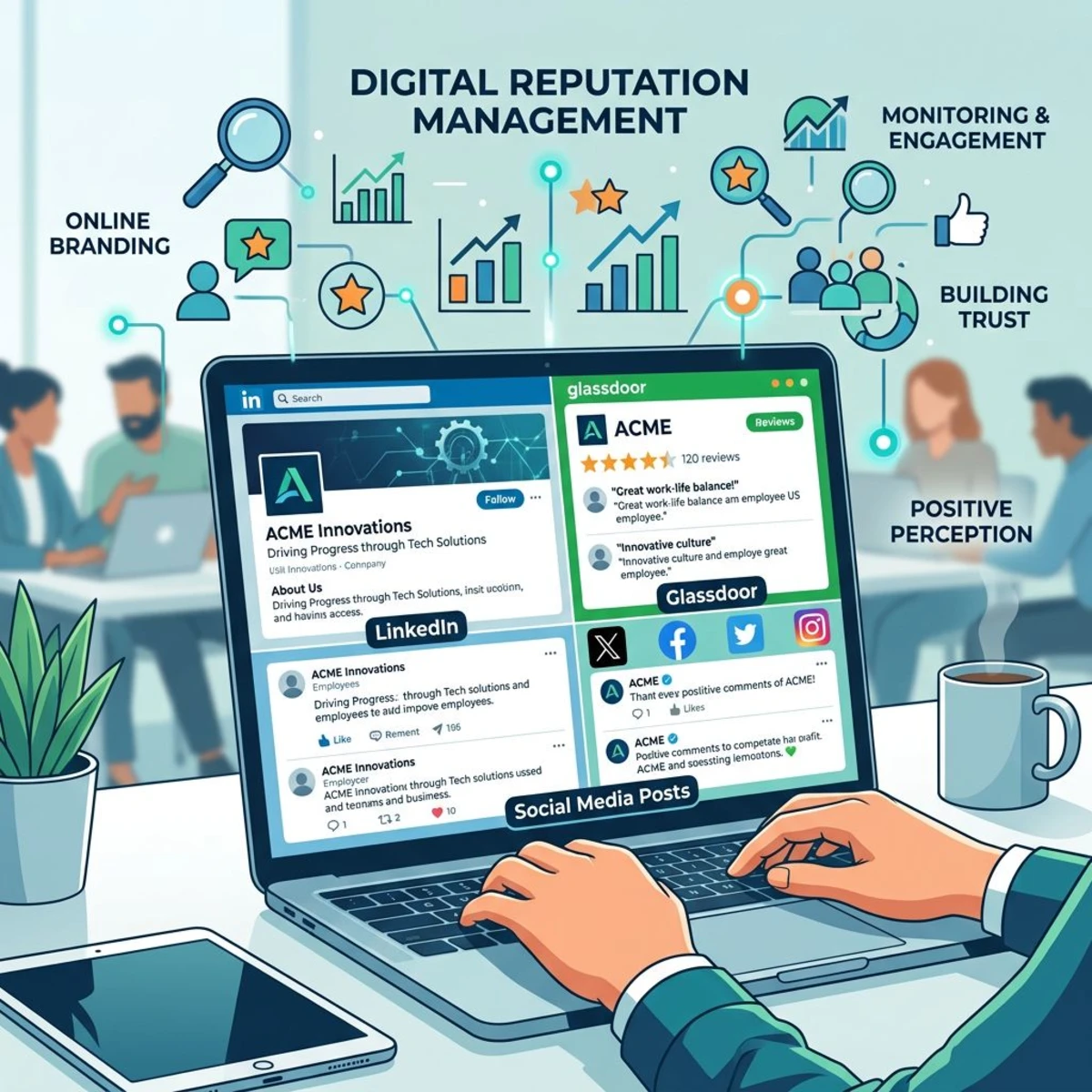
You can't improve what you don't measure. Start by auditing how your company currently appears to potential candidates across key platforms.
Google your company name + "reviews" or "careers" or "working at"
What appears in the first page of results? Are there Glassdoor reviews, news articles, or forum discussions about your workplace?
Check these platforms specifically:
Glassdoor: Read all reviews and note common themes in both positive and negative feedback.
LinkedIn: Look at your company page, employee posts mentioning work, and what former employees say in their LinkedIn profiles.
Indeed: Check both job postings and any company reviews.
Google Reviews: Sometimes candidates leave reviews about interview experiences.
Industry forums: Reddit, Discord communities, or industry-specific forums where people discuss employers.
Create a simple audit spreadsheet:
| Platform | Current Rating | # of Reviews | Common Positive Themes | Common Negative Themes | Action Items |
|---|---|---|---|---|---|
| Glassdoor | 3.8/5 | 12 reviews | Flexible work, great team | No career advancement | Address growth paths in job postings |
| - | 45 followers | - | Inactive company page | Post weekly culture content |
Don't panic if you find negative feedback. Small sample sizes on review sites aren't representative, and every company has detractors. Focus on patterns and legitimate concerns you can address.
Step 3: Optimize Your Career Pages and Job Postings
Your careers page is often a candidate's first deep interaction with your employer brand. Make it count.
Essential elements for small-team career pages:
Team photos and bios: Show the real people behind the work. Include everyone from interns to executives.
Mission and values: Explain why your company exists and what drives daily decisions.
Day-in-the-life content: Show what employees actually do, not generic role descriptions.
Growth stories: Feature employee promotions, skill development, or expanded responsibilities.
Benefits and perks: Be specific about what you offer, even if it's not traditional corporate benefits.
Interview process: Transparency builds trust and helps candidates prepare.
Office/workspace: Show your physical or remote work environment.
For job postings, avoid generic descriptions. Instead:
✅ "You'll work directly with our CEO to launch new product features" ❌ "Reports to senior leadership"
✅ "Our 15-person engineering team ships code daily with minimal meetings" ❌ "Fast-paced environment"
✅ "Previous team members have been promoted to management roles within 18 months" ❌ "Growth opportunities available"
Link to your team calendar features when mentioning flexible PTO policies or highlight your document management when talking about organized, transparent communication.
Step 4: Leverage Employee Stories and Social Proof
People trust people more than brands. Your employees are your best employer brand ambassadors.
Encourage (don't mandate) employee advocacy:
LinkedIn posts: Ask team members to share project wins, company milestones, or conference learnings with their networks.
Employee spotlights: Feature team members on your company blog or LinkedIn, focusing on their career growth and interesting projects.
Interview takeovers: Have employees interview candidates via video call or Slack, sharing their authentic experience.
Conference speaking: Support employees who want to speak at industry events, then promote their talks.
Case study: A 30-person marketing agency saw 40% more qualified applications after implementing monthly "Employee Spotlight" LinkedIn posts featuring team members discussing their career progression and favorite projects.
Create shareable moments:
- Team offsites or retreats
- Product launch celebrations
- Learning and development activities
- Awards or company milestones
- Behind-the-scenes content
The key is authenticity. Forced or overly polished content feels like corporate propaganda. Encourage genuine sharing about projects they're proud of or experiences they found valuable.
Step 5: Build Your Social Media Presence
Social media extends your reach beyond your immediate network and shows personality behind your company.
Platform priorities for small teams:
LinkedIn (mandatory): Professional network where candidates research employers.
- Post 2-3x per week: mix of company updates, employee highlights, and industry insights
- Engage with employee posts by liking and commenting
- Share job openings with context about why the role matters
Twitter/X: Great for real-time updates and industry conversations.
- Share company culture moments and behind-the-scenes content
- Engage in industry discussions to demonstrate expertise
- RT and celebrate employee achievements
Instagram: Visual storytelling works well for company culture.
- Office photos, team events, product development process
- Stories for day-to-day moments
YouTube: Longer-form content like employee interviews or company overviews.
- "Day in the life" videos
- Product development stories
- Company culture documentaries
Content mix that works:
- 40% company culture and employee stories
- 30% industry insights and thought leadership
- 20% product/service updates
- 10% behind-the-scenes and fun content
Pro tip: Repurpose content across platforms. A team lunch photo becomes a LinkedIn post about company culture, an Instagram story, and a Twitter thread about remote team building.
Step 6: Create Helpful, Industry-Relevant Content
Content marketing isn't just for customers. Publishing helpful industry content positions your team as experts and makes potential employees want to work with smart people.
Content that attracts talent:
Industry guides: Share expertise your team has developed.
Case studies: Show interesting problems you've solved.
Technical deep-dives: Demonstrate the caliber of work your team does.
Lessons learned: Share honest insights from successes and failures.
A small software company's engineering team wrote about their migration to microservices. The post attracted not just customers, but senior engineers who wanted to work on similar technical challenges.
Internal knowledge as external content:
Turn internal documents into public content:
- Performance review processes → blog post on employee development
- Company values → LinkedIn article on building culture
- Technical architecture decisions → conference talk or technical blog post
This content serves triple duty: it helps industry peers, attracts potential employees who respect your expertise, and demonstrates thought leadership to potential customers.
Step 7: Measure and Iterate Based on Results
Track metrics that matter for small teams focusing on quality over quantity.
Key metrics to monitor:
Application quality: Are you attracting candidates with the right skills and experience?
Application-to-interview ratio: Higher ratios suggest better job posting clarity and employer brand appeal.
Offer acceptance rate: Strong employer brands see 70%+ acceptance rates.
Time to hire: Engaged candidates move through your process faster.
Source of hire: Track which employer branding efforts generate the best candidates.
Employee referral rate: Happy employees refer quality candidates.
Glassdoor rating: Monitor but don't obsess over small sample sizes.
Simple tracking spreadsheet:
| Month | Applications | Interviews | Offers | Accepts | Referrals | Glassdoor Rating |
|---|---|---|---|---|---|---|
| Jan 2026 | 45 | 12 | 3 | 3 | 2 | 4.1 |
| Feb 2026 | 67 | 18 | 5 | 4 | 4 | 4.2 |
Quarterly review questions:
- Which employer branding activities generated the most qualified applications?
- What feedback themes are appearing in candidate surveys or exit interviews?
- Which content performed best on social media?
- Are our employee advocates active and engaged?
Adjust your strategy based on what's working. If employee LinkedIn posts generate more quality applications than paid job board postings, double down on employee advocacy.
Employer Branding on a Budget: What Actually Works
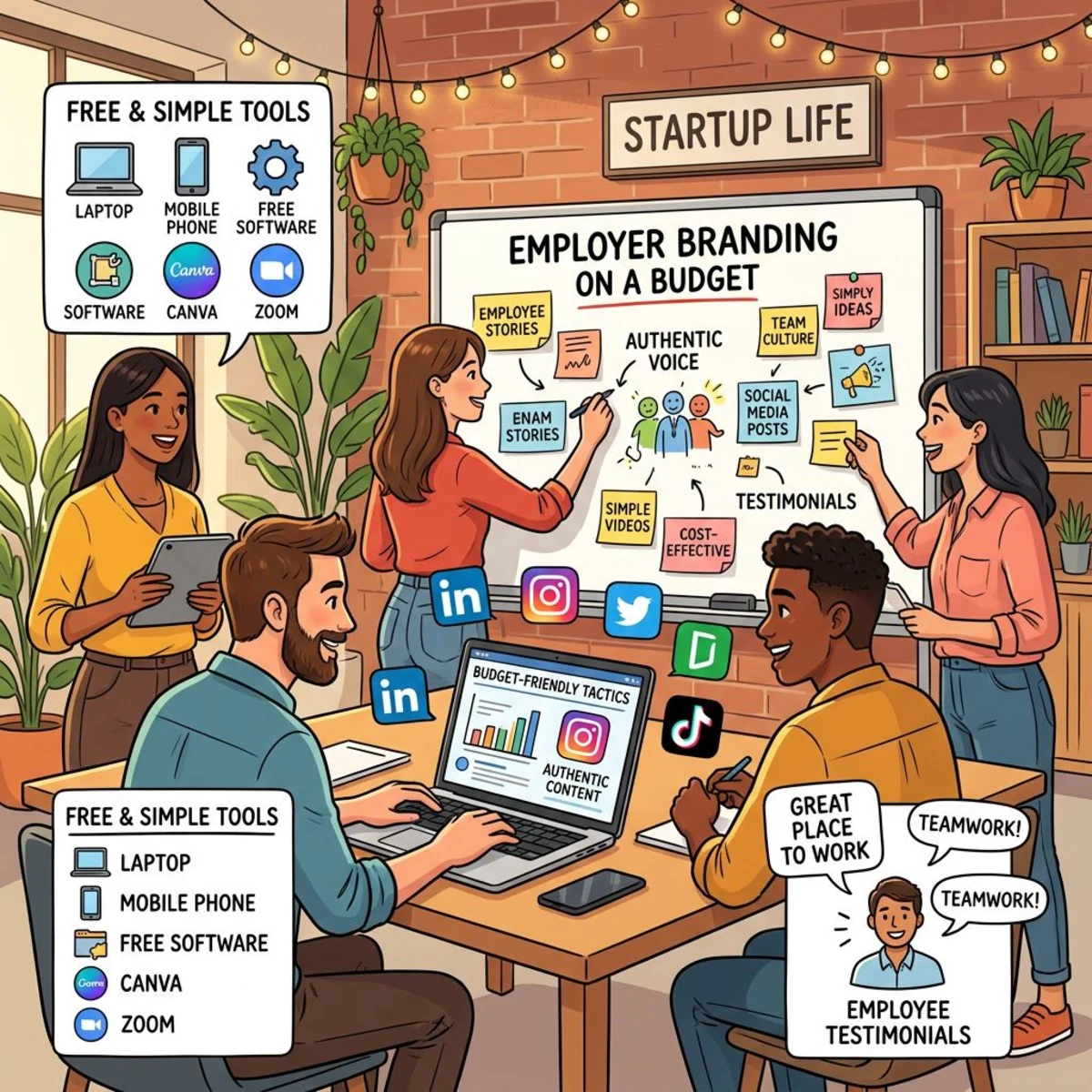
Small teams often assume effective employer branding requires big budgets. The opposite is true. Large companies struggle to show authenticity because everything goes through legal review and corporate communications. You can move fast and be genuine.
Zero-Budget Tactics That Drive Results
Employee LinkedIn optimization: Help team members write compelling LinkedIn profiles that naturally mention your company. When they engage with industry content, they're representing your brand.
Glassdoor response strategy: Respond to reviews (both positive and negative) with thoughtful, personalized messages. This shows you care about employee feedback.
Interview experience audit: Ensure every candidate has a positive experience, even if you don't hire them. They'll share their experience with their network.
Referral program enhancement: Most small teams have informal referral processes. Formalize it with clear incentives and easy processes for employees to share opportunities.
Company newsletter highlights: Include employee achievements, project wins, and company milestones. This content can be repurposed across other channels.
Low-Budget ($100-500/month) High-Impact Tactics
Content creation tools: Canva Pro, Loom, or Buffer for creating and scheduling social content.
Employee advocacy platform: Tools like Bambu or GaggleAMP help employees share content more easily.
Video testimonials: Simple employee interview videos using basic equipment.
Professional headshots: Invest in team photos for career pages and LinkedIn profiles.
Company swag: T-shirts, stickers, or notebooks that employees actually want to wear/use.
Event hosting: Monthly industry meetups or technical talks that position your team as experts.
Medium-Budget ($500-2000/month) Systematic Approaches
Employer brand photography: Professional photos of your team, workspace, and company events.
Video content production: Regular YouTube content featuring employee stories and company insights.
Job board premium listings: Featured postings on niche industry job boards.
Conference sponsorships: Speaking opportunities and booth presence at industry events.
Employee experience surveys: Tools like Culture Amp or TinyPulse to systematically gather feedback and improve.
The key insight: consistency beats budget. A small team posting authentic content weekly will outperform a large company with sporadic, polished posts.
Case study: A 12-person fintech startup increased qualified applications by 180% over six months using only zero-budget tactics:
- CEO posted weekly "founder updates" on LinkedIn
- Developers shared technical insights on Twitter
- All job postings included specific project examples
- Team responded to every Glassdoor review within 48 hours
- Monthly "coffee chat" video calls with industry professionals
Their total additional spend: $0. Their secret: authentic, consistent engagement from real team members.
Employer Branding Metrics to Track
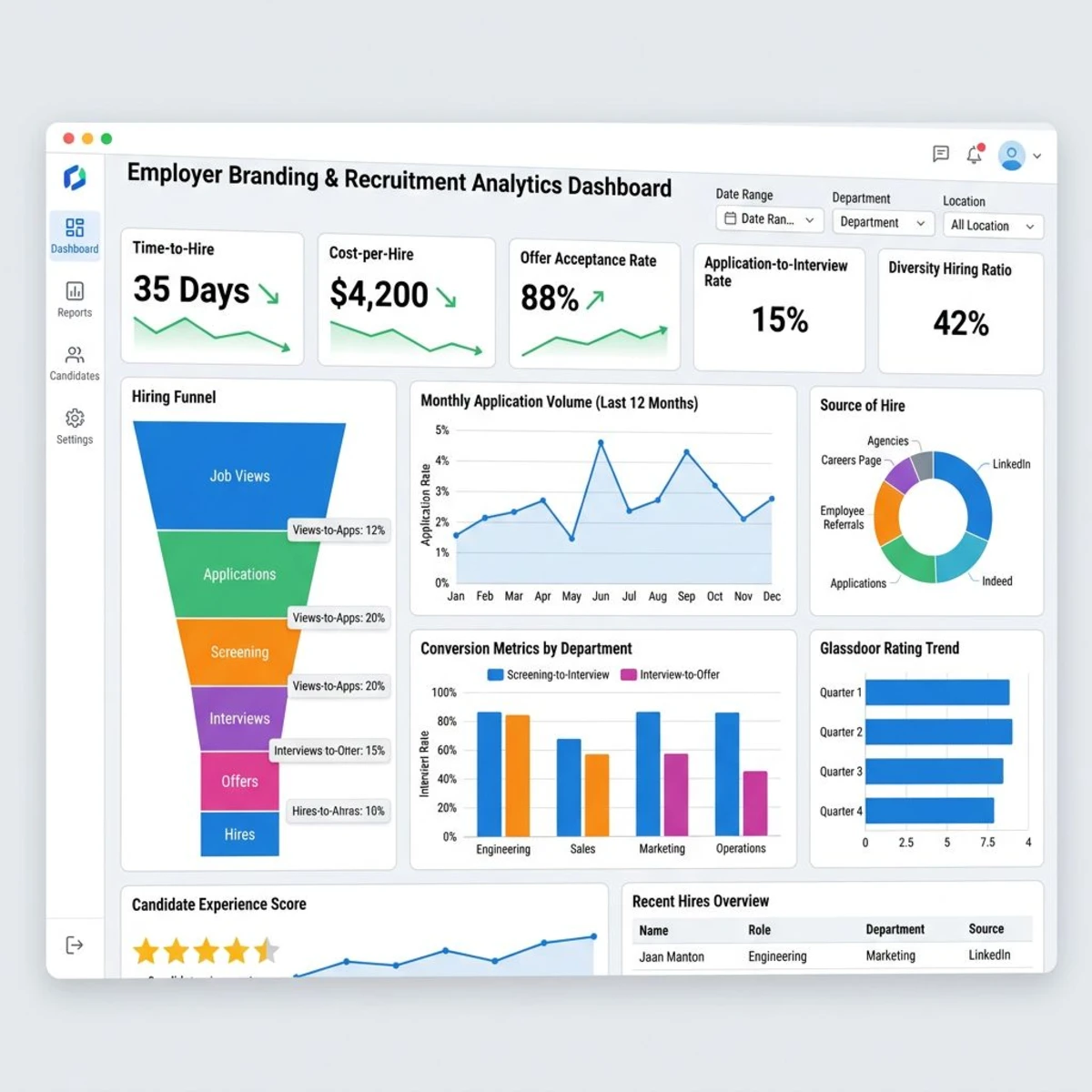
Small teams need focused metrics that drive decision-making, not vanity metrics that look impressive but don't correlate with hiring success.
Primary Metrics (Track Monthly)
Quality of Applications
- Percentage of applications that meet minimum qualifications
- Applications from passive vs. active candidates
- Applications requiring less screening time
Application Sources
- Direct applications (career page)
- Employee referrals
- Social media
- Job boards
- Networking events
Conversion Rates
- Application → Phone screen: 15-25% is healthy
- Phone screen → In-person interview: 30-50%
- Interview → Offer: 30-50%
- Offer → Acceptance: 70-90%
Time Metrics
- Time from posting to qualified application
- Time from application to offer
- Time from offer to acceptance
Secondary Metrics (Track Quarterly)
Brand Health
- Glassdoor rating and review sentiment
- LinkedIn company page followers and engagement
- Social media mentions and sentiment
- Industry forum discussions
Employee Advocacy
- Employee social media mentions of company
- Referral applications per employee
- Employee participation in content creation
- Employee conference speaking or industry involvement
Competitive Intelligence
- Salary benchmarking vs. competitors
- Benefits comparison
- Time-to-hire vs. industry averages
- Offer acceptance rates vs. market standards
Metric Thresholds for Small Teams
Green (Healthy):
- 70%+ of applications meet basic qualifications
- 80%+ offer acceptance rate
- 30+ days average time to hire
- 4.0+ Glassdoor rating (with 5+ reviews)
Yellow (Needs attention):
- 50-70% qualified applications
- 60-80% offer acceptance rate
- 45+ days average time to hire
- 3.5-4.0 Glassdoor rating
Red (Immediate action needed):
- less than 50% qualified applications
- less than 60% offer acceptance rate
- 60+ days average time to hire
- less than 3.5 Glassdoor rating
Simple Tracking Dashboard
Create a monthly dashboard using Google Sheets or your people management system:
=== EMPLOYER BRAND METRICS - FEBRUARY 2026 ===

APPLICATIONS
• Total: 67 (+12 vs Jan)
• Qualified: 45 (67%)
• Referrals: 8 (12%)

CONVERSIONS
• Screen rate: 18/67 (27%)
• Interview rate: 12/18 (67%)
• Offer rate: 5/12 (42%)
• Accept rate: 4/5 (80%)

TIME METRICS
• Avg time to hire: 34 days
• Avg offer response: 3 days

BRAND HEALTH
• Glassdoor: 4.2/5 (15 reviews)
• LinkedIn followers: 234 (+18)
• Employee advocates active: 8/15 (53%)
The most important insight: track trends, not absolute numbers. A small team with 15 quality applications per month and 90% offer acceptance rates is in a much better position than one with 100 applications but 40% acceptance rates.
Common Employer Branding Mistakes Small Teams Make
Mistake 1: Copying Big Company Strategies
Large companies have different employer branding needs. They're fighting recognition problems ("Does anyone know we exist?") while you're fighting perception problems ("Why should top talent choose us over Google?").
What doesn't work for small teams:
- Generic corporate speak in job postings
- Overly polished, perfect social media content
- Hiding behind the company brand instead of showcasing real people
- Competing purely on traditional benefits (health insurance, 401k)
What works instead:
- Specific, project-focused job descriptions
- Behind-the-scenes, authentic content
- Employee faces and stories front and center
- Competing on growth opportunities and impact
Mistake 2: Trying to Be Everything to Everyone
Small teams often think they need to appeal to all types of candidates. This dilutes your message and attracts people who aren't a good fit.
Better approach: Define your ideal candidate profile and double down on appealing to that specific person.
Example: Instead of "We're looking for passionate developers," try "We're looking for full-stack developers who want to own product features from conception to production and don't mind wearing multiple hats as we scale."
Mistake 3: Neglecting the Candidate Experience
Every interaction shapes your employer brand, especially rejections. Small teams often have informal, inconsistent interview processes that leave candidates with negative impressions.
Candidate experience basics:
- Confirm interviews 24 hours in advance
- Start and end interviews on time
- Provide clear next steps and timelines
- Send personalized rejection emails within one week
- Ask for feedback on your interview process
Mistake 4: Only Focusing on External Perception
Your employer brand starts with employee experience. You can't market your way out of high turnover or low engagement.
Internal brand health checklist:
- Are employees proud to work here?
- Do they refer friends and former colleagues?
- Are they sharing positive experiences on social media?
- What do exit interviews reveal about perception gaps?
Mistake 5: Inconsistent Messaging Across Touchpoints
Your job posting says "fast-paced startup environment" but your career page emphasizes "work-life balance." Your CEO posts about innovation on LinkedIn while your job descriptions mention "traditional company values."
Brand consistency audit:
- Do job postings match career page messaging?
- Are employee LinkedIn profiles aligned with company messaging?
- Does leadership social media reflect the same values as HR communications?
- Are your interview questions consistent with stated company culture?
Mistake 6: Measuring Vanity Metrics
Tracking LinkedIn followers or social media likes doesn't correlate with hiring success. Focus on metrics that impact your ability to hire quality candidates quickly.
Vanity metrics to avoid:
- Total applications (quality matters more than quantity)
- Social media followers (engagement and conversion matter more)
- Job posting views (applications matter more)
- Career page traffic (time spent and conversion matter more)
Mistake 7: Not Involving Current Employees
Your team knows better than anyone why people should (or shouldn't) work at your company. Not involving them in employer branding efforts misses your biggest asset.
Employee involvement strategies:
- Monthly "brand ambassador" meetings to share content ideas
- Incentive programs for social media advocacy
- Regular feedback sessions on brand messaging accuracy
- Employee-led interviews or culture presentations
Recovery strategy for these mistakes: Conduct quarterly "brand health" reviews with your team. Ask what's working, what feels inauthentic, and where external perception doesn't match internal reality.
Industry Examples: Small Teams Doing Employer Branding Right
Buffer: Transparency as a Differentiator
Buffer (90+ employees) built their employer brand around radical transparency. They publish employee salaries, diversity data, and revenue numbers publicly.
What works:
- Candidates know exactly what to expect
- Attracts people who value openness
- Differentiates from typical corporate secrecy
Applicable tactics:
- Share salary ranges in job postings
- Publish team meeting notes or company updates
- Be honest about challenges and failures
Basecamp: Anti-Corporate Positioning
Basecamp positioned itself against typical startup culture: no overtime, no venture capital pressure, no ping pong tables.
What works:
- Clear about what they're NOT
- Attracts people tired of hustle culture
- Differentiates in a crowded SaaS market
Applicable tactics:
- Define what your company culture opposes
- Be explicit about work-life balance expectations
- Show how you're different from industry norms
GitLab: Remote-First Culture Documentation
GitLab created the world's most comprehensive remote work handbook, publicly available and constantly updated.
What works:
- Demonstrates expertise in remote work
- Shows organizational maturity
- Attracts remote work enthusiasts globally
Applicable tactics:
- Document your processes publicly
- Share expertise through content
- Show how you solve industry problems
Zapier: Employee Development Focus
Zapier (400+ employees) built employer branding around learning and growth, featuring employee skill development stories.
What works:
- Appeals to growth-minded candidates
- Shows career progression paths
- Demonstrates investment in people
Applicable tactics:
- Highlight employee learning opportunities
- Share promotion and skill development stories
- Offer clear professional development paths
Building Your Employer Brand Action Plan
Month 1: Foundation
Week 1: Define your Employee Value Proposition Week 2: Audit current online presence Week 3: Optimize career pages and job postings Week 4: Set up tracking metrics
Month 2: Content and Social
Week 1: Launch employee social media advocacy program Week 2: Create content calendar for company social accounts Week 3: Produce first round of employee spotlight content Week 4: Begin regular industry thought leadership posts
Month 3: Amplification and Optimization
Week 1: Launch employee referral program enhancements Week 2: Create video content featuring team members Week 3: Engage with industry communities and events Week 4: Analyze results and adjust strategy
Quarterly Reviews
- Metric analysis and trend identification
- Employee feedback on brand messaging accuracy
- Competitive landscape assessment
- Strategy adjustments based on what's working
Budget allocation by company size:
5-15 employees: $200-500/month
- Focus on organic social media and employee advocacy
- Basic content creation tools
- Professional photos and basic video equipment
16-50 employees: $500-1500/month
- Add content creation resources
- Job board premium listings
- Event sponsorships and speaking opportunities
51-100 employees: $1500-3000/month
- Professional content production
- Employer brand consulting
- Employee experience survey tools
- Conference and event presence
Tools and Resources to Streamline Your Efforts
Free Tools
Google Alerts: Monitor mentions of your company name + "careers," "interview," or "working at"
Buffer (free tier): Schedule social media posts across platforms
Canva: Create professional graphics for job postings and social media
Loom: Record quick video messages for candidate outreach
LinkedIn Company Page: Free professional networking and job posting
Glassdoor Employer Center: Respond to reviews and manage company profile
Paid Tools (Budget-Friendly)
Buffer Pro ($6/month): Advanced social media scheduling and analytics
Canva Pro ($15/month): Extended graphic design capabilities
Typeform ($35/month): Create engaging candidate surveys
Calendly ($12/month): Streamline interview scheduling
Zoom Pro ($20/month): Professional video interviews
Integration with Tiny Team
Your hiring and ATS features can support employer branding by:
- Creating consistent candidate communication templates
- Tracking candidate sources and conversion rates
- Managing employee referral programs
- Storing interview feedback and candidate experience data
Use your document management to:
- Maintain brand messaging guidelines
- Store employee testimonial content
- Create interview question banks
- Document candidate feedback themes
Your team calendar helps with:
- Scheduling consistent interview times
- Coordinating employee advocacy activities
- Planning content creation schedules
- Managing employer branding campaign timelines
Frequently Asked Questions
How long does it take to see results from employer branding efforts?
Most small teams see initial improvements in application quality within 2-3 months of consistent employer branding efforts. However, building a strong reputation takes 6-12 months of sustained activity.
Early indicators (1-2 months): Higher quality applications, better candidate engagement during interviews, improved feedback from candidates about your company.
Medium-term results (3-6 months): Increased employee referrals, better offer acceptance rates, positive mentions in industry forums.
Long-term benefits (6+ months): Passive candidates reaching out directly, improved Glassdoor ratings, recognition as an industry employer of choice.
Should we respond to negative Glassdoor reviews?
Yes, but thoughtfully. Responding to negative reviews shows that you take feedback seriously and are committed to improvement.
Best practices:
- Respond within 48-72 hours
- Thank the reviewer for their feedback
- Address specific concerns without being defensive
- Mention improvements you've made since their departure
- Keep responses professional and concise
- Don't try to identify the reviewer or share internal information
Example response: "Thank you for sharing your experience. We've taken your feedback about career development seriously and have since implemented quarterly growth conversations and skills training programs. We're always working to improve and appreciate honest feedback from our team members."
How do we compete with companies offering higher salaries?
Small teams can't always match big company salaries, but they can compete on total value proposition:
Growth opportunities: Highlight faster promotion paths and skill development Impact: Emphasize how individual contributions directly affect company success Learning: Show access to diverse projects and cross-functional experience Culture: Demonstrate values alignment and team dynamics Flexibility: Offer remote work, flexible hours, or unlimited PTO Equity: If applicable, explain potential upside as the company grows
In job postings, be specific: "While our cash compensation is competitive for our stage, you'll gain experience equivalent to 2-3 years at larger companies due to the scope and variety of projects you'll own."
What if we don't have enough employees for testimonials and social content?
Start with what you have and be creative:
Founder stories: Share why you started the company and what drives your mission Behind-the-scenes: Show product development, decision-making processes, or company challenges Industry insights: Position your small team as experts through thought leadership Customer stories: Feature customers who love working with your small, responsive team Partner highlights: Showcase other small companies you work with
Quality over quantity: One authentic founder post about lessons learned is more valuable than five generic company updates.
How do we handle employer branding when we're pivoting or changing direction?
Transparency and honesty work better than trying to hide changes:
Communicate the vision: Explain why you're pivoting and what the new direction means for employees Highlight stability: Show what remains consistent (values, team, mission) Frame as opportunity: Position changes as growth and learning opportunities Update materials quickly: Ensure job postings, career pages, and social content reflect current reality Be selective: During transition periods, focus on candidates who are excited about the new direction
Example messaging: "We're evolving from a consulting firm to a SaaS company, which means our team will gain product development experience and potential equity upside as we scale."
Should small teams invest in employer branding if we're not actively hiring?
Yes, for several reasons:
Retention: Strong employer branding helps current employees feel proud of their workplace Passive recruiting: Building reputation now means candidates will reach out when you are hiring Customer trust: Companies with good employer brands often have better customer relationships Partnership opportunities: Other businesses want to work with companies that treat employees well Preparation: When you do need to hire quickly, you won't be starting from zero
Maintenance-level efforts: Even when not hiring, maintain LinkedIn presence, respond to reviews, and encourage employee advocacy. This keeps your brand warm for future needs.