Disciplinary action is the formal process an employer uses to correct an employee's behavior or performance when it falls short. Done well, it gives the employee a fair chance to improve. It protects the business, and it keeps the rest of the team confident that the rules apply evenly. Done poorly, it breeds resentment and lawsuits.
This guide walks you through the whole process. You will learn what disciplinary action is, when to use it, and how the progressive discipline model works. We also cover how to document each step, how to run a disciplinary meeting, and where the legal lines sit. You will find example warning letters you can adapt today.
What is disciplinary action?
Disciplinary action is a structured response to an employee who breaks a workplace rule, underperforms, or acts out. It usually starts small, such as a chat or a verbal warning. It escalates only if the problem continues.
The goal is correction, not punishment. A good process assumes most people will fix the issue once you name it clearly. They also need to know what happens if they don't. Termination sits at the far end of the scale. You use it when earlier steps fail or when the misconduct is serious enough to skip ahead.
Think of it as a ladder. Each rung raises the stakes and creates a written record. If you ever have to defend a firing, that record shows the decision was fair, consistent, and earned.
When to use disciplinary action
Not every issue calls for a formal warning. A one-off mistake, a first-time lateness, or an honest mix-up is usually better handled with a quick, direct chat. Save formal disciplinary action for patterns and for serious single events.
Common triggers include:
- Attendance problems — repeated lateness, no-shows, or misuse of leave. A clear employee attendance policy makes these cases easier to prove.
- Performance issues — missed targets, sloppy work, or no change after coaching.
- Misconduct — refusing orders, breaking policy, lying, or harassment.
- Safety violations — skipping steps that put the employee or others at risk.
For performance gaps, a coaching plan often comes before or alongside discipline. A performance improvement plan gives the employee a set window to hit clear goals. That also strengthens your position if things don't improve.
The progressive discipline model

Progressive discipline is the most widely used framework. It is also the backbone of the SHRM guidance on administering a progressive discipline policy. It applies rising consequences so the employee always knows where they stand and what comes next.
Most policies use four core stages. You can add a suspension step between the final warning and termination if your business needs it.
| Stage | What it is | Typical trigger |
|---|---|---|
| 1. Verbal warning | A documented conversation about the issue | First or minor infraction |
| 2. Written warning | A formal letter stating the problem and expectations | Repeat issue or no improvement |
| 3. Final written warning | Last chance before termination, often with a set review period | Continued failure after a written warning |
| 4. Termination | Ending employment | No improvement, or serious misconduct |
The word progressive matters. Each step should follow the last. Leave enough time in between for the employee to actually change. SHRM's guidance on the elements of due process is blunt about this. Rushing the steps makes your discipline "appear to be an artificial excuse to get the employee out of the organization."
Step 1: Verbal warning
A verbal warning is a real conversation, but "verbal" doesn't mean unrecorded. You deliver it out loud. Then you write a short note for the file that confirms what was said, when, and what you agreed. Keep it private, factual, and focused on next steps. A ready-made verbal warning template keeps this consistent across managers.
Step 2: Written warning
If the behavior continues, you move to a formal written warning. This is a signed document. It names the issue, points back to the earlier verbal warning, states the standard you expect, and spells out what happens if the employee misses it. The employee signs to confirm they received it, not to agree with it.
Step 3: Final written warning
The final warning makes the stakes clear. Improve within a set period or face termination. It should point back to every prior step and set specific, measurable goals with a review date. Many employers pair this stage with a suspension or a formal improvement plan.
Step 4: Termination
Termination is the last resort. By the time you reach it, you should have a paper trail. It should show the employee knew the standard, got chances to meet it, and still fell short. Before you act, run through an employee offboarding checklist so the exit is handled cleanly and legally.
A note on "progressive discipline" vs. skipping steps
Progressive discipline is a default, not a straitjacket. Serious misconduct, such as theft, violence, or harassment, can justify skipping straight to a final warning or termination. Your policy should reserve that right in writing. SHRM recommends language that lets the company "modify and/or apply the policy in any manner it deems appropriate." That includes speeding up or skipping steps when the situation calls for it.
Documentation: the part that protects you

If a disciplinary decision is ever challenged, your documentation is the case. SHRM calls thorough records "the best evidence an employer can provide regardless of what forum they find themselves in." Weak notes turn a solid firing into a coin flip.
Every disciplinary record should capture:
- The facts — what happened, when, and where, in plain terms. Not "bad attitude," but "raised his voice and swore at a colleague in the 10 a.m. standup on March 3."
- The standard — the policy or expectation that was broken.
- Prior steps — a note of any earlier warnings on the same issue.
- The consequence — what happens if the behavior continues.
- The employee's response — their side of the story, in their words.
- Signatures and dates — the employee's sign-off and the manager's.
Store these in one place. Scattering warnings across email, Slack, and a manager's desk drawer is how records go missing right when you need them. Keep every warning, note, and sign-off in the employee's personnel file. Then the full history stays in one place, in order, and easy to find.
Tip: Write documentation as if a stranger will read it a year from now. Skip labels and opinions. Stick to what you saw, plus dates and quotes.
If you manage people without a central HR system, this is where a lightweight tool earns its keep. Tiny Team keeps each employee's records, notes, and documents in one profile. So a warning issued today is still easy to find when a pattern shows up six months later.
How to conduct a disciplinary meeting

The meeting is where fairness is won or lost. Handle it calmly and by the book. Even a hard conversation stays professional that way. Here is a reliable structure.
Before the meeting
- Gather your facts and documentation.
- Book a private room and a time that isn't rushed.
- Decide who else attends. A second manager or HR rep can serve as a witness and note-taker.
- Give the employee fair notice. Let them know they can bring a support person where your policy or local law allows.
During the meeting
- State the purpose plainly. Skip the small talk that muddies the message.
- Present the specific facts and the policy or standard involved.
- Let the employee respond. This is not optional. Due process means the employee gets to give their side before you finalize any decision. Listen for context you missed.
- Explain the consequence and the improvement you expect.
- Set a clear review period and a follow-up date.
After the meeting
- Write up what was discussed and agreed the same day, while it's fresh.
- Have the employee sign the acknowledgment.
- Diarize the review date and actually follow up on it.
One common mistake is treating the meeting as a verdict you read out. If you have truly already decided, you skip due process and hand the employee a fairness argument. Keep the decision open until you have heard them out.
Employee rights and the legal lines
Discipline doesn't happen in a legal vacuum. A few rules apply almost everywhere in the United States, and getting them wrong is costly.
Apply discipline consistently. The EEOC is clear on this. If two employees commit a similar offense, you cannot discipline them differently because of race, color, religion, sex, national origin, age (40+), disability, or genetic information. Uneven enforcement is one of the fastest routes to a discrimination claim.
Never discipline as payback. You cannot punish someone for filing a complaint, reporting discrimination, or taking legally protected leave. The EEOC's retaliation guidance notes that employers stay "free to discipline or terminate employees for legitimate, non-discriminatory, non-retaliatory reasons." But odd timing and uneven enforcement can make a fair action look like a cover story. Document the performance issue on its own, apart from any protected activity.
Know your leave protections. Discipline that lands right after an employee takes FMLA leave, files a workers' comp claim, or reports a safety issue invites scrutiny. The Department of Labor enforces several laws that protect workers from termination tied to protected activity or protected status.
At-will vs. just cause
Most U.S. employment is at-will. That means either side can end the relationship at any time for any legal reason. It sounds like this makes discipline optional, but it doesn't.
Two things complicate at-will status. First, you cannot fire for an illegal reason, so discrimination and retaliation rules still bind you. Second, a poorly worded discipline policy can create a just cause duty by accident. As SHRM notes, a policy without a clear disclaimer can support an employee's argument that it "constitutes a contract." So every discipline policy should say, in writing, that it does not change at-will status and that the company may skip steps when it chooses.
If your business or a specific contract does require just cause, the bar is higher. You must show a valid reason and a fair process. Progressive discipline, done right, is how you meet it.
Example disciplinary action letters
Templates keep your letters consistent and sound. Adapt these to your policy, and always have a second person review before you send. Fill the brackets with specifics.
Example 1: Attendance
Subject: Written Warning — Attendance
Dear [Employee Name],
This letter is a formal written warning regarding your attendance. Our records show [X] unexcused late arrivals between [date] and [date], following a verbal warning on [date].
Our attendance policy requires employees to be at their desk by [time]. Reliable attendance is essential to your role and your team.
Effective immediately, we expect you to arrive on time for every scheduled shift. We will review your attendance on [date]. Continued lateness may result in further disciplinary action, up to and including termination.
Please sign below to confirm you have received this warning.
Example 2: Performance
Subject: Written Warning — Performance
Dear [Employee Name],
This letter follows our meeting on [date] about your performance. Despite coaching on [dates], the following targets have not been met: [list specific, measurable examples].
The expected standard is [describe standard]. We are placing you on a [30/60/90]-day review period. During this time you must [list clear goals]. We will meet weekly to review progress.
Failure to meet these expectations by [date] may result in further action, up to and including termination.
Example 3: Misconduct
Subject: Final Written Warning — Conduct
Dear [Employee Name],
This is a final written warning regarding [describe the specific incident, with date]. This conduct violates [policy name/section] and follows a written warning issued on [date].
This behavior must stop immediately. Any further incident of this nature will result in termination of your employment.
You are entitled to share your account of these events, and we have recorded your response in your file.
For performance letters, you may also want the fuller structure in our performance improvement plan template. It pairs well with a written warning.
How to create a disciplinary action policy
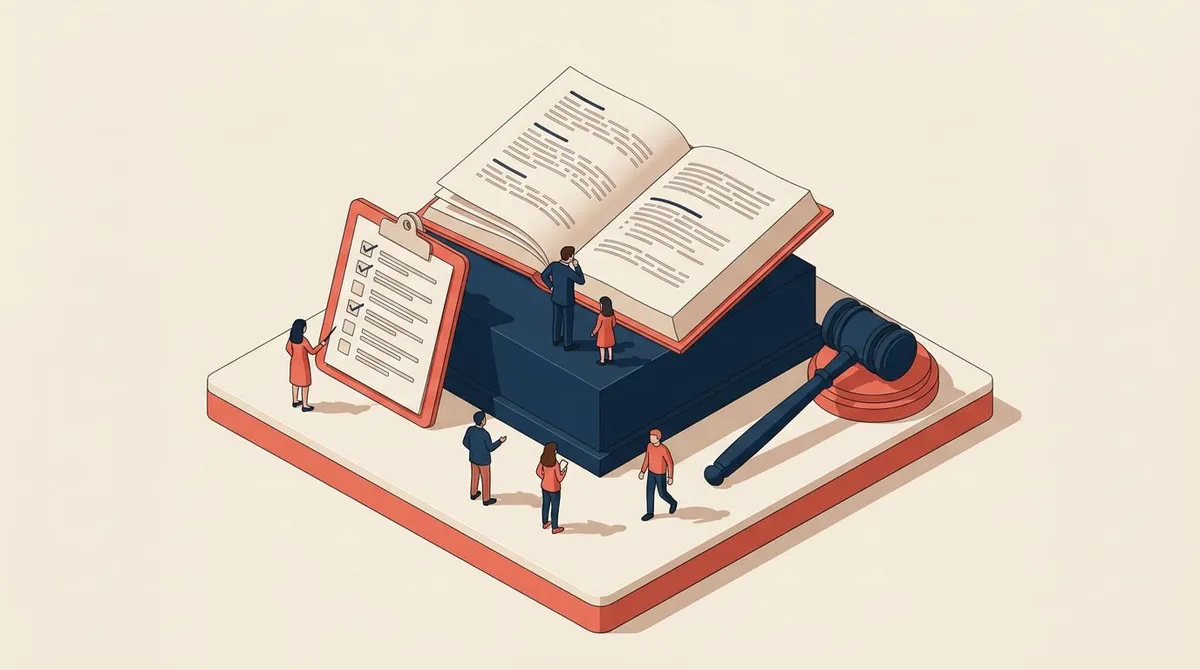
A written policy makes discipline predictable and easy to defend. Every manager applies the same steps, and employees know the rules in advance. Build yours around these parts.
1. Scope and purpose. State who the policy covers and that its aim is correction, not punishment.
2. The steps. Lay out your stages: verbal, written, final, termination. Note that the company may skip steps for serious misconduct.
3. Conduct standards. Point to the specific rules in your employee handbook that discipline enforces, so nothing comes as a surprise.
4. Records and privacy. Explain how records are kept and who can see them.
5. The at-will disclaimer. Add clear language that the policy does not create a contract or change at-will employment.
6. Appeals. Give employees a way to raise concerns about a decision. Pair this with an employee complaint form so grievances are logged the same way every time.
Roll the finished policy into your onboarding and your handbook. Require sign-off so no one can claim they never saw it. If discipline sits alongside broader people issues, our employee relations guide covers how the pieces fit together.
Common mistakes to avoid
Even skilled managers slip on the same points. Watch for these.
- Vague notes. "Attitude problem" proves nothing. Record what you saw, plus dates and quotes.
- Uneven enforcement. Disciplining one person for what you let slide in another is the classic discrimination trap.
- Skipping the employee's side. Deciding before you listen wipes out due process.
- No follow-up. Set a review date and ignore it, and the warning looks empty.
- Heated delivery. Discipline when you're angry, and the record shows it. Wait until you can be factual.
- Firing with no trail. Jumping to termination with no prior steps is where wrongful-termination claims start.
Frequently asked questions
What are the steps of progressive discipline?
The standard progressive discipline model has four steps: a verbal warning, a written warning, a final written warning, and termination. Some employers add a suspension between the final warning and termination. Each step raises the stakes and creates a written record. That gives the employee a fair chance to fix the issue before losing their job.
Do I have to follow every disciplinary step before firing someone?
Not always. Progressive discipline is a default, not a legal rule, and most employment in the U.S. is at-will. For serious misconduct like theft, violence, or harassment, a well-written policy lets you skip steps and go straight to a final warning or termination. For everyday performance or attendance issues, following the steps in order protects you against wrongful-termination and discrimination claims.
What should a disciplinary action letter include?
A disciplinary letter should name the specific issue with dates and facts. It should point to the policy or standard that was broken, cite any prior warnings, state the improvement you expect, and set a review period. It should also spell out what happens if the employee doesn't improve, give them space to respond, and include a signature line to confirm they received it.
Is documentation legally required for disciplinary action?
Documentation is not always required by law, but it is your strongest protection. If an employee challenges a warning or firing as unfair or as payback, your records are the main evidence that the decision was fair, consistent, and based on real performance or conduct issues. Steady, factual records turn a sound decision into one you can prove.
How do I discipline an employee without breaking the law?
Apply discipline the same way for everyone who commits a similar offense. Record the specific behavior, not opinions. Give the employee a chance to respond. And never discipline in a way that could look like payback for protected activity, such as filing a complaint or taking FMLA leave. When a serious case is unclear, talk to an employment attorney before you act.
Bringing it together
Fair discipline comes down to consistency plus good records. Name the problem clearly, follow the same steps for everyone, write down what happened, and give people a real chance to improve. That protects your employees, your team's trust, and your business.
If keeping warnings, notes, and personnel records in order is the part that keeps slipping, that's exactly what an HR system handles. Tiny Team is free for teams up to 10, then a flat $79/month for up to 50 — every feature included, no per-seat pricing. Your disciplinary paper trail lives in one place instead of a dozen inboxes. The paid plan comes with a 30-day free trial. See how it works.