A performance improvement plan is a formal document that spells out what's going wrong, what "good" looks like, and how long someone has to get there. Think of it as a coaching tool, not a firing checklist.
For small teams, PIPs feel personal. You sit across from this person every day. But that's exactly why you need structure. It takes the guesswork out and gives both sides a clear path.
Below you'll find free PIP templates you can copy and paste, a writing guide, and real examples sorted by role. No signup, no email gate, no downloads. Just grab what you need and go.
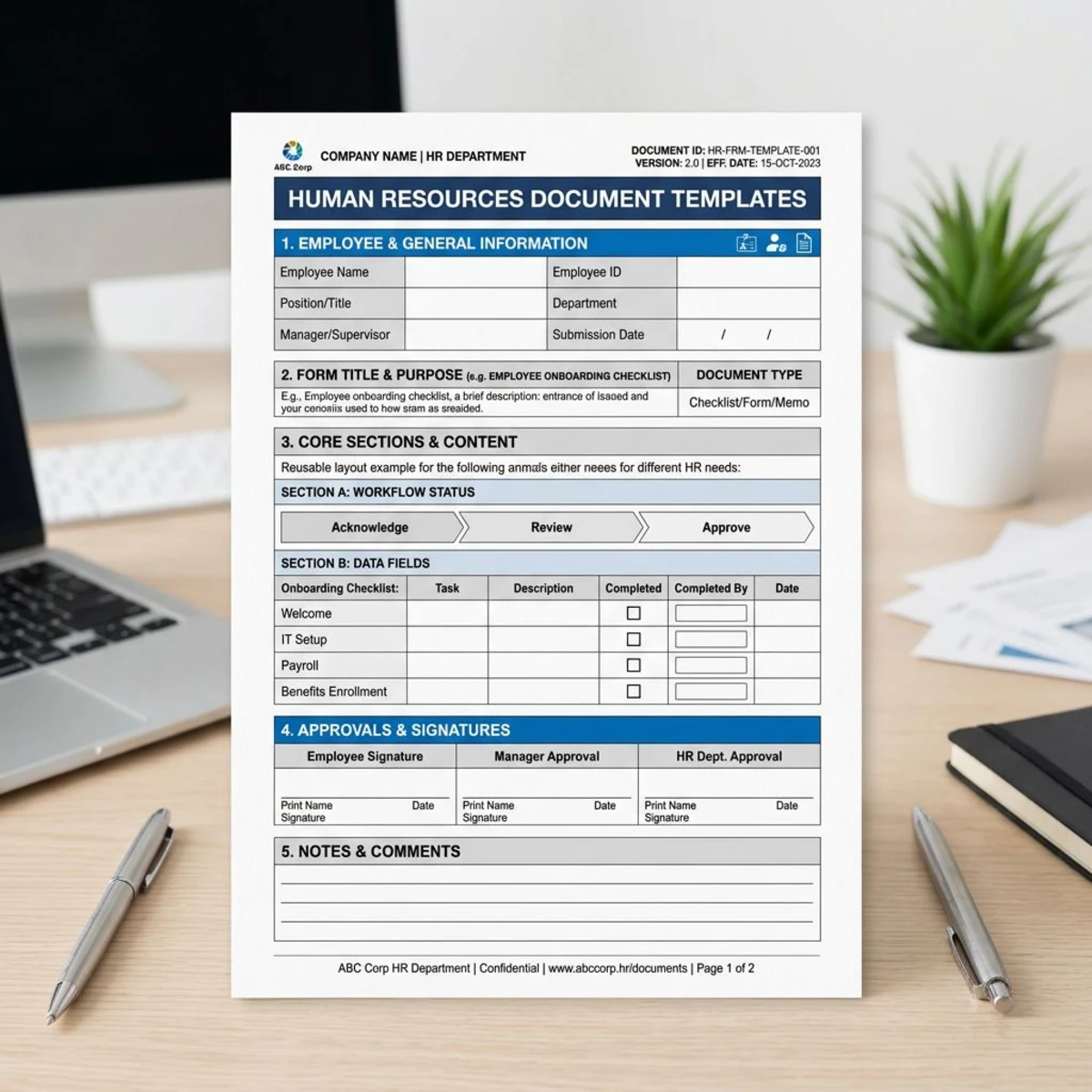
What Is a PIP?
A PIP is a written agreement between a manager and an employee. It does five things:
- Names the problem with real examples and dates.
- Sets goals the employee must hit, with numbers attached.
- Puts a clock on it — usually 30 to 90 days.
- Lists the help the company will give (training, coaching, tools).
- States what happens if goals are met and what happens if they are not.
Unlike a quick chat over coffee, a PIP creates a paper trail. The employee knows exactly what must change. The company can show it acted fairly if things don't work out.
Data from SHRM shows about one in three employees finish their PIP and keep their job. Harvard Business Review found that the gap between success and failure usually comes down to three things: clear goals, real support from the manager, and a timeline that makes sense.
When Should You Use a PIP?
A PIP fits when someone used to do fine but has slipped, when the issues can be measured and fixed, and when you have already tried informal coaching. It also fits when you see a pattern — repeated lateness, dropping quality, or friction with the team.
A PIP does not fit when the issue is serious misconduct like theft or harassment. It does not fit when you are cutting headcount for budget reasons. And it should never be used when you have already made up your mind to fire someone. A sham PIP is not just unfair — courts can spot it, and it can cost you real money.
Ask yourself one question: "Do I honestly believe this person can turn things around with clear goals and help?" If yes, write the PIP. If no, have a direct conversation about fit instead.
One more thing to keep in mind: timing matters. Do not wait six months to address a problem. The longer you let poor performance slide, the harder the conversation becomes — and the more damage it does to the rest of your team. High performers notice when low performers get a free pass, and it chips away at morale fast.
If you are a first-time manager, you might feel awkward putting someone on a formal plan. That is normal. But avoiding the issue is worse for everyone, including the employee who deserves honest feedback.
Free PIP Templates
General PIP Template
PERFORMANCE IMPROVEMENT PLAN
Employee: [Name] | Role: [Job Title] | Department: [Dept] Manager: [Name] | Date: [Date]
What needs to change: Describe the problem with dates and examples. Be specific.
Goals:
- [Goal] — Current level: [X]. Target: [Y]. How you will measure it: [method].
- [Goal] — Current level: [X]. Target: [Y]. How you will measure it: [method].
Timeline: [Start] to [End]. Check-ins on [dates]. Final review on [date].
Help we will give: [Training, coaching, tools, schedule changes.]
What happens next: If you hit these goals, the PIP closes and we move on. If you do not, further steps may follow, up to and including letting you go.
Signed by employee: _____________ Date: _______ Signed by manager: _____________ Date: _______
Attendance PIP Template
PERFORMANCE IMPROVEMENT PLAN — ATTENDANCE
Employee: [Name] | Role: [Title] | Date: [Date]
The problem (covering [date range]): You have had [X] unexcused absences and [X] late arrivals. We have noticed a pattern of [describe, e.g., Monday absences].
Goals:
- Show up on time at least 95 percent of work days.
- Keep your absence rate at or below 5 percent.
- Give at least [X] hours notice for any planned time off.
Timeline: 30 days, with a weekly check-in every [day of week].
Signed by employee: _____________ Date: _______
Work Quality PIP Template
PERFORMANCE IMPROVEMENT PLAN — QUALITY
Employee: [Name] | Role: [Title] | Date: [Date]
The problem (covering [date range]): Your error rate is [X] percent. The team standard is [Y] percent. You have had [number] customer complaints. Here are the details: [list each one with dates].
Goals:
- Bring your error rate down to [Y] percent or lower.
- Run a quality checklist before every submission.
- Reach a customer satisfaction score of [target] out of 10.
Timeline: 60 days with reviews every two weeks. Help we will give: [Training, mentoring, tools.]
Signed by employee: _____________ Date: _______
Behavior PIP Template
PERFORMANCE IMPROVEMENT PLAN — CONDUCT
Employee: [Name] | Role: [Title] | Date: [Date]
What happened:
- [Date]: [What the employee did and how it affected the team.]
- [Date]: [Second incident and its impact.]
Goals:
- Keep all interactions respectful and professional.
- Take part in every team meeting.
- Raise concerns through the right channels, not in public.
Timeline: 60 to 90 days with check-ins every two weeks. Help we will give: [Coaching, a conflict resolution workshop, communication training.]
Signed by employee: _____________ Date: _______

How to Write a PIP in Five Steps
Step 1: Gather your evidence first
Before you type a single word, pull together the facts. Dates, numbers, emails, complaint logs, and notes from past chats. A PIP built on feelings instead of facts will fall apart.
If you already run regular performance reviews, you will have most of what you need. That is one big reason structured reviews matter — they build the paper trail before you need it.
Also gather any positive feedback from the same period. If the employee did some things well, note those too. A PIP that only lists failures feels like an attack. One that says "here is what you do well, and here is what needs work" feels more balanced and gets better results.
Step 2: Write goals that pass the "how will I know?" test
Every goal in the plan must be clear enough that both sides can tell whether it was met. Compare these two versions:
- Bad: "Be more productive." There is no way to measure that.
- Good: "Complete 40 outreach calls per week, logged in the CRM by Friday at 5 PM."
If you cannot put a number or a date on a goal, rewrite it until you can.
Step 3: Pick a timeline that fits the problem
Simple issues like showing up on time can be fixed in 30 days. Quality gaps or skill building usually need 60 days. Big behavior shifts may take 90 days. For most small teams, 60 days is the sweet spot — long enough for real change but short enough to keep the urgency alive.
Build in milestones along the way. A weekly check-in for the first two weeks helps you catch problems early. After that, switch to every two weeks. Each check-in should be short — 15 to 20 minutes — and focused on progress toward the specific goals in the plan. Write a quick note after each one so you have a record.
Step 4: Offer real help, not empty promises
A plan that says "get better or else" without any support will fail. And it looks bad if things end up in court.
Be specific about what you will do. Name the training course and the date. Say who the mentor will be. List the tools you will provide. "We will give you support" is vague. "You will complete the customer service module by March 15 and shadow Jamie for two hours each Tuesday" is something the employee can act on.
Step 5: Spell out what comes next
State the outcomes in plain language. If the employee hits every goal, the PIP closes and life goes back to normal. If they do not, further action may follow, up to and including termination. Keep it direct and honest.
PIP Examples by Role
Sales rep below quota. Goals: hit 90 percent of monthly quota, make 40 outreach calls a week, keep CRM data 95 percent accurate. Support: sales training and call shadowing with a top performer. Timeline: 60 days.
Customer service rep with low ratings. Goals: reach a 4.2 out of 5.0 satisfaction score and keep escalations below 5 percent. Support: a de-escalation workshop and pairing with a senior rep. Timeline: 90 days.
Developer with too many bugs. Goals: fewer than two bugs per sprint, 80 percent code review approval on the first try. Support: technical courses and pair programming sessions. Timeline: 90 days.
Manager with disengaged team. Goals: raise engagement scores above 4.0, cut turnover below 10 percent. Support: leadership training and executive coaching. Timeline: 90 days.
Admin assistant missing deadlines. Goals: process invoices with 99 percent accuracy (up from 91 percent), submit weekly reports by Friday at 3 PM (currently arriving Monday), respond to internal requests within four business hours. Support: software refresher training and time management coaching. Timeline: 60 days.
Notice the pattern. Every example has a number, a way to measure it, and a defined support plan. That is what turns a vague warning into a useful improvement plan.

Mistakes That Kill a PIP
Fuzzy goals. "Do better" is not a goal. Every line item needs a number, a deadline, and a way to check.
No real help. If you hand someone a PIP and disappear, you have set them up to fail.
Uneven enforcement. Two people have the same problem but only one gets a PIP? That is a lawsuit waiting to happen.
Using the PIP as cover. If you have already decided to fire someone, do not dress it up as a chance to improve. Courts and juries can tell.
Dropping the ball on follow-up. Take notes after every check-in. Write down what got better and what did not. Good notes protect both sides.
Making it too long. A ten-page PIP will overwhelm the employee and make the process feel like punishment. Keep the document to two or three pages. Focus on the two or three goals that matter most, not every small issue you have ever noticed.
How to Have the PIP Conversation
Book 60 minutes in a private room. Have the document, your evidence, and a list of resources ready. Then follow this flow:
Open with a clear statement. "I want to talk about some performance concerns and build a plan to help you succeed here." Do not bury the lead in small talk.
Share the facts. Use dates and numbers. "In the last 30 days, three clients raised complaints about slow replies" hits harder than "people are unhappy."
Walk through each part of the plan — goals, timeline, support, and outcomes. Pause and let the employee ask questions.
Expect a strong reaction. Tears, anger, or silence are all normal. Give the person space to feel what they feel. Do not dismiss the emotion, but do not let it stop the meeting.
End by looking forward. "I believe you can do this with focused effort and the support we are putting in place." Then book the first check-in before you leave the room.
One tip that many managers miss: send a short written recap after the meeting. A quick email that says "Here is what we discussed and the next steps we agreed on" keeps everyone aligned. It also adds another layer of documentation in case you need it later.

What Happens After the PIP Ends?
They hit every goal. Great. Say so out loud, close the PIP, and go back to normal. Many people who finish a PIP become some of your most dependable team members because they proved they can adapt under pressure.
They hit some goals but not all. You can extend the timeline, adjust the targets, or explore a different role that plays to their strengths.
They miss the mark. Move to termination, following your company's process. The PIP paperwork — goals, support offered, check-in notes — gives you the documentation you need.
They quit during the PIP. This is common. Some people see a PIP as a signal to move on. Process it as a voluntary departure and follow your employee offboarding checklist so nothing falls through the cracks.
A strong onboarding process can reduce PIPs down the road. When new hires get clear expectations from day one, fewer of them end up needing a formal plan later.
And if a PIP does lead to someone leaving, an exit interview can surface problems you might not see otherwise. Use that feedback to make your management better.
One pattern worth watching: if you find yourself writing PIPs for the same role over and over, the problem may not be the people. It could be the job description, the hiring process, or the training program. Step back and ask whether the role itself is set up for success. Sometimes fixing the system is smarter than fixing the person.
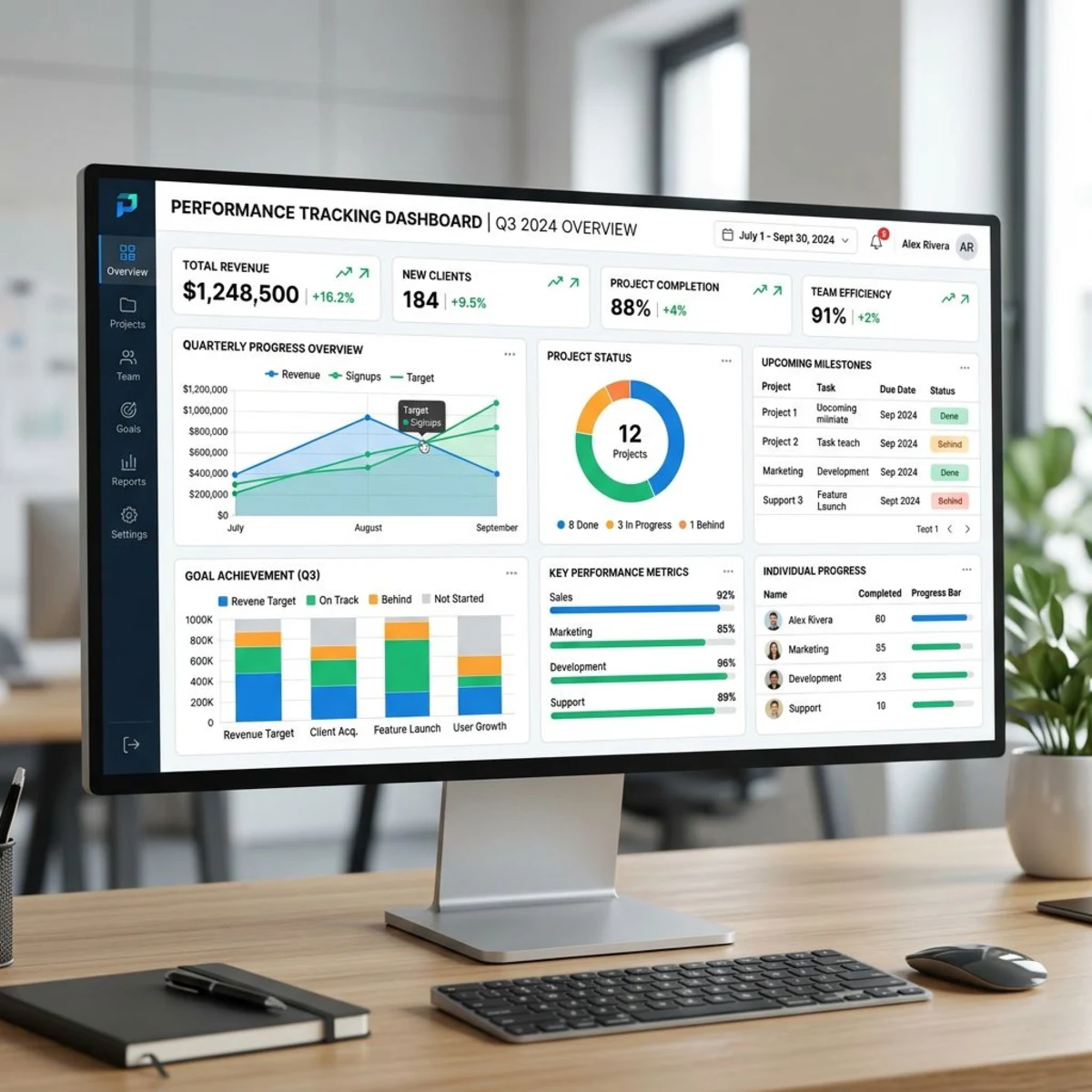
Tracking PIPs as Your Team Grows
A spreadsheet works when you have one or two PIPs open. But as your team gets bigger, keeping track of goals, check-in dates, and documents turns into a mess.
A people management tool puts everything in one place and saves you from digging through email threads and shared drives. Tiny Team has built-in performance reviews and people management, so you can track improvement plans right next to regular reviews. Tiny Team offers one-time lifetime access to HR and Document Spaces per organization. Choose one module or buy several in a single payment. Each module has its own 30-day free trial, starting when you activate it. No credit card, automatic charges or per-person fees. See current module pricing.
If your team works from different locations, having one central system matters even more. You cannot rely on hallway chats when everyone is working remotely. A shared tool keeps managers and employees on the same page no matter where they sit.
Frequently Asked Questions
How long should a performance improvement plan last?
Most PIPs run 30 to 90 days. Simple issues like attendance can be fixed in 30 days. Skill gaps or behavior changes usually need 60 to 90 days. Match the timeline to how big the change is.
Can an employee refuse to sign a PIP?
Yes, but the signature only means "I received this." It does not mean "I agree." If they refuse, write "Employee declined to sign," have a witness initial the page, and move forward. The PIP still applies.
Should a PIP cover personal issues that affect work?
Keep the PIP focused on job performance, not personal life. Point the employee to support resources like an EAP separately. If the issues may be tied to a disability, look into reasonable accommodations before starting a PIP.
Can you fire someone before the PIP period ends?
You can, but only for serious new problems or a major drop in performance. Document the new issues on their own. Ending a PIP early should be based on real reasons, not small setbacks.
What if an employee improves during the PIP but slips back afterward?
Keep an eye on performance for 6 to 12 months after the PIP closes. If things slide, address it early through your regular performance review process. Finishing one PIP does not shield anyone from future action on new issues.
Do you need to give a welcome email tone in a PIP?
No. A PIP is a formal document, not a warm greeting. But it should still be respectful. You are telling someone their work is not meeting the bar — be honest and direct, but not cold. The goal is to help them succeed, and the tone should reflect that.