Great employees leave when they stop growing. That's not a guess. It's backed by real data.
Companies with strong growth programs keep 34% more staff. They also see 11% higher profits. Yet most small teams have no plan for helping people grow. They wing it. And they lose good people because of it.
The fix is simple. Create a development plan for each person. Map their goals to your business needs. No fancy tools needed. Just honest chats and clear next steps.
This guide gives you free templates you can copy today. It has five examples for different roles. And it walks you through a six-step process that works even with a tiny budget.

What Is an Employee Development Plan?
A development plan is a short document. It lists goals, actions, and due dates for one person's growth at work.
Think of it as a road map. It shows where someone is today. And it maps the path to where they want to be in 6 to 24 months.
It's not the same as a performance review. Reviews look back. They grade past work. A development plan looks ahead. It charts future growth.
It's not the same as a training course, either. A course teaches one skill. A plan maps an entire growth path across many months.
Every good plan has these parts:
- Skills check — where the person stands right now
- Goals — what they want to reach in 6 to 24 months
- Actions — training, projects, or mentoring to get there
- Dates — monthly or quarterly targets to hit
- Metrics — how you'll track their progress
- Resources — budget, tools, and time you'll provide
- Review dates — when you'll check in and update the plan
The best plans line up three things. What the person wants. What the manager needs. What the company is building toward. When all three match, growth happens fast.
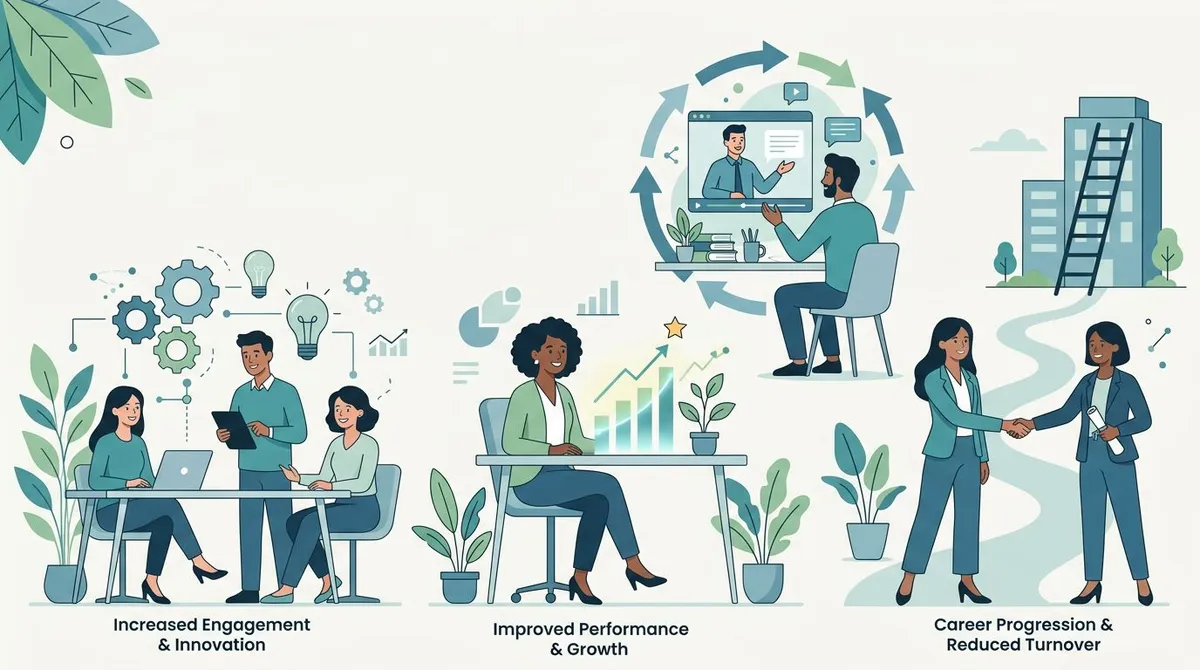
Why Development Plans Boost Retention
People don't quit jobs. They quit dead ends. Growth is the top thing workers want after fair pay.
LinkedIn found that 94% of people would stay longer if their company helped them grow. But only 25% of companies do this well. That gap is your chance to stand out.
How Growth Keeps People
Clear paths stop job hunting. When staff see a future at your company, they stop looking at job boards. They put their energy into the work in front of them.
Growing from within saves money. Hiring outside talent costs a lot. It takes time, too. When you promote from within, you keep years of context. You also spend less on recruiting fees.
Investment shows you care. When you spend time on someone's growth, they feel valued. That bond is stronger than any raise. It's personal, and it sticks.
Other Big Wins
Growth plans also make people better at their current job. New skills help them do more. They solve problems faster. They take on bigger tasks with less hand-holding.
A team that grows together also attracts top talent. Word spreads. People want to work where they'll get better, not just get paid.
And when people do move on, they leave on good terms. You can learn a lot from their reasons for going. A solid exit interview process helps you spot patterns and fix issues early.
Employee Development Plan Template (Free)
Copy this template today. Change it to fit any role or level. Keep it short enough that both the manager and the person will use it.
Employee Info:
- Name: ___
- Role: ___
- Department: ___
- Manager: ___
- Plan dates: ___ to ___
Current Skills:
Strengths (list 3 to 5):
- List both hard and soft skills
- Back each one with a recent example
Growth areas (list 2 to 4):
- Skills needed to do the current role well
- Skills needed for their next role
Career goals:
- Short-term (6 to 12 months): ___
- Mid-term (1 to 2 years): ___
- Long-term (3 to 5 years): ___
Goal 1: [Name the goal]
- Why it matters: Link it to the role or career path
- Metrics: How you'll know they hit it
- Due date: A firm target date
- Actions:
- Action 1 with a due date
- Action 2 with a due date
- Action 3 with a due date
- Resources: Budget, tools, and support they need
Goal 2: [Name the goal] (Same format as above)
Goal 3: [Name the goal] (Same format as above)
Support Plan:
- Manager: Weekly or biweekly check-ins on progress
- Company: Training budget and time off for learning
- Outside help: Courses, certs, coaching, or events
Review Dates:
- Monthly check-ins: First Friday of each month
- Quarterly reviews: [pick dates]
- Annual review: [pick a date]
5 Development Plan Examples by Role
Here are five examples for common roles. Each one fits a different stage of a career. Copy and adapt them for your own team.
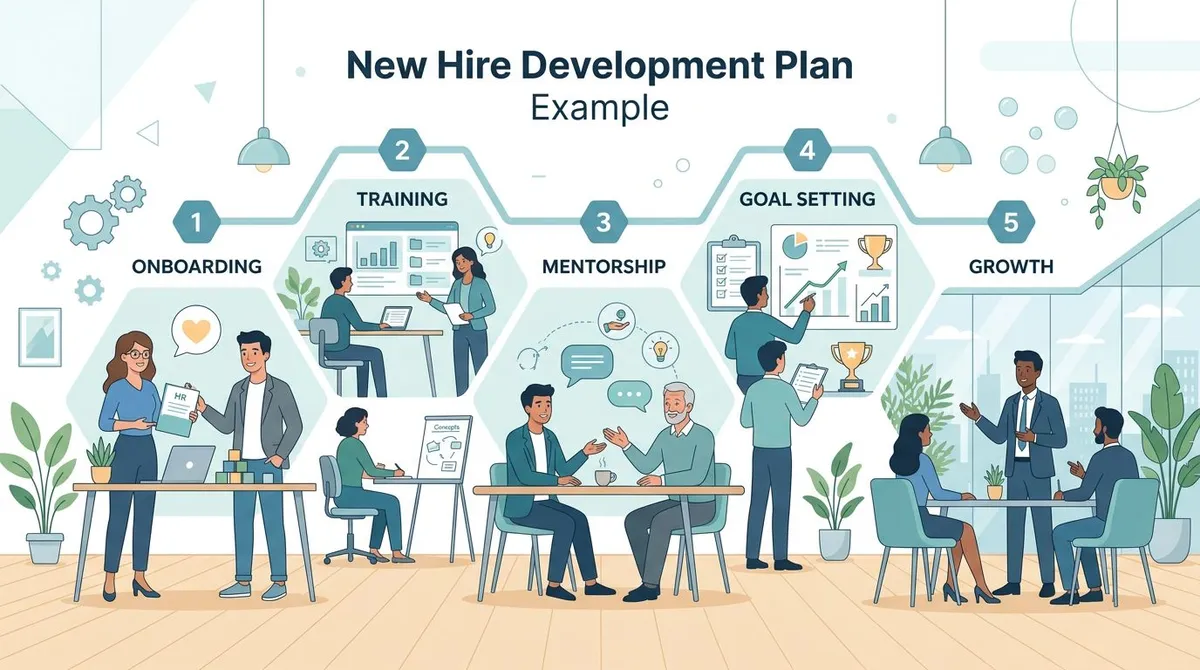
1. New Hire (First 90 Days)
Pair this with your new hire onboarding checklist for best results.
Employee: Sarah, Junior Marketing Lead
Goal 1: Learn core tools (30 days)
- Finish the HubSpot training cert
- Shadow a senior team member on two campaigns
- Review results from last quarter's top project
- Metric: Can run a basic campaign solo
Goal 2: Build key bonds (60 days)
- Have coffee chats with five key people
- Go to cross-team meetings each week
- Meet every department lead at least once
- Metric: Knows who to go to for what
Goal 3: Run a solo project (90 days)
- Lead one small campaign from start to finish
- Share the results with the full team
- Write down lessons for the next person
- Metric: Campaign hits its target numbers
2. Senior Individual Contributor
Employee: Mike, Senior Developer
Goal 1: Build system design skills (6 months)
- Earn the AWS Solutions Architect cert
- Lead one system design review for the team
- Build a new feature that handles 10x the load
- Metric: System scales with no downtime
Goal 2: Start mentoring juniors (ongoing)
- Mentor two junior devs with weekly meetings
- Give one tech talk per month to the team
- Write two posts for the team's engineering blog
- Metric: Mentees hit their own skill targets
Goal 3: Learn the business side (3 months)
- Sit in on product strategy meetings
- Take a short business basics course online
- Add ROI notes to every tech proposal going forward
- Metric: Tech plans show clear business impact
3. First-Time Manager
Employee: Lisa, New Team Lead
Goal 1: Nail the basics (90 days)
- Start weekly 1:1s with every direct report
- Take a management basics course
- Set up a shared team goals tracker
- Metric: Team rates role clarity at 4 out of 5
Goal 2: Run a review cycle (6 months)
- Study the review process end to end
- Do mock tough talks with HR as a coach
- Build a habit of giving feedback each week
- Metric: First review cycle runs smoothly
Goal 3: Think at a higher level (4 months)
- Watch how leaders run strategy meetings
- Draft a 6-month plan for the team
- Present the plan to senior leaders for buy-in
- Metric: Plan gets approved and funded
4. High-Potential Employee
Employee: David, Senior Ops Manager
Goal 1: Own a budget (12 months)
- Take full charge of the department P&L
- Lead a project to cut costs by 10%
- Finish a finance course for non-finance managers
- Metric: Costs drop 10% with no quality loss
Goal 2: Lead across teams (18 months)
- Run a project that spans three departments
- Join an exec-level training program
- Build strong ties with every department head
- Metric: Project hits all its milestones on time
Goal 3: Build an outside profile (24 months)
- Speak at two industry events this year
- Publish articles in trade journals or blogs
- Join an industry advisory group
- Metric: Gets invited to top conferences
5. Specialist Growth Plan
Employee: Jen, UX Designer
Goal 1: Master user research (8 months)
- Earn a UX research certification
- Run a real-world user study in the field
- Show findings to the exec team in a formal review
- Metric: Research shapes the product roadmap
Goal 2: Build a design system (12 months)
- Create a company-wide set of reusable parts
- Write clear docs for every pattern and style
- Train the dev team on how to use it all
- Metric: Dev time drops by 30%
Goal 3: Work better across teams (6 months)
- Join sprint planning with the engineers
- Team up with marketing on brand projects
- Host a monthly design review with product leads
- Metric: Other teams ask for design input early
How to Create a Plan in 6 Steps
Step 1: Check Current Skills
Start by mapping what the person can do today. Use more than one method to get the full picture:
- A self-check form the person fills out on their own
- Peer feedback from the people they work with daily
- Notes from the manager based on real-world work
- Data from past performance reviews
Don't just look for gaps. Note strengths, too. Great plans build on what's already working.
Step 2: Match Personal and Business Goals
Sit down for an honest career chat. Ask what they want in two to five years. Then map that to what the company needs right now.
The sweet spot is where both goals overlap. That's where the plan should focus. If goals don't match, be upfront. A lateral move might work. A stretch project might close the gap. But false promises will backfire.
Step 3: Set SMART Goals
Vague goals fail every time. Look at this pair:
- ❌ "Get better at project management"
- ✅ "Earn PMP cert and lead a $100K project in 8 months"
Each goal needs a number and a date. Tie it to a real business result when you can. That turns a wish into a plan.
Step 4: Mix Up the Learning
Don't just send people to courses. Use the 70-20-10 rule:
- 70% learning by doing — stretch tasks, new projects, job shadowing, temp roles
- 20% learning from others — mentors, peer groups, coaching, real-time feedback
- 10% formal training — courses, books, certs, events
For remote teams, online courses and virtual mentoring work great. Set up weekly video coaching calls. Distance doesn't have to slow growth.
Step 5: Commit Real Support
Plans fail fast without real backing. Make sure each person has:
- Time — set hours each week just for learning, with no meetings booked
- Budget — even $500 to $2,000 a year can go a long way
- Manager check-ins — real talks, not just a box to tick
- A peer network — learning groups, mentors, or study partners
A plan without support is just a piece of paper. With support, it's a promise.
Step 6: Review and Update Often
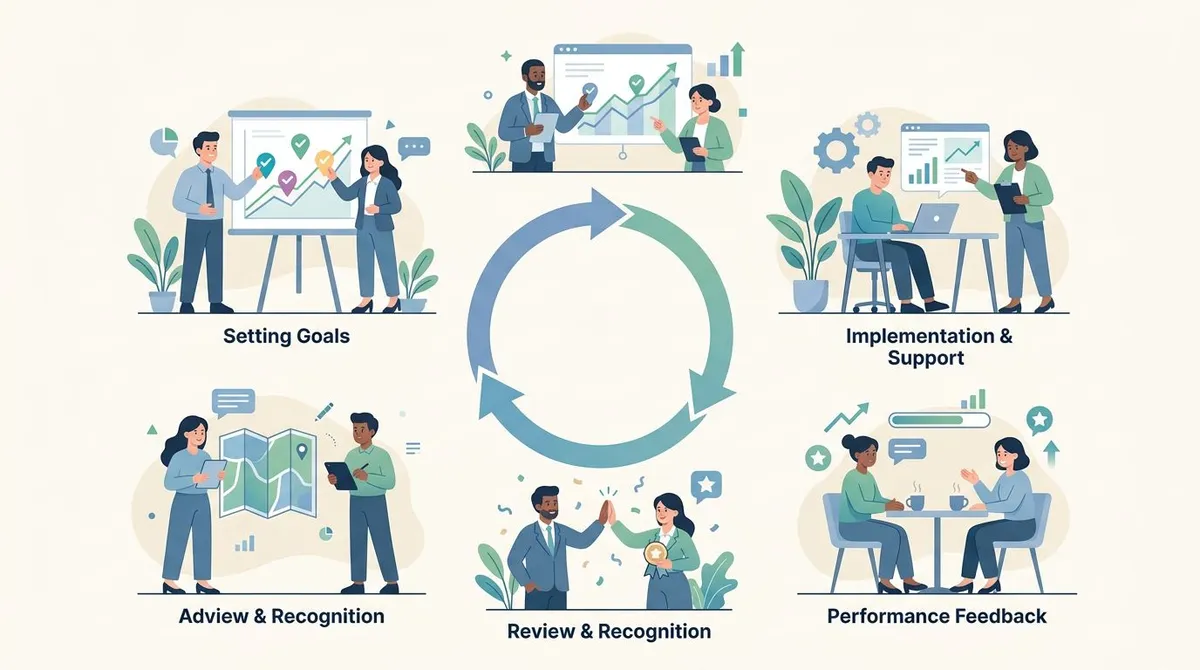
Plans must change as people grow. Treat them like living documents.
- Monthly: Quick 15-minute check on wins and blockers
- Quarterly: Formal 30- to 60-minute review and goal tweaks
- Annual: Full reset linked to the yearly performance review
Don't wait for a set date if something big changes. A new role, a big project, or a company shift all call for a fast update.
Individual Plan vs. Team Plan
Not every plan should be personal. Sometimes the whole team needs to grow in the same way.
Use a personal plan when:
- Someone is getting ready for a promotion
- One person has a unique skill gap to close
- A team member wants to change career paths
- You're working through a performance issue
Use a team plan when:
- You're rolling out new tools or systems
- The team needs shared skills for a big project
- You want to boost how the group works together
- You need steady quality across all team members
Use both when one person's growth helps the whole team. That's the best setup of all.
How to Track Development Plans
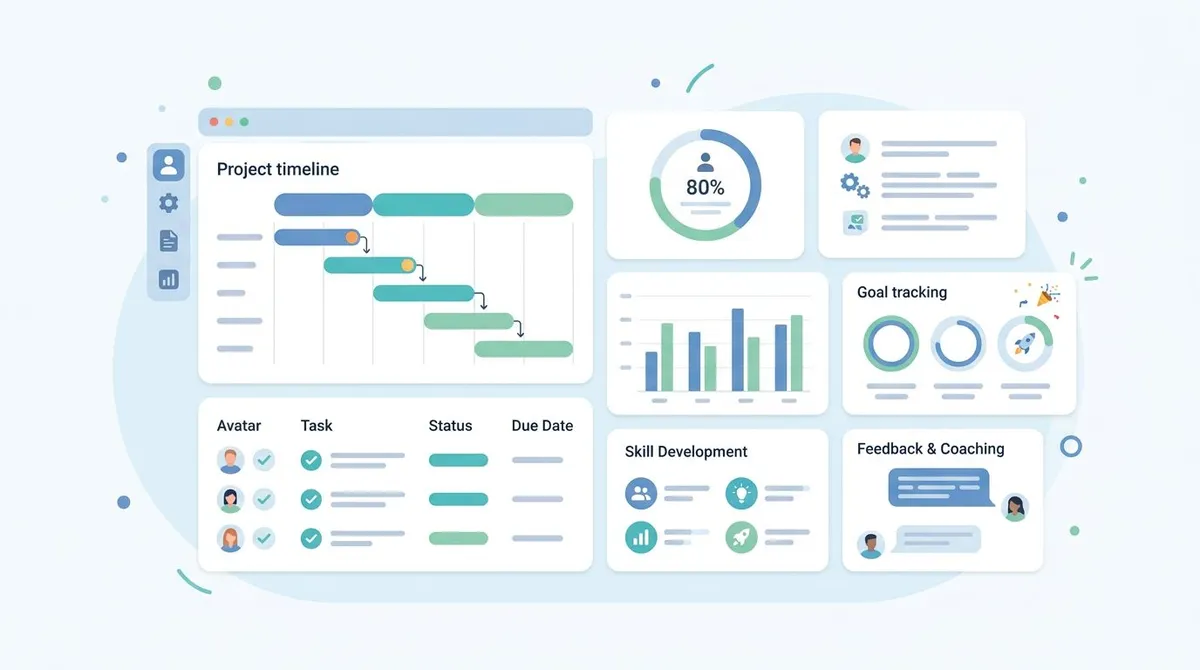
You don't need pricey software. But you do need a system that people follow.
Basic options that work:
- A shared Google Sheet with the template above
- A Trello or Asana board for each person's actions
- A shared doc for plan drafts and progress notes
Better options for growing teams:
- An HR tool with goal tracking built in
- Tiny Team links growth goals to employee profiles in one spot
- An all-in-one system that ties reviews, records, and goals together
Numbers to watch each quarter:
- How many planned tasks get done on time
- Skill scores from checks and peer reviews
- How many people get promoted from within
- Retention rates for staff with active plans vs. those without
These numbers tell you if your time is well spent. Track them. Share them with your team.
Frequently Asked Questions
How often should I update a development plan?
Do quick monthly check-ins. Run a full review each quarter. Reset goals once a year. If a role shifts or the company changes direction fast, update right away. Never wait for a set date when big changes happen.
What if an employee's goals don't fit our needs?
Talk about it openly. Look for spots where goals overlap. Try a side project or a lateral move. If nothing works, support their growth anyway. That builds trust. And trust keeps people longer than you'd think.
How much should small teams spend on growth?
Aim for 1 to 3% of total payroll. But start with free stuff first. Mentoring, job shadowing, and peer learning cost next to nothing. Paid courses run $500 to $5,000 per person per year. Start small. Add more as you see results.
Should plans link to pay and promotions?
Yes, but be careful. Make it clear that growth leads to raises and new roles. But never punish someone for saying "I need help here." The goal is honest growth. Not fear. Keep the tone warm.
How do I handle remote staff development?
Remote teams can grow just as well. Use virtual mentoring and online courses. Hold weekly video coaching sessions. Make sure remote staff get equal access to every growth chance. Location should never be a limit.
What if managers are too busy for this?
Use templates to cut prep time way down. Fold growth chats into the 1:1s you already do. Try peer mentors to share the load. Show managers that growing their team now saves them work later through lower turnover and more capable staff.
A development plan turns good vibes into real results. It boosts retention. It lifts daily output. And it builds the leaders you'll need next year.
Start small. Use the template in this guide. Have one honest career chat this week. That single talk could change everything.
You can track growth goals next to org charts and employee profiles in one place. Don't aim for perfect. Just aim to start.