Performance review examples provide managers with ready-to-use language that transforms the daunting task of employee evaluation into a structured, fair process. Instead of staring at a blank screen wondering how to articulate an employee's contributions or areas for growth, these examples offer proven frameworks that ensure consistent, constructive feedback across your organization.
The challenge most HR managers face isn't knowing whether an employee performed well—it's finding the right words to communicate that assessment clearly and professionally. Generic comments like "good job" or "needs improvement" fail to provide the specific, actionable feedback that drives employee development and organizational growth.

Why Performance Review Examples Matter for HR Success
Writing effective performance reviews is both an art and a science. The best performance evaluations combine objective observations with constructive guidance, creating a roadmap for future success rather than simply documenting past performance.
When you use proven performance review templates and examples, you achieve several critical objectives. First, you maintain consistency across all employee evaluations, ensuring that similar performance receives similar recognition or coaching. This consistency protects your organization from potential bias claims while building trust in your review process.
Second, well-crafted performance review comments save significant time for busy managers. Rather than crafting unique feedback from scratch for each employee, managers can adapt proven phrases to specific situations, allowing them to focus on the substance of feedback rather than the structure. If you need a complete framework to build on, our employee review template provides a ready-made starting point.
Most importantly, structured performance review examples help ensure that feedback is both specific and actionable. Instead of vague observations, these templates guide managers toward concrete examples and clear next steps.
According to the Society for Human Resource Management (SHRM), effective performance reviews should be conducted regularly and focus on specific, measurable outcomes rather than personality traits.

Essential Components of Effective Performance Reviews
Every comprehensive performance review should address five core competency areas: job performance and results, collaboration and teamwork, communication skills, professional development, and leadership potential. Each area requires different types of observations and feedback approaches.
Job performance and results focus on measurable outcomes and goal achievement. This section should reference specific projects, metrics, and deadlines to provide concrete evidence of an employee's contributions. The most effective comments in this category combine quantitative data with qualitative observations about work quality and consistency.
Collaboration and teamwork evaluations examine how well an employee works with colleagues, contributes to team goals, and supports organizational culture. These assessments often reveal an employee's true value to the organization, as technical skills mean little without the ability to work effectively with others.
Communication skills encompass both written and verbal abilities, including presentation skills, active listening, and the ability to explain complex concepts clearly. Strong communicators often become natural leaders, making this competency area particularly important for succession planning.
Professional development comments should acknowledge an employee's growth efforts, learning achievements, and potential for advancement. This forward-looking perspective helps employees understand their career trajectory while identifying specific skills or experiences needed for future roles.
Copy-Paste Performance Review Examples by Category
Outstanding Performance Examples
Project Management and Results:
- "[Employee name] consistently exceeds project deadlines while maintaining exceptional quality standards. Their recent [specific project] was completed 15% under budget and two weeks ahead of schedule, demonstrating excellent resource management and planning skills."
- "Demonstrates outstanding accountability by proactively identifying and resolving project obstacles before they impact timelines. Their forward-thinking approach prevented three major delays this quarter."
- "Shows exceptional attention to detail in all deliverables. [Employee name]'s work requires minimal revision and serves as a quality benchmark for the team."
Leadership and Initiative:
- "Naturally emerges as a team leader during challenging projects, providing clear direction and motivation to colleagues. Their guidance was instrumental in the successful completion of [specific project]."
- "Consistently identifies process improvement opportunities and takes ownership of implementing solutions. Their initiative resulted in a 20% efficiency gain in [specific area]."
- "Mentors newer team members with patience and expertise, contributing significantly to their rapid onboarding and skill development."
Problem-Solving and Innovation:
- "Approaches complex challenges with creative thinking and systematic analysis. [Employee name]'s innovative solution to [specific problem] saved the company [specific amount/percentage] and improved [specific outcome]."
- "Demonstrates exceptional critical thinking skills by analyzing problems from multiple angles before proposing solutions. Their recommendations consistently prove both practical and effective."
Solid Performance Examples
Reliable Contributor:
- "[Employee name] consistently meets performance expectations and demonstrates reliable execution of assigned responsibilities. Their steady contributions provide valuable stability to team operations."
- "Shows strong technical competence in [specific area] and delivers quality work within established timelines. Colleagues frequently seek their input on [relevant topics]."
- "Maintains positive working relationships with team members and demonstrates willingness to assist others when needed. Their collaborative approach enhances overall team effectiveness."
Areas of Strength:
- "Excels in [specific skill/area] and has become the team's go-to resource for related questions and challenges. Their expertise contributes significantly to project success."
- "Demonstrates strong analytical skills when reviewing [specific type of work/data]. Their insights often reveal opportunities or risks that others might overlook."
- "Shows excellent customer service orientation, consistently receiving positive feedback from internal and external clients."
Performance Improvement Examples
Areas Requiring Development:
- "Would benefit from developing stronger project planning skills to improve deadline management. Recommend exploring project management training or mentoring opportunities to build these capabilities."
- "Should focus on enhancing communication clarity, particularly when explaining technical concepts to non-technical stakeholders. Consider joining presentation skills workshops to build confidence and effectiveness."
- "Needs to strengthen attention to detail in routine tasks. Implementing a personal quality checklist could help ensure consistent accuracy in all deliverables."
Constructive Guidance:
For more examples of developmental feedback phrasing, check out our dedicated constructive feedback examples collection.
- "Has valuable ideas but should work on presenting them more concisely in meetings. Practicing key message preparation before discussions would help ensure important points are communicated effectively."
- "Shows potential for growth in [specific area] but requires additional experience and training to reach full proficiency. Recommend partnering with [colleague/mentor] to accelerate learning."
- "Would benefit from taking greater initiative in problem-solving rather than always seeking guidance. Building confidence through smaller independent projects could help develop this skill."
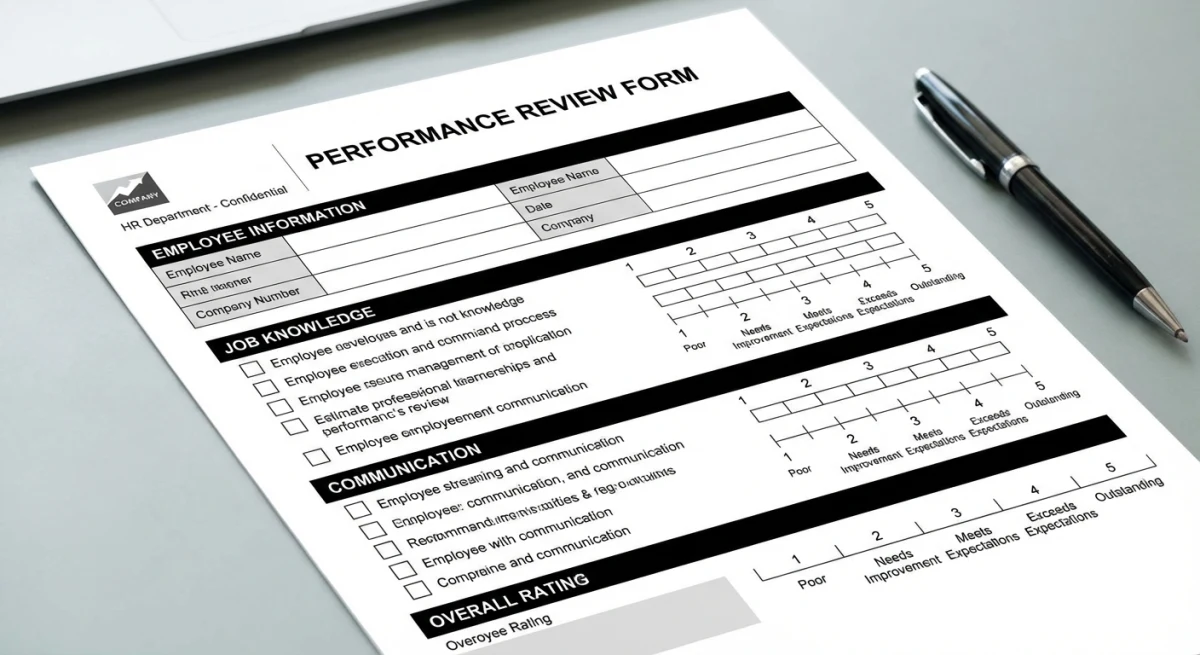
Performance Review Templates by Role Type
Individual Contributor Template
Overall Performance Summary: "[Employee name] has [exceeded/met/partially met] expectations during this review period, demonstrating [specific strengths] while showing progress in [development areas]. Their contributions to [specific projects/areas] have been [description of impact]."
Key Accomplishments:
- Successfully [specific achievement with quantifiable result]
- Contributed to [team goal/project] by [specific actions]
- Developed skills in [area] as evidenced by [specific example]
Areas for Growth:
- Focus on [specific skill/behavior] by [suggested approach/timeline]
- Seek opportunities to [specific development activity]
- Continue building expertise in [area] through [recommended method]
Goals for Next Period:
- [Specific, measurable goal with deadline]
- [Professional development objective]
- [Performance improvement target]
Need help writing effective objectives? Our SMART goals examples for work guide walks through goal-setting best practices with ready-to-use templates.
Manager Evaluation Template
Leadership Effectiveness: "[Manager name] demonstrates [strong/developing/needs improvement] leadership skills through their approach to [specific examples]. Their team [specific outcomes/feedback] indicates [assessment of management effectiveness]."
Team Development:
- Provides [description of mentoring/coaching approach]
- Supports team growth through [specific examples]
- Creates team environment that [specific cultural outcomes]
Strategic Contribution:
- Aligns team objectives with organizational goals by [specific methods]
- Demonstrates business acumen through [specific examples]
- Contributes to strategic planning through [specific involvement]
Advanced Performance Review Strategies
The most effective performance reviews go beyond individual assessment to create development roadmaps that align personal growth with organizational objectives. This strategic approach requires HR managers to think beyond current performance toward future potential and organizational needs.
Competency-Based Evaluation Framework:
Creating a standardized competency framework ensures that all employees are evaluated against consistent criteria while allowing for role-specific requirements. Core competencies typically include technical skills, interpersonal effectiveness, leadership potential, and cultural alignment.
When implementing competency-based reviews, provide specific behavioral examples for each competency level. For instance, "communication skills" might range from "clearly explains ideas to immediate colleagues" at the basic level to "effectively presents complex information to executive leadership" at the advanced level.
360-Degree Feedback Integration:
Modern performance reviews incorporate input from multiple sources to provide a comprehensive view of employee performance. This approach includes self-assessment, peer feedback, subordinate input (for managers), and customer feedback when relevant. For specific prompts to use in multi-rater reviews, see our guide on 360 feedback questions.
The key to successful 360-degree feedback lies in proper preparation and clear communication about the process. Participants need to understand that feedback should be specific, constructive, and focused on behaviors rather than personality traits.
Performance Review Best Practices and Common Pitfalls
Documentation and Legal Considerations:
Every performance review comment should be supportable with specific examples and observable behaviors. Avoid subjective language like "has a bad attitude" in favor of specific behavioral descriptions like "frequently interrupts colleagues during meetings" or "responds defensively when receiving feedback."
Maintain detailed documentation throughout the review period rather than relying on memory during review season. Keep notes on significant achievements, missed deadlines, customer feedback, and professional development activities.
Creating Actionable Development Plans:
The most valuable performance reviews conclude with clear, specific development plans that outline exactly what success looks like and how it will be measured. Rather than suggesting that an employee "improve communication skills," provide specific actions like "complete presentation skills training by [date]" and "seek feedback from three colleagues after each team presentation."
Development plans should include both short-term tactical improvements and longer-term strategic growth opportunities. This dual focus helps employees see immediate relevance while building toward future career advancement.
The U.S. Department of Labor emphasizes that employee development programs should align with both individual career goals and organizational objectives to maximize effectiveness.

Performance Review Conversation Guidelines
The written performance review is only part of the evaluation process. The accompanying conversation often determines whether the review motivates positive change or creates defensiveness and disengagement.
Preparation for Review Conversations:
Schedule review meetings well in advance and provide employees with their written evaluation at least 24 hours before the meeting. This allows them to process the feedback and prepare thoughtful responses rather than reacting defensively in the moment.
Prepare specific examples for every major point in the review, whether positive recognition or areas for improvement. Employees need concrete instances to understand exactly what behaviors to continue or change.
Conducting Effective Review Discussions:
Begin every review conversation by acknowledging the employee's contributions and expressing appreciation for their efforts. Even when significant improvement is needed, starting with genuine recognition creates a foundation for constructive dialogue.
Use the "SBI" model for delivering feedback: Situation (when and where), Behavior (what specifically occurred), and Impact (the result or consequence). This approach keeps feedback objective and actionable while avoiding personal attacks or vague generalizations.
Allow plenty of time for employee input and questions. The most productive review conversations are dialogues, not monologues. Employees often have valuable context about challenges they faced or resources they needed, which can inform future support and goal-setting.
Technology Tools for Performance Review Management
Modern HR technology has transformed performance review administration from a paper-intensive annual ritual to an ongoing dialogue supported by sophisticated tracking and analytics tools.
Performance Management Platforms:
Contemporary performance management platforms like Tiny Team's performance review feature enable continuous feedback collection, goal tracking, and progress monitoring throughout the year. These systems reduce the administrative burden on HR teams while providing managers with real-time insights into team performance.
When selecting performance management technology, prioritize platforms that integrate with your existing HR systems and provide customizable templates that align with your organization's competency framework and values. For a comparison of top tools, see our roundup of the best performance review software.
The most effective platforms also include features for peer feedback collection, self-assessment tools, and automated reminders that keep the review process on track without requiring constant HR intervention.
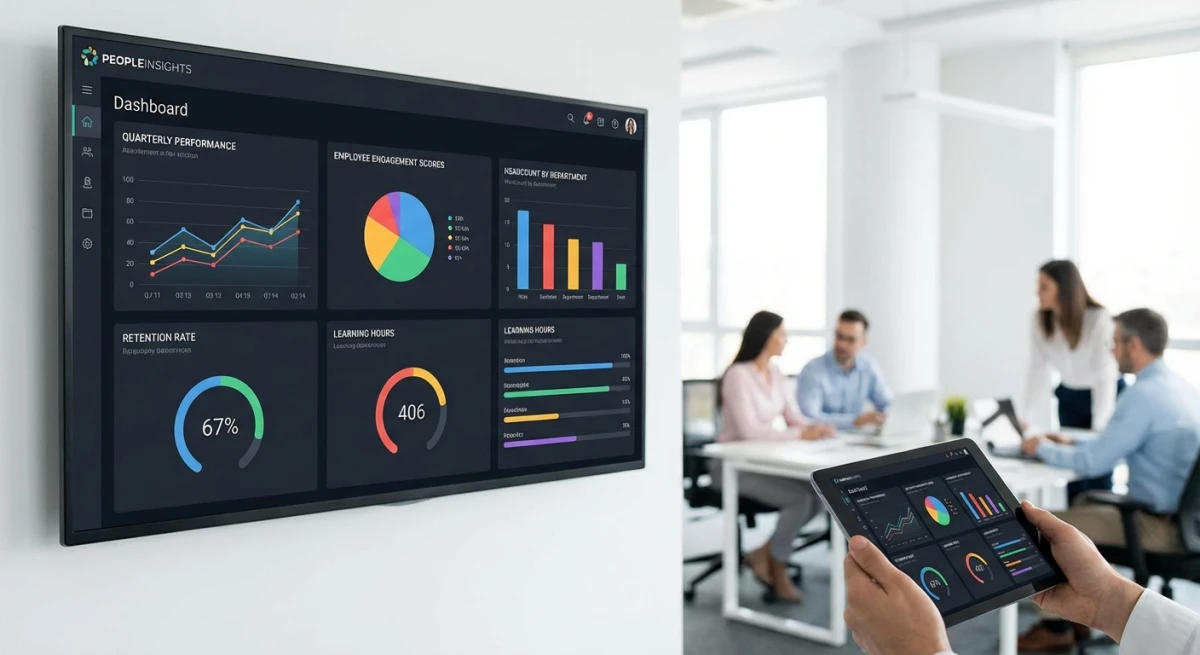
Research from Harvard Business Review shows that organizations using continuous performance management see 40% higher employee engagement and 24% lower turnover rates compared to those relying solely on annual reviews.
Frequently Asked Questions
How often should performance reviews be conducted?
Most organizations benefit from quarterly check-ins combined with comprehensive annual reviews. Quarterly meetings allow for timely course correction and continuous development, while annual reviews provide opportunity for thorough evaluation and strategic planning. Companies with rapidly changing roles or objectives may prefer monthly touchpoints with semi-annual comprehensive reviews.
What's the ideal length for performance review comments?
Effective performance review comments typically range from 50-150 words per section, providing enough detail to be meaningful while remaining concise enough for busy managers to complete. Each comment should include at least one specific example and, when applicable, suggested next steps or development opportunities.
How do you handle disagreements during performance reviews?
When employees disagree with their evaluation, focus on specific behaviors and documented examples rather than debating subjective assessments. If performance gaps are serious, a performance improvement plan may be the appropriate next step. Ask open-ended questions to understand their perspective, acknowledge valid points, and be prepared to adjust ratings when presented with new information. Document any disagreements and follow up with HR if resolution requires additional support.
Can self-evaluations improve the review process?
Yes — asking employees to complete a self-assessment before their review leads to more productive conversations. Self-evaluations surface accomplishments managers may have missed and help employees take ownership of their development. For ready-to-use prompts and formats, see our self-evaluation examples guide.
Should performance reviews be tied to salary decisions?
While performance reviews inform compensation discussions, the most effective approach separates the evaluation conversation from salary negotiations. This allows employees to focus on development feedback without becoming defensive about potential financial implications. Schedule compensation discussions 1-2 weeks after performance review meetings to maintain focus on growth and development.
How do you write performance reviews for remote employees?
Remote employee reviews require extra attention to communication patterns, virtual collaboration skills, and self-management abilities. Focus on measurable outcomes rather than observable behaviors, and include feedback about digital communication effectiveness, meeting participation, and proactive status updates. Consider input from multiple team members who interact with the employee in virtual settings.
What should managers do if they lack specific examples for performance reviews?
Managers who struggle with specific examples should implement regular documentation practices throughout the year, such as weekly one-on-one notes or quarterly achievement tracking. For immediate situations, gather input from colleagues who work closely with the employee and focus on recent, memorable interactions rather than attempting to recall events from months ago.
Performance reviews represent one of the most impactful tools in an HR manager's arsenal for driving employee development and organizational success. By using structured examples, maintaining consistent evaluation criteria, and focusing on specific, actionable feedback, you can transform performance reviews from administrative burden into powerful catalysts for growth.
The templates and examples provided here offer a starting point, but the most effective performance reviews are tailored to your organization's culture, values, and specific role requirements. Invest time in customizing these frameworks to reflect your company's unique priorities and communication style.
Remember that performance reviews are ultimately about people and their potential. When approached with genuine care for employee development and organizational improvement, they become valuable conversations that strengthen relationships while driving results.
Effective performance reviews work best as part of a comprehensive people management system that tracks employee development, maintains detailed records, and supports ongoing communication. For new organizations, establishing clear performance standards should be part of your employee handbook to ensure consistency and transparency.
Tools like Tiny Team's performance review feature can streamline the administrative aspects, allowing you to focus on what matters most: helping your people grow and succeed.