A new hire checklist is a structured list of tasks that HR managers and team leads complete before, during, and after a new employee's first day. It ensures nothing falls through the cracks — from paperwork and equipment setup to introductions and goal-setting — so every new team member feels welcome and productive from the start.
Getting onboarding right matters more than most companies realize. According to the Society for Human Resource Management (SHRM), organizations with a standardized onboarding process see 50% greater new-hire retention. Yet Gallup research found that only 12% of employees strongly agree their company does a great job onboarding new hires.
That gap represents a massive opportunity. This guide gives you a complete, actionable new hire onboarding checklist you can adapt to your team — whether you're onboarding your fifth employee or your fiftieth.
Why Employee Onboarding Matters
A 15-person marketing agency in Portland learned this lesson the hard way. They hired three designers in one quarter without a formal onboarding process. Two quit within 90 days, citing confusion about expectations and feeling "thrown into the deep end." The third stayed — but only because her manager happened to spend extra time walking her through projects informally.
The cost of replacing an employee ranges from 50% to 200% of their annual salary, according to SHRM's human capital benchmarking report. For a $60,000 role, that's $30,000 to $120,000 in lost productivity, recruiting fees, and training time.
Strong onboarding delivers three measurable outcomes:
| Outcome | Impact |
|---|---|
| Faster time-to-productivity | New hires reach full productivity 34% faster with structured onboarding |
| Higher retention | 69% of employees stay 3+ years if well onboarded |
| Better engagement | Onboarded employees are 2.6x more likely to be "extremely satisfied" |
The bottom line: every hour you invest in onboarding saves weeks of confusion, rework, and potential turnover down the road.
Pre-Boarding Checklist (Before Day One)
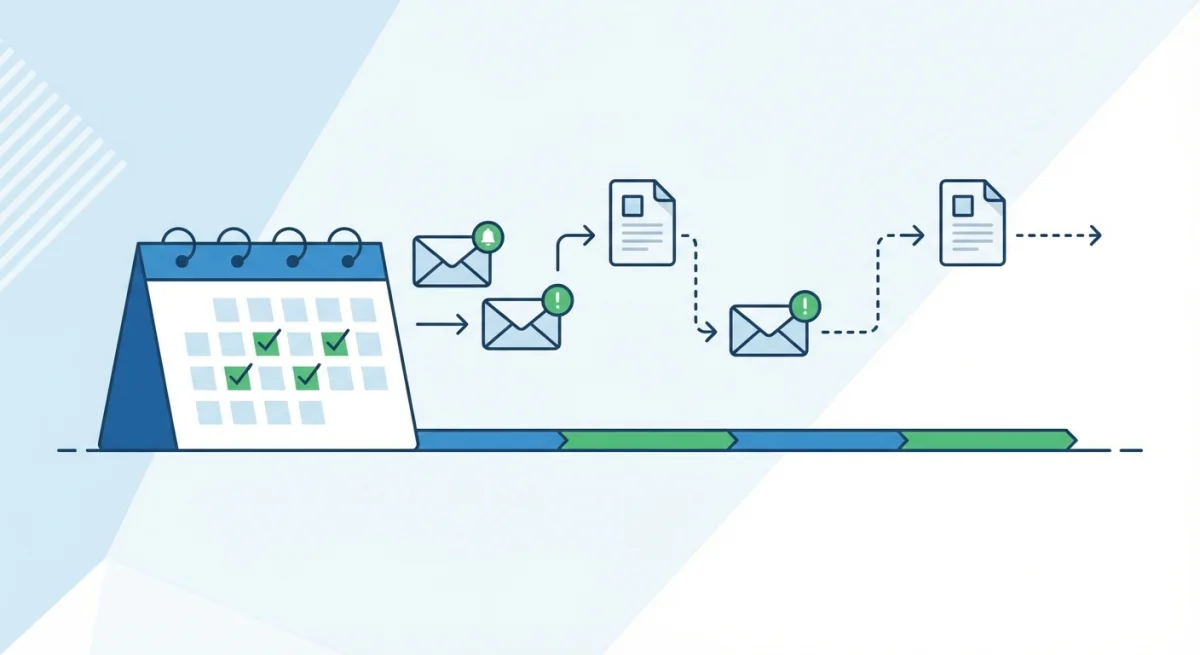
Great onboarding starts before the new hire walks through the door. Pre-boarding is the window between a signed offer letter and the first day — typically one to two weeks.
Administrative Tasks
- Send the offer letter and collect signed documents — Employment agreement, NDA, non-compete (if applicable), and tax forms (W-4, I-9 in the US).
- Set up payroll — Add the new hire to your payroll system with correct start date, salary, and tax withholding.
- Order equipment — Laptop, monitor, keyboard, mouse, headset. For remote hires, ship everything to arrive two days before start.
- Create accounts — Email, Slack/Teams, project management tools, HR platform, and any role-specific software.
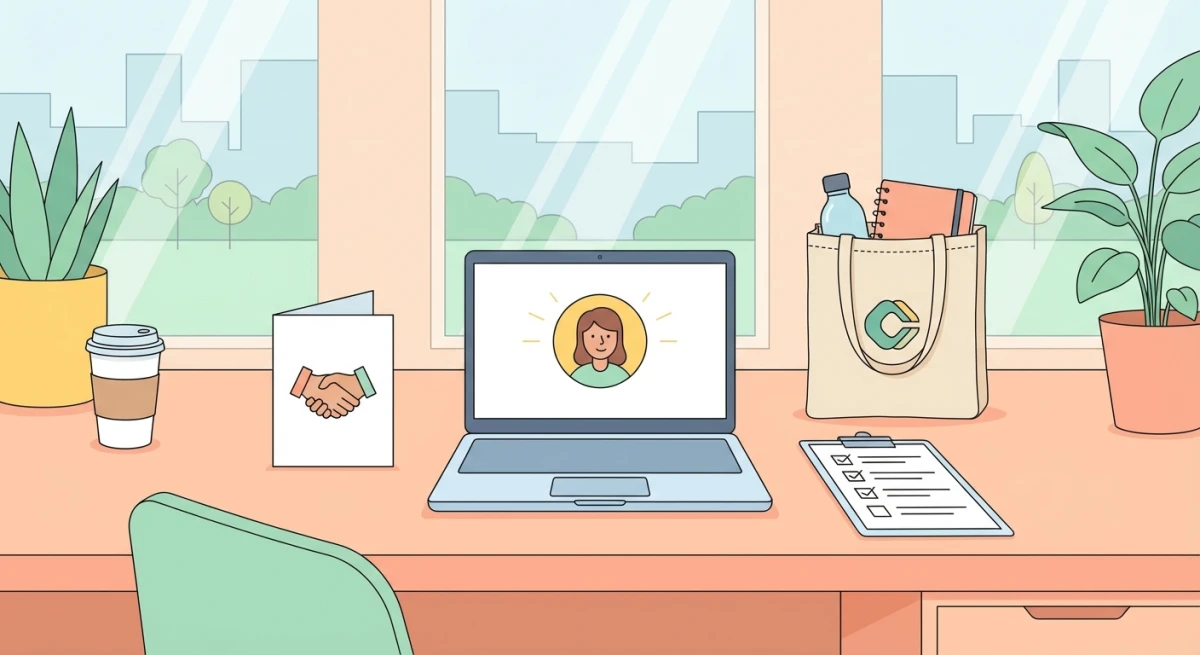
- Prepare their workspace — Clean desk, chair adjusted, supplies stocked. Small touches like a welcome card or company swag bag make a real difference.
Communication Tasks
- Send a welcome email with first-day logistics: start time, dress code, parking, who to ask for at reception.
- Share the employee handbook or link to your company wiki so they can browse at their own pace.
- Notify the team about the new hire — name, role, start date, and a fun fact if the new hire is comfortable sharing one.
- Assign an onboarding buddy (more on this below).
Manager Prep
Your hiring manager should block 30 minutes to prepare a first-week schedule. This isn't just meetings — it's a mix of introductions, training sessions, and breathing room. Nobody wants a wall-to-wall calendar on day one.
Pro tip: Create a shared document with the new hire's first-week schedule. Update it as things change. Transparency reduces anxiety.
First Day Onboarding Tasks
The first day sets the tone for everything that follows. The goal isn't to cram in every piece of information — it's to make the new hire feel welcome, oriented, and excited.
Morning (First 3 Hours)
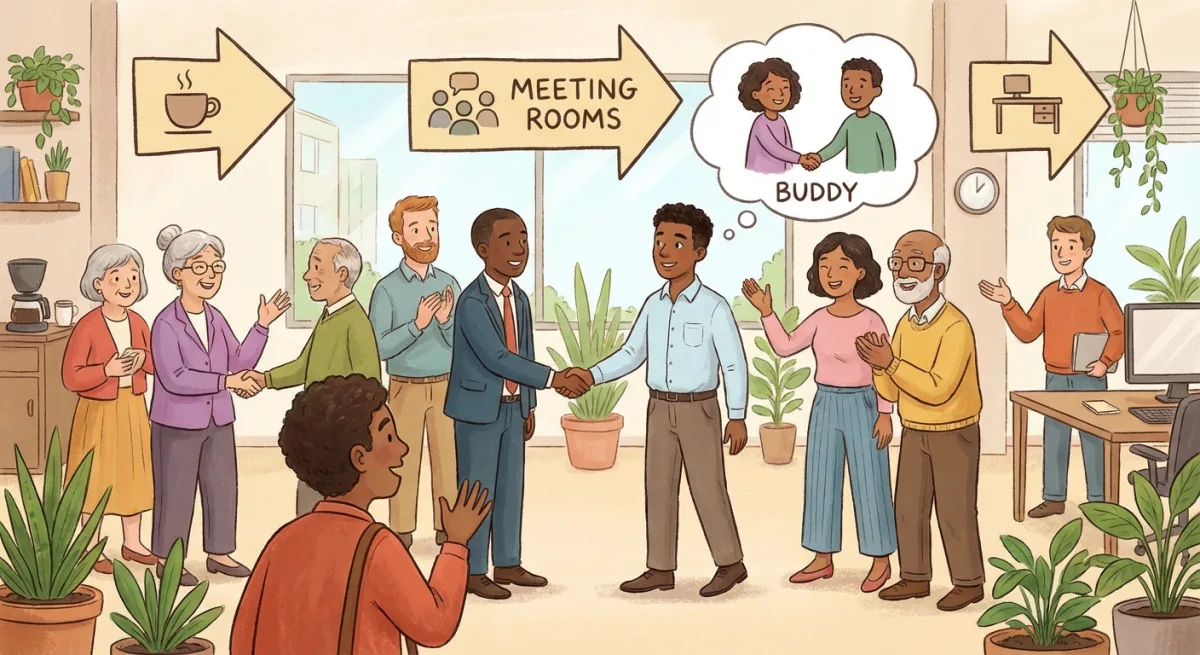
Step 1: Warm welcome. Greet them personally. Don't let them stand awkwardly in a lobby. Their manager or onboarding buddy should meet them at the door (or be the first person on their video call for remote hires).
Step 2: Workspace and equipment check. Walk them to their desk. Confirm everything works — laptop powers on, email is accessible, Slack is connected. Nothing kills first-day energy like spending two hours with IT.
Step 3: HR essentials. Complete remaining paperwork, review benefits enrollment deadlines, and walk through company policies. Keep this under 45 minutes. You can cover details later.
Step 4: Team introduction. A quick round of introductions with immediate team members. Keep it casual — names, roles, and one thing they're currently working on.
Afternoon (Remaining Hours)
Give the new hire structured exploration: a 30-minute company overview (mission, values, org structure), a 30-minute tool walkthrough, buddy lunch, and solo setup time. End the day with a 15-minute manager check-in: What went well? What felt unclear? What do you need for tomorrow?
First Week Onboarding Activities
The first week transitions from "welcome" to "integration." By Friday, the new hire should understand their role, know their team, and have started contributing in small ways.
Day 2–3: Role Clarity
| Activity | Duration | Owner |
|---|---|---|
| Role expectations meeting | 60 min | Direct manager |
| Review current projects and priorities | 45 min | Direct manager |
| Shadow a team member on a typical task | 2 hours | Onboarding buddy |
| Access and explore relevant documentation | 1 hour | Self-directed |
| Intro meetings with cross-functional partners | 30 min each | Manager sets up |
The role expectations meeting deserves special attention. Don't just hand over a job description. Discuss what success looks like at 30, 60, and 90 days. Be specific: "By day 30, you'll have completed your first client report independently."
Day 4–5: First Contributions
Give the new hire a "quick win" — a real but manageable task they can complete by the end of the week. This builds confidence and demonstrates trust.
Examples of good quick wins:
- Update a section of internal documentation
- Join a client call as an observer, then summarize key takeaways
- Fix a small bug or complete a minor design task
- Draft a social media post or internal announcement
Avoid assigning busywork. New hires can tell the difference between meaningful contribution and time-killing exercises.
End-of-Week Reflection
Schedule a 30-minute one-on-one. Use this fill-in-the-blank template:
This week I learned: _______________
I'm most excited about: _______________
I'm still unclear on: _______________
Next week I'd like to: _______________
This gives the manager concrete feedback to adjust the onboarding plan for week two.
First Month Integration

By the end of month one, the new hire should be operating semi-independently. They won't know everything, but they should know where to find answers and who to ask.
Weeks 2–4: From Learning to Independence
Week two is when training gets role-specific. By weeks three and four, gradually shift from "instructor" to "coach." A useful framework:
Week 1: "I do, you watch." Week 2: "We do together." Week 3: "You do, I watch." Week 4: "You do independently."
30-Day Check-In Agenda
- Review initial 30-day goals — what's complete, what's in progress?
- Discuss what's working well and what needs adjustment
- Set goals for days 31–60
- Ask: "On a scale of 1–10, how supported do you feel?" (Anything below 7 needs immediate attention)
- Discuss any concerns about role fit, team dynamics, or workload
90-Day Onboarding Plan
The U.S. Department of Labor considers the first 90 days critical for new employee retention. Your 90-day plan should include formal milestones at 30, 60, and 90 days.
60-Day and 90-Day Milestones
By day 60, the new hire should be delivering work near team pace and navigating processes independently. The 90-day review is a mutual assessment — not a performance review, but a check-in where both manager and employee share feedback on goals, integration, role fit, and resources. Document this conversation as a baseline for the first formal performance review.
Remote Employee Onboarding
Remote onboarding follows the same structure but requires extra intentionality. Ship equipment early, test VPN and software access before day one, and schedule daily video check-ins during the first week. For a deeper dive on managing distributed teams, see our remote team management guide.
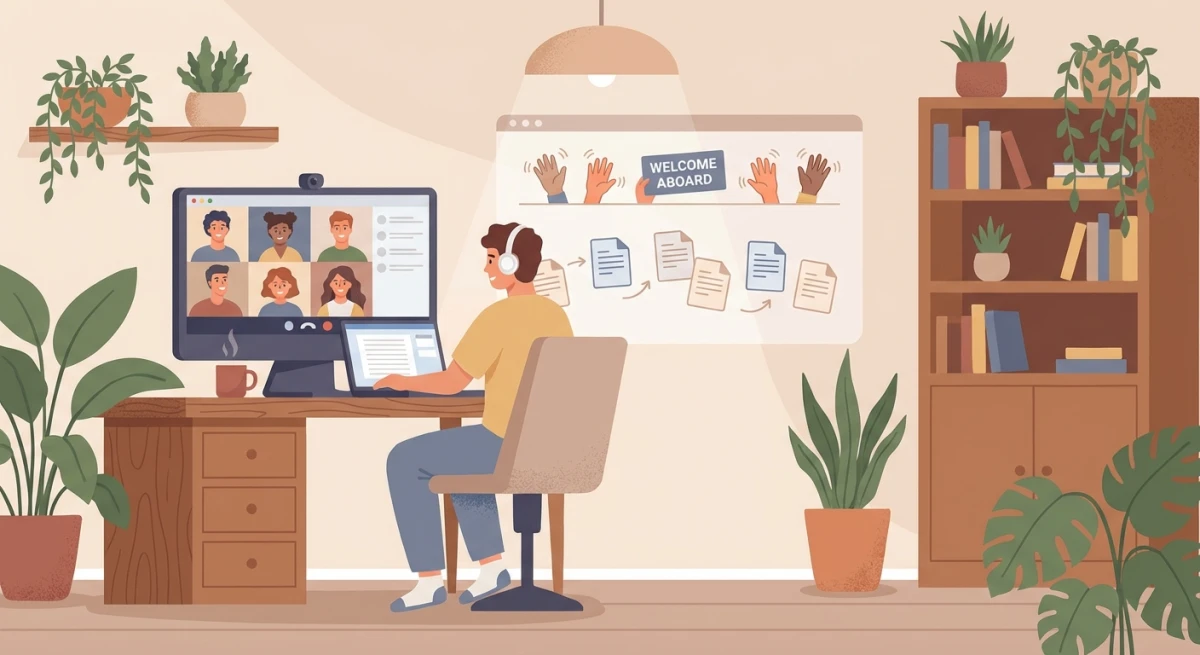
Social connection requires deliberate effort. Schedule virtual coffee chats, assign a buddy who checks in daily, and keep your company documents and internal wiki thorough and current so remote hires can self-serve.
Remote Onboarding Checklist Add-Ons
- Equipment shipped and delivery confirmed 2+ days before start
- All software accounts created and tested
- Video call links sent in advance
- Time zone overlap hours clearly communicated
Onboarding Checklist Template
Here's a condensed, copy-paste-ready checklist you can adapt for your team:
Pre-Boarding (1–2 Weeks Before)
- Offer letter signed and filed
- Tax and legal documents collected
- Payroll setup complete
- Equipment ordered/shipped
- Software accounts created (email, Slack, HR platform, tools)
- Workspace prepared (in-office) or shipment confirmed (remote)
- Welcome email sent with day-one logistics
- Team notified about new hire
- Onboarding buddy assigned
- First-week schedule drafted
Day One
- Personal welcome by manager or buddy
- Equipment and access verified
- HR paperwork and benefits overview completed
- Team introductions done
- Company overview session delivered
- Tools walkthrough completed
- Buddy lunch/coffee scheduled
- End-of-day check-in with manager
Week One
- Role expectations meeting completed
- Current projects and priorities reviewed
- Job shadowing session done
- Cross-functional introductions scheduled
- First "quick win" task assigned
- End-of-week reflection completed
30 / 60 / 90 Days
- 30-day goals set and reviewed
- 60-day milestone assessment
- 90-day formal review completed
- Ongoing 1:1 cadence established
- Training gaps identified and addressed
Onboarding Software That Helps
Manually tracking dozens of onboarding tasks across spreadsheets gets messy fast — especially when you're hiring multiple people at once.
HR platforms designed for small teams handle the heavy lifting. Look for tools that combine people management, document storage, and task tracking in one place. Tiny Team, for example, lets you manage employee profiles, store onboarding documents, and track time-off policies from a single dashboard — free for teams up to 10 people, then $79/month flat for teams up to 50.
The key is choosing a tool that matches your team size. Enterprise platforms like Workday or SAP SuccessFactors are overkill for a 20-person company. You need something that takes minutes to set up, not months.
For a deeper comparison of HR tools, check out our guide to the best HR software for small business.
Measuring Onboarding Success
Track four key metrics: time-to-productivity (30/60/90-day goal completion rates), new hire retention (percentage staying past 90 days and one year), onboarding satisfaction (survey at 30 and 90 days on a 1–10 scale), and manager feedback (are repeated questions decreasing over time?). According to Harvard Business Review, companies extending onboarding beyond the first week see significantly higher retention. When someone does leave, having a solid employee offboarding checklist is equally important.
Frequently Asked Questions
How long should employee onboarding last?
At least 90 days, with many experts recommending a full year of decreasing-intensity check-ins. The first week covers logistics, months two and three focus on skill development, and after 90 days you shift to quarterly reviews.
What's the difference between onboarding and orientation?
Orientation is a one-time event (day one or first week) covering policies and paperwork. Onboarding is the longer process — role-specific training, goal-setting, relationship building, and performance milestones over 90+ days.
Who is responsible for onboarding a new employee?
It's shared: HR handles admin and compliance, the direct manager owns training and check-ins, the onboarding buddy provides informal guidance, and IT ensures equipment and access.
What is an onboarding buddy and why does it matter?
A team member who helps new hires with informal questions they might not ask their manager. Microsoft's research found buddies made new hires 23% more satisfied with onboarding.
What are the biggest onboarding mistakes to avoid?
Five common ones: (1) no structured plan, (2) information overload on day one, (3) skipping pre-boarding, (4) no check-ins after week one, and (5) treating onboarding as HR-only when managers must be involved.