Employee lifecycle management is the strategic approach to guiding people through every stage of their relationship with your company—from first awareness to post-departure alumni status. For small teams, mastering this lifecycle is crucial for sustainable growth and culture development.
Companies that systematically manage the employee lifecycle see 23% lower turnover rates and 18% higher revenue per employee, according to Deloitte research. Small teams especially benefit from this systematic approach because every hire significantly impacts team dynamics and business outcomes.
What Is the Employee Lifecycle?
The employee lifecycle is a framework that maps every touchpoint and experience a person has with your organization, from their first interaction with your brand through their eventual departure and beyond. It's a strategic tool for understanding how to attract, develop, and retain the right people.
Unlike traditional HR approaches that focus on isolated events like hiring or annual reviews, lifecycle management views employment as a continuous journey with multiple interconnected stages. Each stage influences the next, creating either positive momentum that drives engagement and performance or negative cycles that lead to turnover and poor outcomes.
The lifecycle perspective helps small teams think strategically about people decisions rather than just reacting to immediate needs. Instead of panic-hiring when someone quits, lifecycle-focused teams build systems that prevent unwanted departures while naturally attracting strong candidates.
Why Lifecycle Management Matters for Small Teams
Small companies face unique challenges that make lifecycle management especially valuable:
Every hire matters significantly. When your team is 15 people instead of 1,500, a single bad hire or unexpected departure can disrupt operations, damage morale, and strain remaining team members.
Limited resources require efficiency. Small teams can't absorb the costs of high turnover, extended hiring processes, or poor onboarding experiences. Systematic lifecycle management optimizes every interaction to maximize return on people investments.
Culture develops rapidly. In small teams, culture forms quickly and can shift dramatically with each new hire or departure. Lifecycle management helps you scale culture intentionally rather than letting it evolve randomly.
Growth creates complexity. As teams grow from 5 to 50 people, informal relationships and ad-hoc processes break down. Lifecycle frameworks provide structure that scales with your organization.
The 7 Stages of the Employee Lifecycle
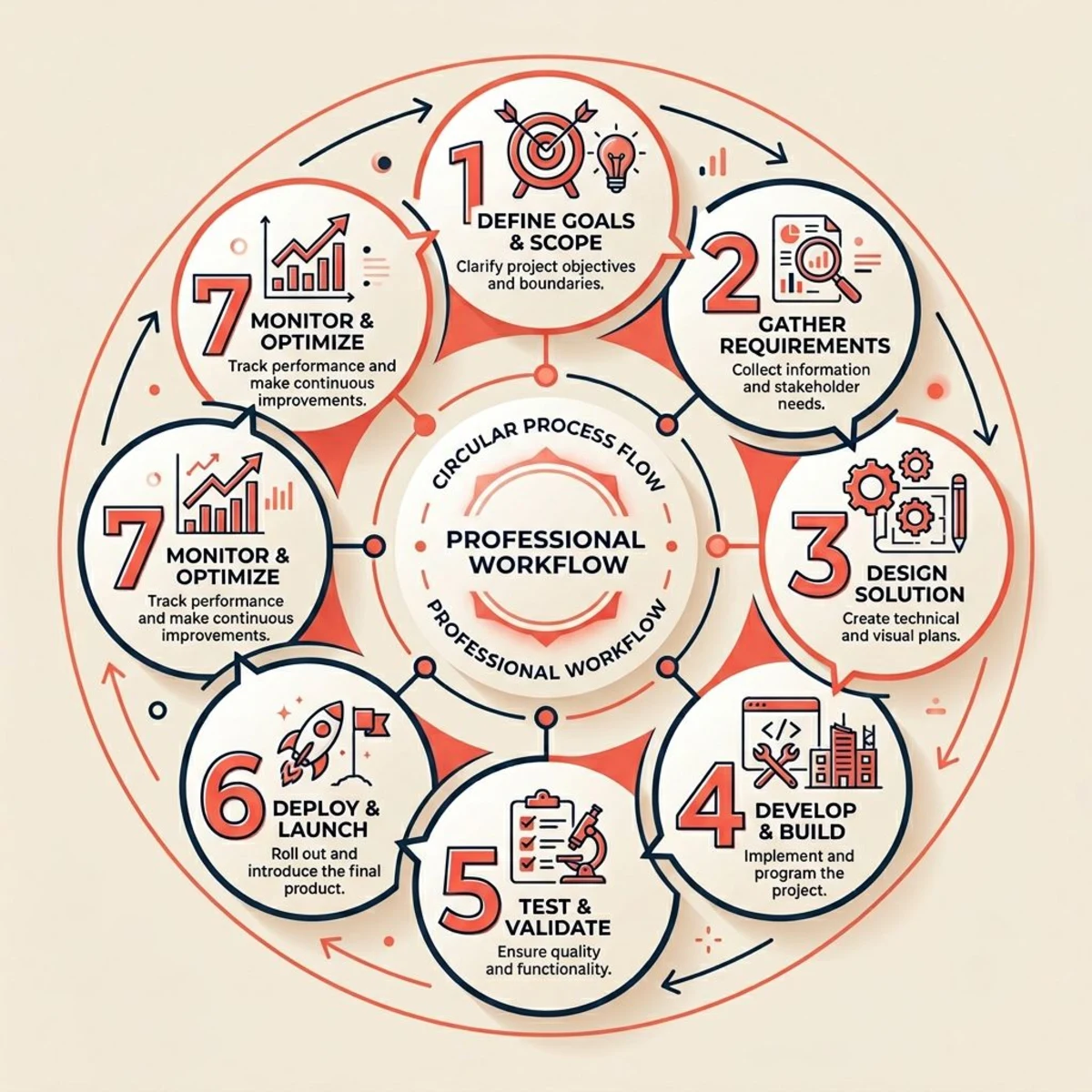
Stage 1: Attraction
Attraction begins long before someone applies for a job. It's how potential employees first learn about your company and decide whether they want to be associated with your brand.
Key activities:
- Employer branding: How your company is perceived as a place to work
- Content marketing: Blog posts, social media, and thought leadership that showcases your culture
- Employee advocacy: Current team members sharing their experiences and referring others
- Community presence: Participation in industry events, conferences, and professional networks
Small team strategies:
- Encourage team members to share work experiences on LinkedIn
- Write authentic blog posts about your company culture and values
- Attend local meetups and industry events where potential candidates gather
- Create compelling job descriptions that sell the opportunity, not just list requirements
Success metrics:
- Source of hire quality (referrals typically perform best)
- Application rate per job posting
- Brand awareness in target talent pools
- Employee referral participation rates
Stage 2: Recruitment
Recruitment transforms attraction into active candidacy. This stage covers everything from job posting through offer acceptance, focusing on identifying and evaluating candidates who'll succeed in your specific context.
Effective recruitment process:
Job Description Design Write job posts that attract the right candidates while deterring poor fits. Include salary ranges, growth opportunities, and realistic day-in-the-life scenarios rather than generic requirement lists.
Structured Interview Process Create consistent evaluation frameworks that reduce bias and improve hiring decisions. Use behavioral questions that reveal how candidates have handled situations similar to what they'll face in your environment.
Candidate Experience Provide clear communication about your process, realistic timelines, and prompt feedback. Remember that every candidate becomes an ambassador for your employer brand, regardless of hiring outcome.
Decision Framework Establish clear criteria for evaluating candidates beyond just technical skills. Consider cultural fit, growth potential, and team dynamics alongside role-specific competencies.
For detailed guidance, see our comprehensive applicant tracking system guide designed for small teams.
Common recruitment mistakes for small teams:
- Moving too quickly due to urgency and missing red flags
- Relying too heavily on "gut feeling" instead of structured evaluation
- Overselling the role during interviews, leading to mismatched expectations
- Focusing only on current skills instead of learning ability and potential
Stage 3: Onboarding
Onboarding shapes new employees' first impressions and sets the foundation for their success. Effective onboarding reduces time-to-productivity while building strong cultural connections.
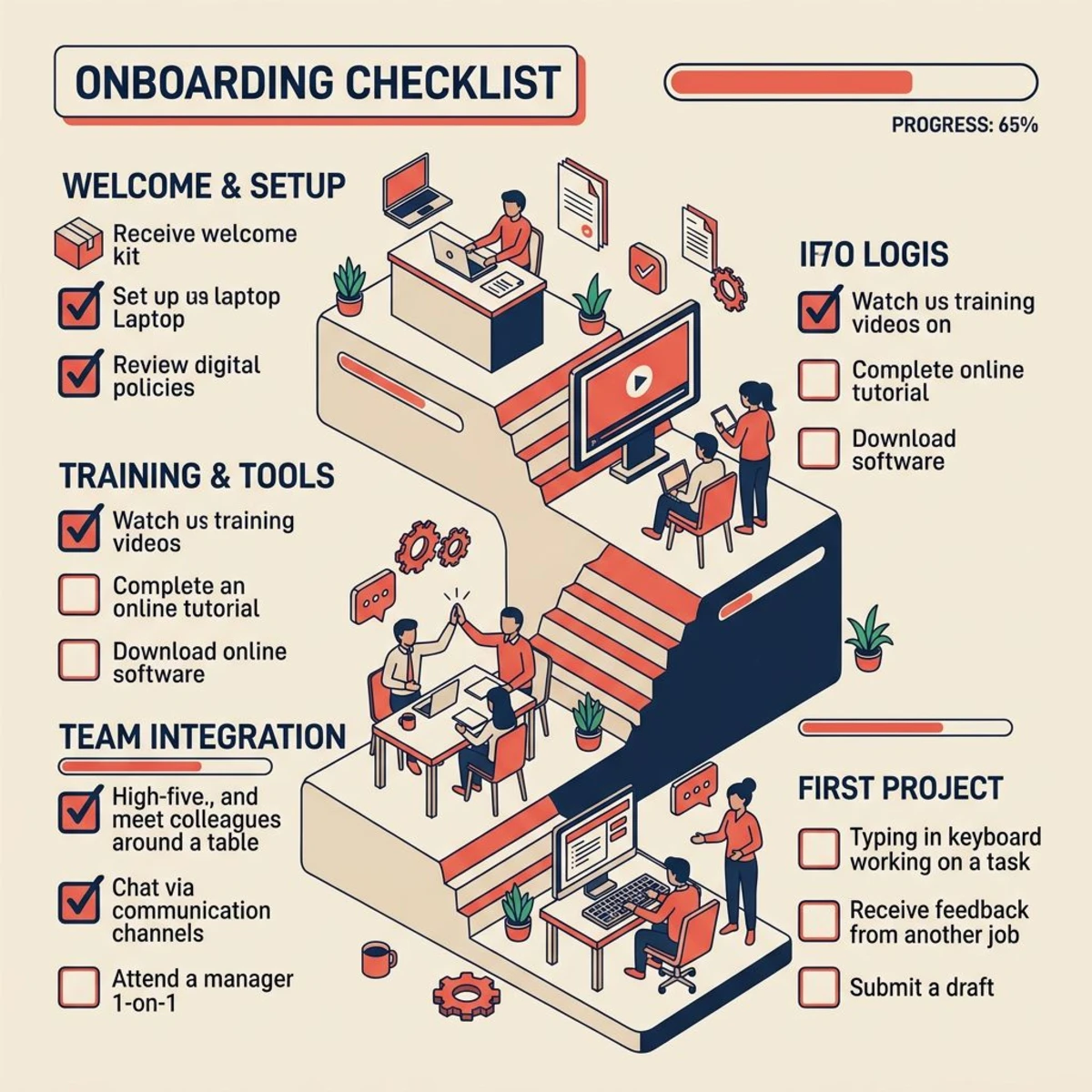
The Critical First 90 Days
Week 1: Foundation
- Welcome package with equipment, access, and first-day logistics
- Manager meeting to discuss role expectations and success criteria
- Team introductions and relationship building
- Basic training on tools, processes, and company information
Month 1: Integration
- Shadow key colleagues to understand workflows and relationships
- Begin contributing to meaningful projects with appropriate support
- Regular check-ins to address questions and provide feedback
- Cultural immersion through team events and informal interactions
Months 2-3: Independence
- Increase responsibility and project ownership
- Provide opportunities to contribute ideas and improvements
- Conduct formal performance and satisfaction reviews
- Create development plan for skills growth and career progression
Onboarding technology stack: Small teams benefit from simple, effective onboarding tools:
- Tiny Team: Centralized onboarding checklists with automated workflows
- BambooHR: Structured onboarding with document management
- Notion or Asana: Project-based onboarding with clear milestones
- Slack: Communication channels for questions and team integration
Research shows that employees who experience structured onboarding are 58% more likely to remain with the organization after three years. For small teams, this retention boost directly impacts stability and growth potential.
Stage 4: Development
Development encompasses all activities that help employees grow their skills, advance their careers, and contribute more effectively to organizational success.
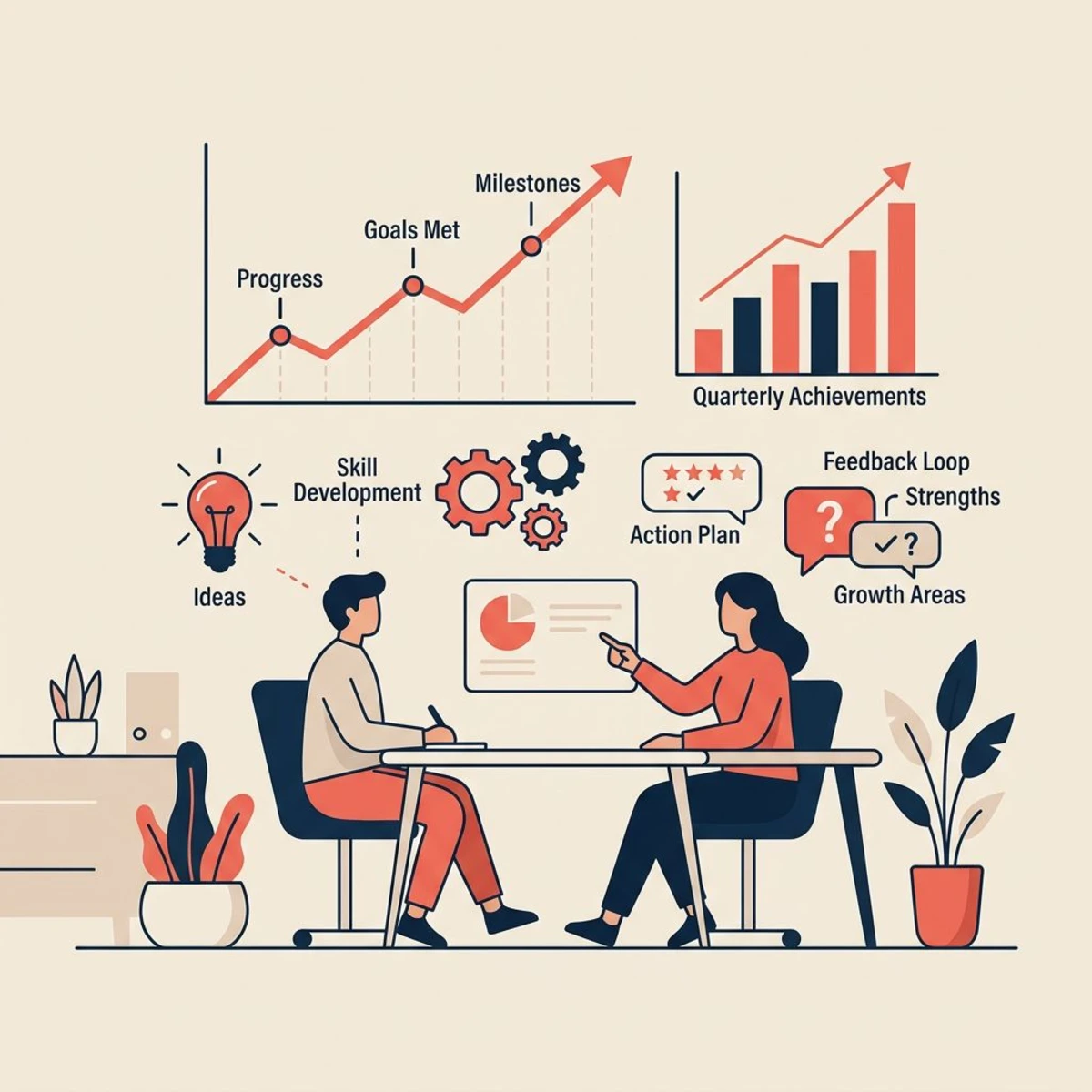
Growth Framework Components
Individual Development Plans Work with each team member to identify their career goals, skill gaps, and learning preferences. Create specific action plans with timelines and success metrics.
Regular Feedback Systems Implement consistent feedback mechanisms that provide ongoing guidance rather than waiting for annual reviews.
Weekly one-on-ones framework:
- Performance discussion: What's working well? What needs adjustment?
- Career development: What skills is the employee trying to build?
- Support needs: How can you better help them succeed?
- Feedback exchange: What can leadership do differently?
Learning and Growth Opportunities
- Conference attendance and industry education
- Cross-training in different departments or skills
- Stretch assignments that build new capabilities
- Mentoring relationships with senior team members
Performance Recognition Acknowledge good work consistently and meaningfully. Recognition doesn't always require budget—public acknowledgment, additional responsibilities, or development opportunities can be equally valuable.
For more insights on effective performance systems, explore our performance management tools designed for growing teams.
Stage 5: Retention
Retention focuses on creating conditions that motivate strong performers to stay and contribute long-term. It's cheaper and more effective to retain good employees than constantly replace them.
Key Retention Drivers
Compensation and Benefits Ensure total compensation remains competitive for your market and industry. This includes salary, equity, benefits, and perquisual.
Growth and Advancement Provide clear paths for skill development and career progression. Small companies can offer opportunities for leadership and ownership that larger organizations can't match.
Work Environment and Culture Create psychological safety, meaningful relationships, and alignment between personal values and company mission.
Manager Effectiveness Train managers to support their teams effectively. Poor management is the primary reason people leave companies, while great managers can retain employees even when other factors are suboptimal.
Stay Interview Process Conduct regular "stay interviews" to understand what motivates your best performers and address potential issues before they lead to departures.
Stay interview questions:
- What do you look forward to each day at work?
- What might tempt you to leave?
- What would make your job more satisfying?
- How do you prefer to receive recognition?
- What development opportunities interest you most?
Stage 6: Offboarding
Offboarding manages the transition when employees leave, whether voluntarily or involuntarily. Done well, offboarding protects organizational knowledge, maintains relationships, and provides learning opportunities.
Effective Offboarding Process
Exit Interview Understand why the employee is leaving and what the organization could have done differently. Focus on systemic issues rather than individual complaints.
Knowledge Transfer Document processes, relationships, and institutional knowledge that might otherwise walk out the door. Create transition plans that minimize disruption.
Administrative Tasks Handle equipment return, access revocation, and final paperwork efficiently and professionally.
Relationship Maintenance End on positive terms whenever possible. Former employees become alumni who may return, refer others, or speak positively about your organization.
For comprehensive guidance, see our employee offboarding checklist with step-by-step processes.
Learning Integration Analyze exit interview data to identify patterns and improvement opportunities. Regular turnover analysis helps prevent future departures.
Stage 7: Alumni
Alumni relationships extend beyond employment termination, recognizing that former employees remain connected to your organization's network and reputation.
Alumni Program Benefits
Referral Source Former employees understand your culture and requirements, making them excellent sources for candidate referrals.
Business Connections Alumni may become clients, partners, or collaborators in their new roles.
Boomerang Employees Strong performers who leave for external opportunities sometimes return with new skills and perspectives.
Brand Ambassadors Positive alumni speak well of your organization, enhancing your employer brand and customer reputation.
Simple Alumni Engagement
- Annual holiday cards or company update newsletters
- LinkedIn connections and occasional check-ins
- Invitations to company events or industry gatherings
- Alumni directory for networking between former colleagues
Managing the Lifecycle at a Small Company
Small teams need practical, scalable approaches that don't require dedicated HR departments or complex technology systems.
Resource-Efficient Strategies
Template and Checklist Approach Create standard templates for onboarding, performance reviews, and exit interviews. Templates ensure consistency while reducing time investment per employee.
Manager Training Investment Focus development resources on manager effectiveness since managers significantly impact multiple lifecycle stages. Better managers improve retention, performance, and team satisfaction.
Technology Leverage Use integrated platforms that handle multiple lifecycle functions rather than point solutions for each stage. This reduces cost and complexity while improving data consistency.
Process Documentation Document your people processes so they don't depend on institutional memory. As teams grow, documented processes ensure quality and consistency.
Scaling Considerations
5-15 people: Informal processes with basic documentation 15-30 people: Formalized processes with dedicated tools 30-50 people: Specialized roles and advanced analytics 50+ people: Dedicated people operations function
Metrics Worth Tracking
Effective lifecycle management requires measuring what matters for your specific business context.
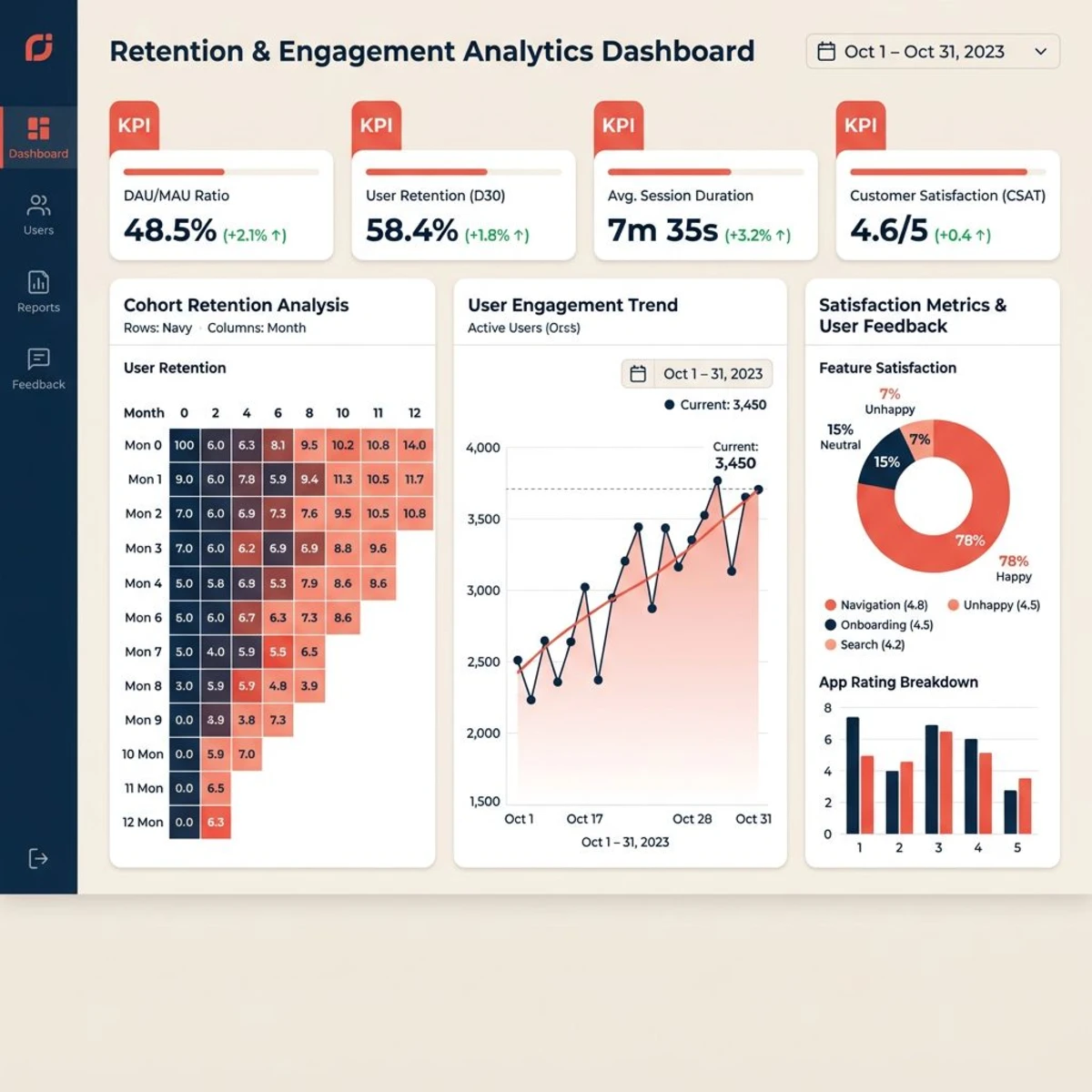
Core Lifecycle Metrics
Time-to-Hire Average days from job posting to offer acceptance. Small teams should target 20-30 days for most roles.
Time-to-Productivity
How quickly new hires become fully productive. Track this by role type and use insights to improve onboarding.
Employee Net Promoter Score (eNPS) Quarterly surveys asking "How likely are you to recommend this company as a great place to work?"
Retention Rate by Tenure Track when people typically leave to identify intervention opportunities:
- 0-90 days: Onboarding issues
- 90 days-1 year: Cultural fit or role clarity problems
- 1-2 years: Growth and compensation concerns
- 2+ years: Career advancement or external opportunities
Internal Mobility Rate Percentage of open positions filled by existing employees. Higher rates indicate effective development and career pathing.
Advanced Analytics for Growing Teams
Quality of Hire Measure new hire performance at 6 and 12 months compared to expectations.
Manager Effectiveness Compare retention rates, engagement scores, and performance ratings by manager to identify high-impact leadership behaviors.
Cost per Hire Total hiring costs (time, tools, external recruiting) divided by number of hires. Helps optimize recruitment efficiency.
Lifecycle Stage Conversion Rates Track how many candidates progress through each stage to identify bottlenecks and improvement opportunities.
Frequently Asked Questions
How long should each lifecycle stage take?
Timing varies by role and company, but typical small team benchmarks include: Attraction (ongoing), Recruitment (20-30 days), Onboarding (90 days), Development (continuous), Retention (ongoing), Offboarding (1-2 weeks), Alumni (indefinite). Focus on quality over speed—rushing any stage often creates problems in later stages.
What's the most important lifecycle stage to get right?
Onboarding has the highest impact for most small teams. Good onboarding significantly improves retention, time-to-productivity, and job satisfaction. Poor onboarding is difficult to recover from and often leads to early departures that are expensive and disruptive for small teams.
How do we manage the lifecycle without an HR person?
Start with simple templates and checklists for each stage. Assign lifecycle responsibilities to managers and create shared accountability for people outcomes. Use integrated software platforms that automate routine tasks. Many successful small teams manage effective lifecycles with part-time attention and good systems.
What lifecycle metrics matter most for small teams?
Focus on retention rate, time-to-productivity, and employee satisfaction. These three metrics capture whether your lifecycle is working effectively. Advanced analytics become valuable as you grow past 30-40 people, but start with basics that directly connect to business outcomes.
How often should we review our lifecycle processes?
Quarterly reviews work well for most small teams. Analyze recent departures, survey employee satisfaction, and assess whether your processes are achieving desired outcomes. Annual strategic reviews should evaluate whether your lifecycle approach aligns with business growth and culture evolution.
Can we implement lifecycle management while growing quickly?
Yes, but prioritize foundation elements first. Ensure consistent onboarding, basic performance feedback systems, and exit interview processes. Add sophistication gradually as your team stabilizes. Rapid growth makes lifecycle management more important, not less—systematic approaches prevent chaos during scaling.
Effective employee lifecycle management transforms how small teams attract, develop, and retain talent. Start with strong onboarding and feedback systems, then expand your approach as you grow. The key is creating consistent, positive experiences at every stage while learning from both successes and departures.
Ready to implement systematic employee lifecycle management? Tiny Team provides comprehensive people management tools designed for small teams, including hiring workflows, onboarding checklists, performance tracking, and employee development planning—free for teams up to 10 people, then a flat $79/month for teams up to 50. Start your free 30-day trial (credit card required; the free plan for up to 10 needs no card) and build the foundation for sustainable team development.