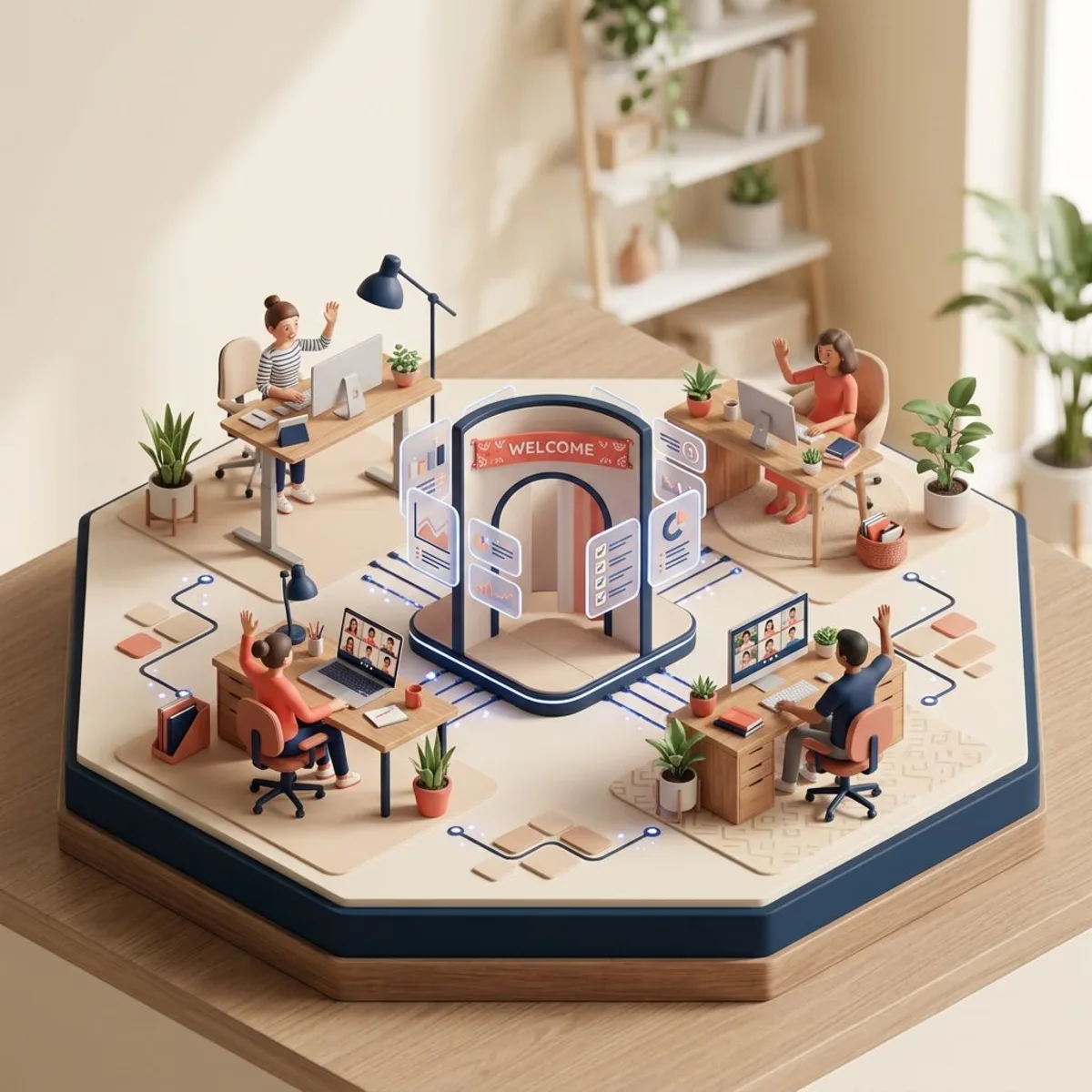
Preboarding is everything that happens between a new hire signing their offer letter and walking through the door on day one. It's the bridge between recruiting and onboarding — and most companies leave it completely empty.
That silence costs them. Research from Talentech shows that a strong preboarding process can improve new hire retention by up to 82%. Meanwhile, 28% of professionals have backed out of a job after accepting the offer, often because they heard nothing from their new employer for weeks.
If you run a small team, every hire matters more. Losing someone before they even start isn't just frustrating — it restarts a recruiting cycle you probably can't afford to repeat. This guide covers what preboarding actually looks like, how it differs from onboarding, and gives you a concrete 10-step checklist with email templates you can use today.
What Is Preboarding?
Preboarding is the structured process of engaging, preparing, and connecting with a new employee during the gap between their accepted offer and their official start date. Depending on the situation, this period can last anywhere from a few days to several months.
Think of it this way: recruiting convinces someone to join. Preboarding makes them glad they said yes.
A 12-person design agency in Portland learned this the hard way. They hired a senior designer in January with a March start date. For eight weeks, the only communication was a benefits enrollment email. The designer accepted a counter-offer in February — and the agency lost three months and roughly $15,000 restarting the search.
Regular touchpoints and a clear picture of her first weeks would have kept her excited instead of uncertain.
Preboarding vs Onboarding: Key Differences
People often conflate preboarding and onboarding, but they serve different purposes at different times. Here's how they compare:

| Preboarding | Onboarding | |
|---|---|---|
| Timing | Offer signed → Day 1 | Day 1 → First 90 days |
| Primary goal | Keep new hire engaged, reduce no-shows | Get new hire productive and integrated |
| Key activities | Welcome emails, paperwork, introductions, access setup | Training, role immersion, goal setting, feedback |
| Who owns it | HR + hiring manager | Manager + team + HR |
| Duration | Days to months (varies by notice period) | Typically 30–90 days |
| Tone | Warm, welcoming, low-pressure | Structured, educational, goal-oriented |
The handoff between preboarding and new hire orientation should feel seamless. If preboarding is done well, day one becomes a continuation — not a cold start.
Why Preboarding Matters
The numbers tell a clear story. Companies that invest in preboarding see measurable improvements across retention, productivity, and engagement.
Retention: Organizations with strong preboarding processes see up to 82% better new hire retention. For a 30-person company where replacing one employee costs roughly 50–200% of their annual salary (per SHRM estimates), that's significant.
Reduced ghosting: One in five new hires doesn't show up on day one, according to a Robert Half survey. In a tight labor market, ghosting has become a real risk — especially for roles with long notice periods.
Faster ramp-up: New hires who complete paperwork, review the employee handbook, and meet their team before day one spend less time on administrative tasks and more time learning their actual role.
Lower anxiety: Starting a new job is stressful. According to LinkedIn research, 80% of workers experience anxiety while waiting to start a new position. Preboarding gives them a sense of belonging before they've even begun.
For small teams especially, every hire represents a larger percentage of your workforce. A single no-show or early departure can disrupt projects, overload existing team members, and set back growth plans by months.
Preboarding Checklist: 10 Steps
Here's a practical, step-by-step preboarding checklist you can adapt to your team's size and workflow. Each step includes the ideal timing so nothing falls through the cracks.

1. Send a Welcome Email (Day of Offer Acceptance)
Within 24 hours of the signed offer, send a warm, personal welcome. This isn't the formal HR packet — it's a human message that says "we're excited you're joining us." For inspiration, check out our guide on welcome emails for new employees.
2. Complete Paperwork Digitally (Week 1)
Tax forms, direct deposit details, emergency contacts, NDAs — get all the new hire paperwork handled before day one. Digital signatures and online forms make this painless. Nobody wants to spend their first morning filling out W-4s.
3. Ship Equipment and Set Up Access (1–2 Weeks Before Start)
Order and ship their laptop, monitor, or any hardware. Create email accounts, set up Slack/Teams access, and provision any software licenses. The goal: everything works when they sit down on day one.
4. Share the Employee Handbook (2 Weeks Before Start)
Send over your employee handbook and any policy documents. Don't require a quiz on it — just let them read at their own pace so they're familiar with company norms and PTO policies.
5. Introduce Their Team and Assign a Buddy (1–2 Weeks Before Start)
Send a brief introduction via email or Slack. A short "meet your team" message with names, roles, and fun facts goes a long way. Assign an onboarding buddy — someone who isn't their manager — as a go-to for questions.
6. Share the First-Week Schedule (1 Week Before Start)
Nobody likes walking into the unknown. Send a clear agenda for their first day and first week: meetings, training sessions, lunch plans, and any orientation activities. Pair this with a 30-60-90 day plan so they see the bigger picture.
7. Manager Introduction Call (1 Week Before Start)
Schedule a casual 15–20 minute video call between the new hire and their direct manager. No agenda needed — just a friendly conversation to build rapport and answer questions. This is the single most impactful preboarding touchpoint.
8. Send Company Swag (1 Week Before Start)
A branded mug, notebook, or t-shirt costs a few dollars but creates genuine excitement. Include a handwritten note from the team if possible. It's a small gesture that signals real investment in the relationship.
9. Post a New Employee Announcement (Day Before Start)
Let the rest of the company know who's joining and when. A short new employee announcement on your internal feed or team channel ensures the new hire gets a warm reception on day one — not blank stares.
10. Day-Before Check-In (Day Before Start)
A quick email or message the day before: "Excited to have you tomorrow! Here's where to go, what to bring, and who to ask for." It eliminates last-minute nerves and shows you're organized.
Preboarding Email Templates
Here are three ready-to-use email templates for different stages of the preboarding process.

Template 1: Welcome Email (Day of Acceptance)
Subject: Welcome to [Company Name], [First Name]! 🎉
Hi [First Name],
We're thrilled you're joining us! The entire team is looking forward to working with you.
Here's what happens next:
- Paperwork: You'll receive a separate email with digital forms to complete at your convenience.
- Equipment: We'll start setting up your workstation and accounts this week.
- Questions? Hit reply anytime — I'm your point of contact until day one.
Your official start date is [Date]. Between now and then, we'll send a few updates to help you feel prepared.
Welcome aboard!
[Hiring Manager Name]
Template 2: Logistics Email (2 Weeks Before Start)
Subject: Getting Ready for Day One
Hi [First Name],
Your start date is coming up on [Date] and we want to make sure everything is set.
A few things to know:
- Arrive at: [Time], [Address/Virtual link]
- First day contact: [Name, phone/email]
- Dress code: [Description]
- Bring: Government-issued ID for verification
Your first-week schedule is attached. You'll meet the team, shadow a few workflows, and get set up with your tools.
Your onboarding buddy is [Buddy Name] ([email]). Feel free to reach out with any questions before you start.
See you soon!
Template 3: Day-Before Check-In
Subject: See You Tomorrow!
Hi [First Name],
Quick check-in — everything is ready for your first day tomorrow.
Reminders:
- Start time: [Time]
- Location: [Details]
- Your laptop and accounts are set up
- Lunch is on us tomorrow 🍕
If anything comes up, text or call me at [Phone].
We're excited to have you!
Preboarding for Remote Teams
Remote hiring adds complexity to preboarding, but the core principle stays the same: don't let silence fill the gap between offer and start date.

For distributed teams, consider these adjustments:
Ship hardware early. Allow at least two weeks for equipment delivery. Include a printed setup guide and IT contact info in the box. Nothing derails a remote first day like a missing power adapter or a laptop stuck in customs.
Schedule virtual coffee chats. Pair the new hire with 2–3 team members for casual 15-minute video calls before day one. These low-stakes conversations replace the hallway introductions that happen naturally in an office.
Create a digital welcome packet. Build a shared document or internal wiki page (using a tool like Tiny Team's Documents feature) with everything a new hire needs: org chart, team norms, communication guidelines, key contacts, and tool access instructions.
Coordinate across time zones. If your team spans multiple time zones, establish a shared "core hours" window and let the new hire know when to expect real-time communication versus async updates.
Don't over-schedule the first week. Remote onboarding often swings too far into back-to-back Zoom calls. Build in buffer time for the new hire to explore documentation, set up their workspace, and absorb information at their own pace.
How to Automate Preboarding
Manual preboarding works when you hire one person every few months. But if your team is growing steadily, automation ensures nothing gets missed.

Here's what an automated preboarding workflow looks like:
- Offer accepted → Triggers welcome email + digital paperwork request
- Paperwork completed → Notifies IT to provision accounts and order equipment
- Two weeks out → Sends logistics email with first-week schedule
- One week out → Reminds manager to schedule intro call + assigns onboarding buddy
- Day before → Sends check-in email + posts team announcement
An HR platform with people management and a team calendar can handle most of these triggers automatically. Instead of tracking tasks in spreadsheets and hoping someone remembers to send the logistics email, the system handles it — and you focus on the human side: the manager call, the personal note, the buddy assignment.
Platforms like Tiny Team let you store employee documents, track onboarding progress, and manage the entire new hire checklist from a single dashboard — free for teams up to 10, then a flat $79/month for teams up to 50.
Common Preboarding Mistakes
Even well-intentioned preboarding efforts can backfire. Here are the mistakes that trip up small teams most often:
Going silent after the offer. Weeks of radio silence after a signed offer signals disorganization — or worse, indifference. Even a short weekly update keeps the connection alive.
Information overload. Sending 47 pages of policy documents and three training videos at once overwhelms people. Drip information gradually — paperwork first, then handbook, then team introductions.
Making it purely administrative. Preboarding shouldn't feel like filing taxes. Balance logistics (forms, ID verification) with personal touchpoints (welcome messages, team intros, the manager call).
Skipping the manager introduction. HR can handle logistics, but the relationship that matters most on day one is with the direct manager. A pre-start video call — even 15 minutes — dramatically reduces first-day anxiety.
Forgetting IT setup. A new hire who spends their first morning waiting for a laptop password feels like an afterthought. Test every account and piece of equipment before they start.
No buddy system. Assigning an onboarding buddy gives the new hire someone who isn't their boss to ask "dumb" questions. Without one, new employees either stay quiet or bother their manager with every minor question.
Frequently Asked Questions
How long should the preboarding period last?
Preboarding starts the moment a candidate signs the offer letter and ends on their first day. The actual duration depends on notice periods — it could be as short as a few days or as long as three months. Adjust your touchpoint frequency accordingly: weekly emails for long gaps, a few key messages for short ones.
What's the difference between preboarding and onboarding?
Preboarding happens before day one and focuses on engagement, paperwork, and preparation. Onboarding starts on day one and focuses on role training, team integration, and reaching full productivity. Both are part of the broader employee lifecycle.
Who is responsible for preboarding?
HR typically owns the process (paperwork, systems access, compliance), but the hiring manager plays a critical role in personal connection. The best preboarding programs involve both — HR handles logistics while the manager builds the relationship.
What if a new hire ghosts before their start date?
It happens — and it's often preventable. If a new hire goes unresponsive, reach out by phone (not just email). Ask directly if they're still planning to start. If they've changed their mind, get honest feedback about why. Common reasons include a counter-offer, poor communication during preboarding, or anxiety about the role. Use that feedback to strengthen your process for future hires.
What paperwork should be completed during preboarding?
Focus on tax forms (W-4, state withholding), I-9 employment eligibility verification, direct deposit enrollment, emergency contacts, NDA or confidentiality agreements, and any benefits enrollment forms. Use our new hire paperwork checklist for a complete list.
Can small teams benefit from preboarding?
Absolutely — small teams benefit more from preboarding than large ones. When you have 10 employees, losing one new hire represents 10% of your planned workforce. A structured preboarding process doesn't require enterprise software. A few well-timed emails, a manager call, and a clear first-week plan are all you need to keep new hires engaged and committed.