A skills gap analysis shows the gap between what your team can do and what they need to do. It helps you spend training budgets wisely. It guides smarter hiring choices. And it keeps your team aligned with business goals.
HR pros report more skill gaps than ever before. In fact, 69% now see big gaps on their teams. That number was just 55% two years ago. The trend is clear: you need a plan to find and fix these gaps.
This guide walks you through each step of the process. You will learn how to assess skills, find gaps, and close them fast. We include templates, real examples, and practical tips. Let's dive in.
What Is a Skills Gap Analysis?
A skills gap analysis compares what your team can do to what each role requires. It shows where people excel. It shows where they struggle. Then it points to the best areas for growth.
The process looks at both hard and soft skills. Hard skills are things like coding or data analysis. Soft skills include leadership, teamwork, and problem-solving. You need to measure both to get a full picture of your team.
Think of it like a health check for your workforce. You find the weak spots before they cause real harm. Then you treat them with the right training or hires.
Types of Skills Gap Analysis
Individual analysis focuses on one person at a time. It works well for performance reviews or career planning. You can build a clear growth plan for each team member.
Team analysis looks at a whole group or department. It finds shared weak spots across the team. It also shows where one person's strength covers another's gap. This is great for project planning too.
Company-wide analysis takes a big-picture view of all teams. It spots patterns that affect strategy and growth. This approach helps leaders plan for the future. It also shapes hiring and training budgets.
Future-state analysis looks at skills you will need soon. Think new tools, new markets, or a big pivot. It helps you prepare before gaps widen into real problems.
How to Use a Skills Proficiency Scale
Before you start any assessment, agree on a rating scale. A 1-to-5 scale works best for most teams. Here is a simple one you can adopt right away.

- 1 — Beginner. Needs a lot of guidance. Can't work alone on this skill yet.
- 2 — Basic. Has some knowledge. Still needs regular help from others.
- 3 — Proficient. Works well on their own. Meets the standard for the role.
- 4 — Advanced. Goes beyond what's expected. Helps others improve too.
- 5 — Expert. A go-to person for this skill. Could teach or lead others in it.
Use the same scale across every team and role. This makes it easy to compare results. It also makes calibration sessions much smoother.
Write clear examples for each level in each skill area. For instance, "Level 3 in data analysis" might mean "can build reports in Excel without help." These examples stop debates about what each rating means.
Why a Skills Gap Analysis Matters for Your Team
Better Training ROI
Without data, training programs often miss the mark. You might train the wrong skills entirely. A gap analysis ensures every dollar targets real needs. No more wasted workshops that nobody applies.
One mid-size consulting firm cut training costs by 40% this way. They also boosted client satisfaction by 25%. Their key insight? Teams lacked project management skills, not technical ones. The data told them where to focus.
Smarter Hiring Decisions
When you know your team's skill map, you hire to fill real gaps. No more guessing. No more generic job posts. Your employee directory becomes a tool for planning, not just a list of names.
You can also plan hires months in advance. If you know a skill gap is growing, start the search early. This avoids the rush of last-minute hiring.
You can also use gap data to write better job descriptions. List the exact skills you need, ranked by priority. This attracts the right candidates from the start. It saves time for everyone in the hiring process.
Stronger Performance Reviews
Skills data gives your performance reviews a clear base. Managers can point to specific gaps with real evidence. Employees get concrete growth paths, not vague feedback. Both sides feel better about the conversation.
This data also helps with promotion decisions. You can show why someone is ready for a new role. Or you can map what they need to get there.
Better Workforce Planning
Business goals change fast these days. A skills analysis helps you keep up with those changes. You can spot future needs before they become urgent problems. This is key for any growing team.
Lower Employee Turnover
People stay when they feel they are growing. Investing in skills shows you care about their careers. That matters a lot in remote teams and in-office ones alike.
When people feel stuck, they leave. Don't let skill gaps become the reason you lose good talent. Growth paths keep your best people engaged and loyal.
How to Run a Skills Gap Analysis: Step by Step
Step 1: Set Clear Goals for the Analysis
Start by asking: what do you want to learn? Pick your scope. Are you looking at one person, a team, or the whole company?
Write down the business problem driving the analysis. Maybe sales are flat. Maybe quality has dipped. Maybe you are launching a new product line. Your goal shapes everything that follows.
Also set a timeline. Decide who will lead the effort. Make sure you have support from leadership. Without buy-in, the results will sit in a drawer.
Common goals include things like: "Reduce support ticket errors by 20%." Or: "Prepare five people for senior roles this year." Or: "Close the data skills gap before our new tool launches." Be specific. Vague goals lead to vague results.
Step 2: List the Skills Each Role Needs
Build a clear list of required skills for each role you plan to assess. Use job descriptions as your starting point. Talk to managers about what top performers do differently.
Group skills into categories for easier tracking:
| Category | Examples |
|---|---|
| Technical | Software, tools, coding, data entry |
| Analytical | Data analysis, research, reporting |
| Communication | Writing, speaking, active listening |
| Leadership | Coaching, decision-making, delegation |
| Digital | Marketing tools, automation, design |
| Customer focus | Relationship building, support, follow-up |
Don't list too many skills at once. Start with 10 to 15 per role. You can always add more later as your process matures.
Step 3: Measure Current Skill Levels
Use more than one method to assess skills. Each has strengths and blind spots. Using several gives you a fuller, more honest picture.
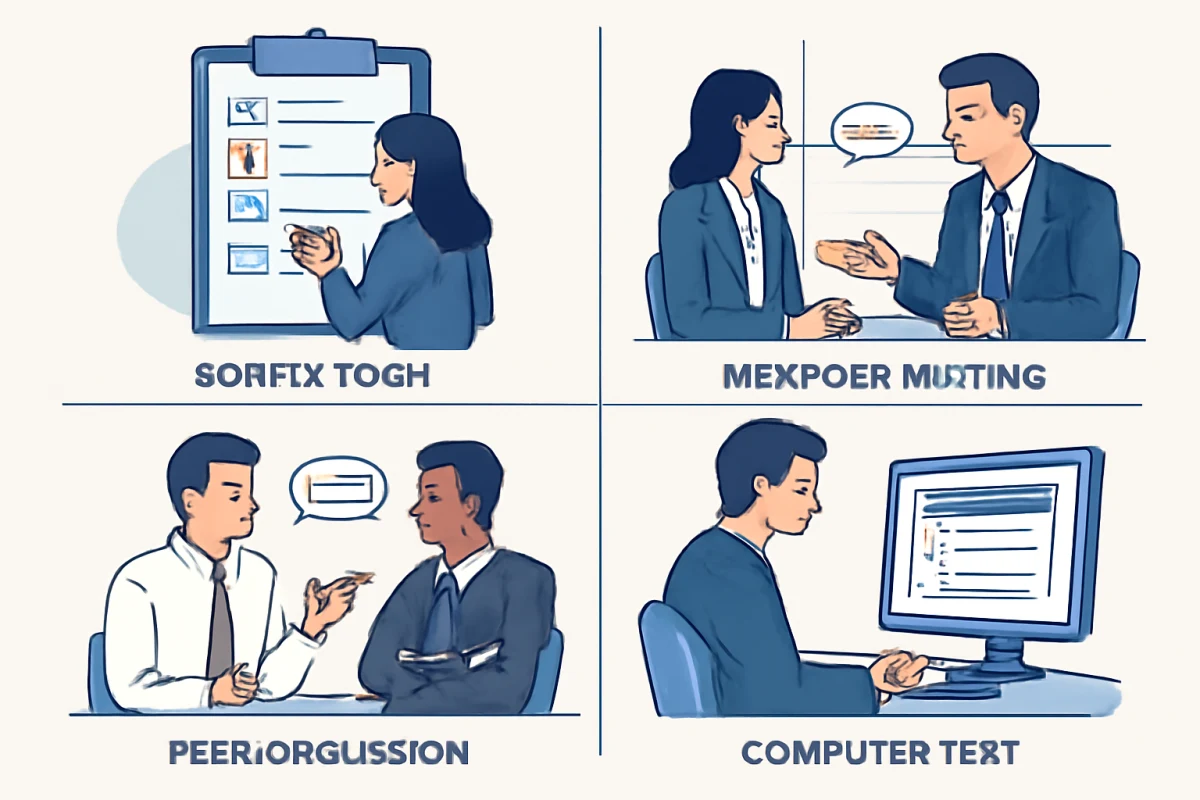
Self-assessments let people rate their own skill levels. They are fast and easy to run. They can be biased, but they do reveal confidence levels and blind spots.
Manager reviews add an outside perspective. Managers see how skills play out on real tasks every day. But they may miss some areas they don't observe directly.
Peer reviews capture teamwork and soft skills well. Colleagues see things managers often miss. They are great for checking communication and collaboration.
Skills tests give you hard data you can trust. Think quizzes, coding tests, or role-play exercises. They take more time but provide very reliable results.
Performance data ties skills to real business results. Look at error rates, speed, and customer scores. This method links gaps directly to business impact.
360-degree feedback gathers input from all directions. It includes managers, peers, and direct reports. This gives the most complete view of each person's abilities.
Step 4: Find and Rank the Gaps
Now compare required levels to current ones. A simple table works great:
| Skill | Required | Current | Gap | Impact | Priority |
|---|---|---|---|---|---|
| Data analysis | 4 | 2 | -2 | High | Critical |
| Project mgmt | 3 | 4 | +1 | Medium | Monitor |
| Customer skills | 3 | 2 | -1 | High | Important |
Rank each gap by its business impact. Ask these questions: What happens if we ignore this gap? How often is this skill used each week? How hard is it to build this skill? What will it cost to fix?
Step 5: Build an Action Plan to Close Gaps
For each key gap, pick the right approach to close it.

Training options:
- In-house workshops or lunch-and-learn sessions
- Online courses, webinars, and certifications
- Mentoring and coaching pairs within the team
- Job rotation or stretch projects for hands-on learning
Hiring options:
- Hire full-time for the most critical skill gaps
- Bring in contractors for short-term or niche needs
- Start an internship pipeline for future talent
Process fixes:
- Adopt tools that reduce the need for certain skills
- Redesign workflows to match your team's current strengths
- Pair people so one person's strength covers another's gap
Build this into your onboarding process too. New hires should know the team's skill map from day one. It helps them see where they fit and where they can grow.
Skills Gap Analysis Templates You Can Use Today
Individual Assessment Template
Use this template during reviews or one-on-one meetings.
| Skill Area | Required | Current | Gap | Priority | Notes |
|---|---|---|---|---|---|
| Technical skills | |||||
| Communication | |||||
| Problem-solving | |||||
| Leadership | |||||
| Digital skills | |||||
| Customer focus |
Add a section for action items at the bottom. List the top three focus areas for the next quarter. Set a timeline for each one. Pick specific learning resources. Schedule a follow-up date to check progress.
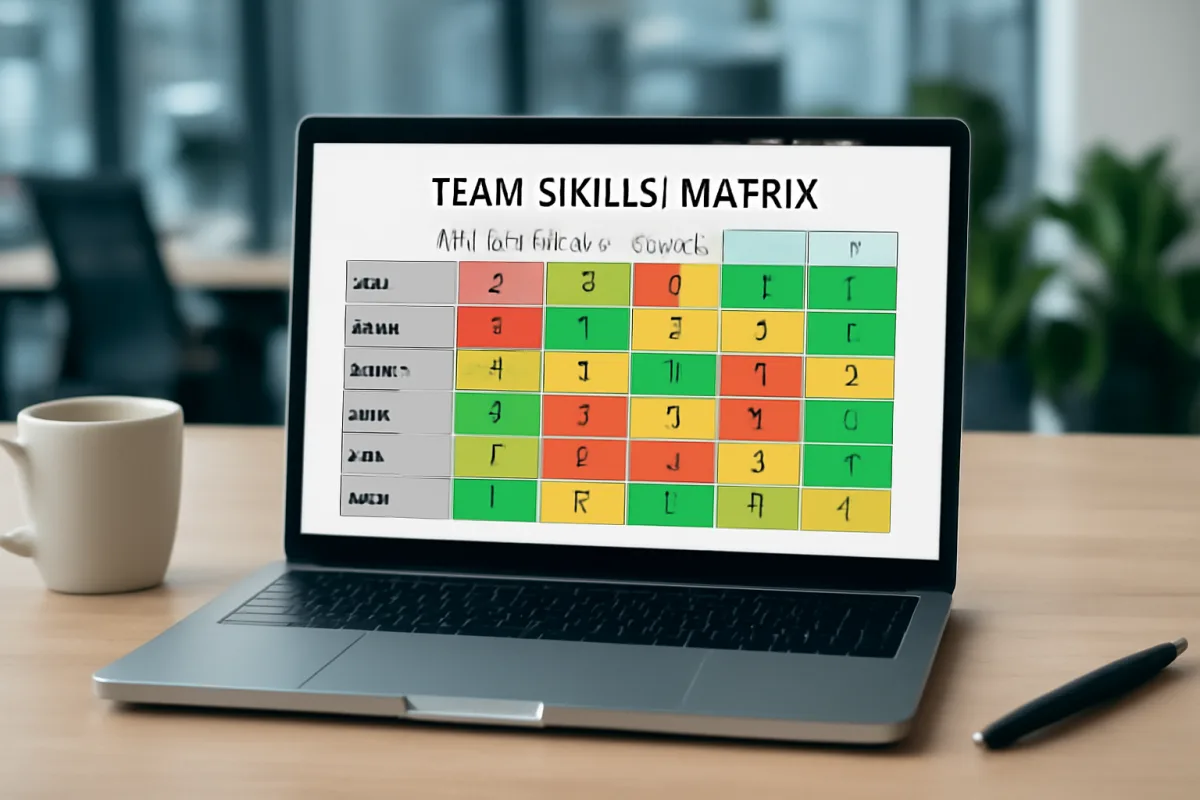
Team Skills Matrix Template
Map your whole team on one grid to spot patterns fast.
| Name | Tech | Communication | Leadership | Customer | Score |
|---|---|---|---|---|---|
| Sarah | 4 | 3 | 2 | 4 | 3.3 |
| Mike | 3 | 2 | 1 | 3 | 2.3 |
| Lisa | 2 | 4 | 3 | 4 | 3.3 |
| Average | 3.0 | 3.0 | 2.0 | 3.7 | 2.9 |
| Required | 3 | 3 | 3 | 4 | 3.3 |
| Gap | 0 | 0 | -1 | -0.3 | -0.4 |
This view makes gaps obvious at a quick glance. Use it in team meetings to start honest talks. Share it with leadership to back up budget requests.
Use a simple 1-to-5 scale for ratings. One means beginner. Five means expert. Keep it consistent across all teams and roles.
A Real-World Skills Gap Example
Here is a quick example of how this works in practice. A 40-person marketing agency noticed client churn was rising. They ran a team-wide skills gap analysis.
The results were revealing. Most team members scored high on creative skills. But data analysis scores were very low across the board. Only two people could build a proper report.
The fix was simple. They enrolled eight people in a six-week data course. They paired each learner with one of the two data experts. Within three months, the team could track campaign results on their own.
Client churn dropped by 30% in the next quarter. The total cost of training was less than one month of a new hire's salary. This is the power of targeted gap analysis.
Common Skills Gap Analysis Challenges (and Fixes)
People Fear the Assessment
Staff may worry that gaps will hurt their careers or reviews. Be very clear: this is for growth, not punishment. Make it optional at first to build trust. Share success stories of people who grew through the process.
Standards Vary by Manager
One manager rates "proficient" very differently than another does. Fix this with clear rubrics that define each level. Train assessors together in one session. Use calibration meetings to align ratings across the team.
Limited Time and Budget
You don't need to assess every skill at once. Start small and focus on the most critical roles first. Use existing review cycles to gather data you already have. Learn from exit interviews what skill gaps drove people away.
Soft Skills Are Hard to Measure
Use behavior-based rubrics instead of vague labels. Instead of rating "communication," look at specific actions. Did they run a clear meeting? Did they resolve a team conflict? Track outcomes and actions, not personality traits.
Results Get Stale Fast
Skills needs change all the time in growing teams. Review your analysis at least once a year. For fast-moving roles, check every quarter. Build skills checks into your ongoing review process.
Building a Culture of Skill Growth
A one-time analysis is not enough on its own. The best teams build ongoing skill growth into their culture. Here is how to make that happen.
Start with a skills audit meeting. Bring the team together to talk about the results. Keep it positive and forward-looking. Focus on what the team will gain, not what it lacks. Set shared goals for the next quarter.
Leaders go first. When managers learn new skills openly, it sets the tone. It tells the team that growth is valued at every level. Nobody should feel too senior to learn.
Celebrate progress. Recognize people who close their gaps. Share wins in team meetings and company updates. Tie skill growth to promotions and career moves.
Make time for learning. Block dedicated hours for courses or reading. Pair junior and senior people for mentoring. Create peer learning groups around shared interests.
Track it in your tools. Use your org chart and people tools to log skill levels. Update records after each training session. Over time, you will see clear trends that guide your next steps.
Tiny Team helps you track employee skills, run reviews, and keep records for gap analysis. It costs a fraction of what enterprise HR tools charge. Every feature is included, and it's free for teams up to 10 people, then a flat $79/month for teams up to 50.
Measuring the Impact of Your Skills Gap Work
After you run training or make hires, check if the gaps are closing. Here are simple ways to track progress.
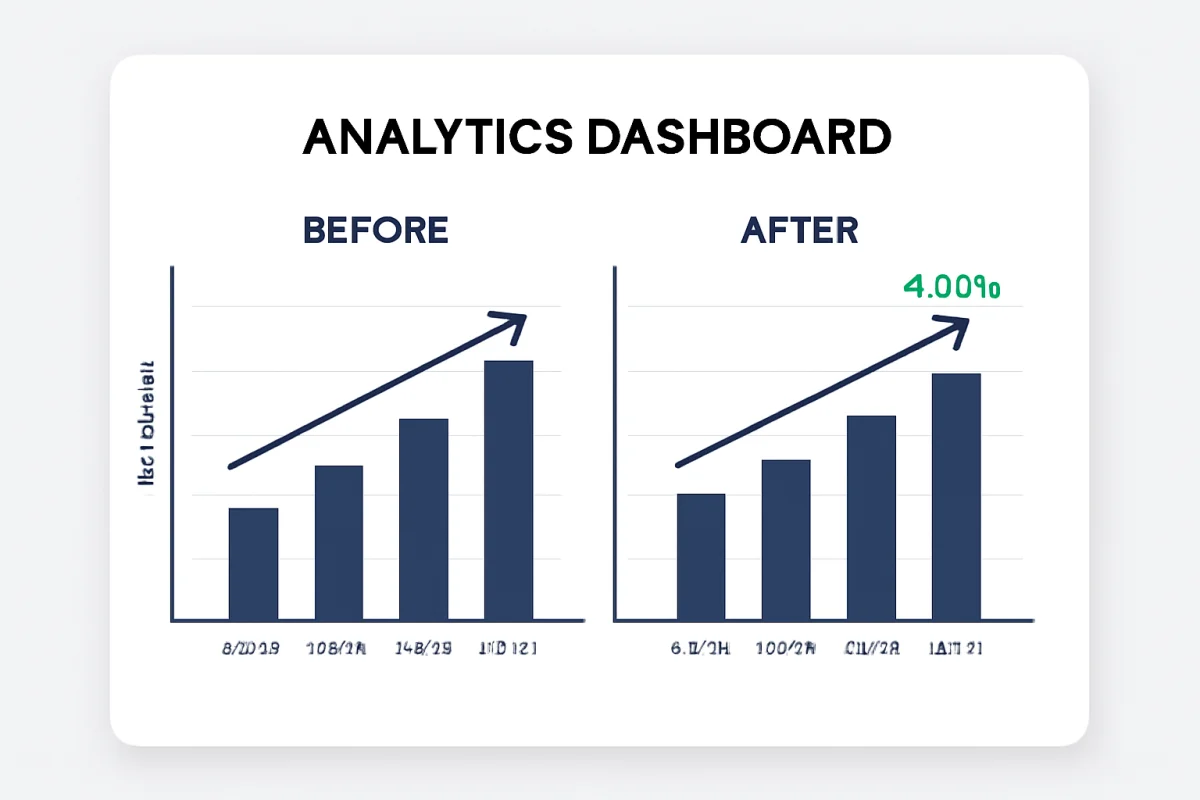
Before-and-after scores. Rate skills before training starts. Rate them again 60 to 90 days after. Compare the numbers. This is the most direct way to see results.
Watch key business metrics. If you trained customer skills, check your support scores. If you trained sales skills, look at close rates. Tie skill growth to real outcomes.
Ask managers for feedback. A quick check-in tells you if new skills show up on the job. If training happened but nothing changed, the method may need a tweak.
Track retention rates. Teams that invest in growth tend to keep people longer. Compare turnover before and after your skills program launched. The link is often very clear.
Review hiring needs. Over time, you should need fewer outside hires for the same gaps. Internal growth should fill more roles as your program matures.
Set a regular review cadence. Monthly is ideal for fast teams. Quarterly works for most others. Share results with the full team to keep momentum strong.
Frequently Asked Questions
How often should we run a skills gap analysis?
Once a year works for most teams. Update quarterly for fast-changing roles. During big shifts like new tech rollouts, assess more often to stay ahead.
How do we get honest answers in skill assessments?
Make it clear that this is for growth, not grading. Use anonymous surveys when you can. Share stories of people who grew from the process. Build trust over time.
Should we focus on current gaps or future needs?
Do both. Spend about 70% of effort on current gaps that hurt results now. Use 30% for future skills tied to planned changes. This keeps you balanced.
How do you measure soft skills in a fair way?
Focus on actions, not traits. Use examples from real work situations. Get input from peers, managers, and direct reports. Track outcomes like team satisfaction scores.
What if we can't afford to fix all the gaps at once?
Start with high-impact, low-cost fixes. Mentoring is free. Job rotation costs nothing extra. Online courses are cheap. Tackle the biggest gaps first, then work your way down.
How can small teams do this without a big HR department?
Keep it simple and start small. Use basic templates like the ones above. Have managers assess their own teams. Focus on five to ten critical skills only. You don't need fancy tools to get real value from this process.