The 9-box grid helps you assess your team. It measures two things: performance and potential. HR teams use it for promotions, development, and succession planning.
GE created this tool decades ago. Today, most HR teams rely on it. The SHRM talent development toolkit calls it a best practice for talent management. It works well for teams of any size. Small startups and large companies both benefit from it.
This guide covers everything you need to get started. You will learn what each box means. You will see how to build one step by step. And you will know how to act on the results.
What Is the 9-Box Grid?
The 9-box grid is a talent assessment matrix. It plots employees on two axes. The x-axis shows current performance. The y-axis shows future potential.
Each axis has three levels: low, medium, and high. This creates nine boxes in a 3x3 grid. Every employee lands in one of these boxes based on their scores.
Performance asks one question: "How well do they do their job right now?" You look at goals met, work quality, and impact on the team. Hard numbers like sales or project deadlines matter here. So do soft skills like teamwork.
Potential asks a different question: "Can they grow into a bigger role?" You look at learning speed, leadership traits, and drive. You also check if they think beyond their current job.
Here is a key insight. High performance does not always mean high potential. Some people are great at their job but do not want a promotion. Others show huge promise but are still learning the ropes. That is why a performance review alone cannot tell the full story. You need both dimensions.
The Nine Boxes Explained
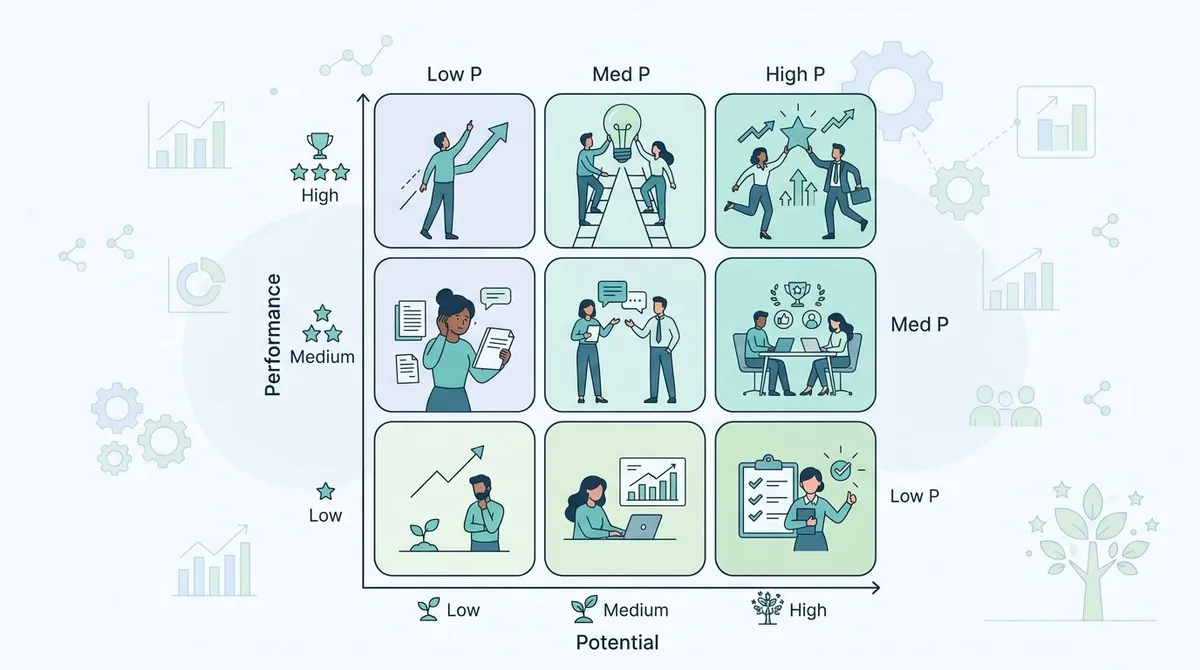
Let us walk through each box. For every box, you will see who fits there and what to do about it.
High Performance + High Potential: "Stars"
These are your best people. They crush their goals every quarter. They also show strong leadership traits and a hunger to grow.
Stars tend to influence the people around them. They take on extra work without being asked. They solve problems before you notice them.
What to do: Give them stretch projects. Fast-track their promotion path. Invest in executive coaching or mentoring. Keep them challenged. Losing a star is very costly. Offer strong retention perks. Include them in succession planning right away.
High Performance + Medium Potential: "Solid Performers"
They deliver great work again and again. They may not want a bigger role. That is perfectly fine. These people hold your team together.
They often have deep expertise in their area. They make good mentors for newer team members. They bring stability to the group.
What to do: Reward their work with praise and pay. Let them mentor junior staff. Offer lateral moves to keep things fresh. Do not push them into roles they do not want. Respect their choice to stay where they are.
High Performance + Low Potential: "Experts"
They are amazing at what they do. But they may not fit a leadership role. They like their niche and they own it.
These people are often specialists. They know their domain inside and out. Teams rely on them for critical decisions.
What to do: Pay them well. Let them go deeper into their specialty. Use them as subject matter experts. Give them flexible work options. Do not force a management track on them.
Medium Performance + High Potential: "Rising Stars"
They show great promise for the future. Their current output still needs work. They may be new to the role or adjusting.
Rising stars learn fast. They ask good questions. They take feedback well. With the right support, they can jump to the top box.
What to do: Invest in coaching and training. Pair them with a strong mentor. Set clear goals and check in every week. A solid onboarding process helps new hires ramp up fast. These people are worth the effort.
Medium Performance + Medium Potential: "Core Players"
They meet expectations and do solid work. Most of your team will land here. These are the people who keep the lights on.
Core players are reliable. They show up and get things done. They may not stand out, but they matter a lot.
What to do: Offer training and clear feedback. Set growth paths they can follow. Do not ignore them just because they are not stars. A little investment here pays off big. Show them you value their work.
Medium Performance + Low Potential: "Steady Hands"
They do okay work. Growth seems limited. They may have hit their ceiling in this type of role.
They are not bad employees. They just may not have room to grow. Sometimes a change of pace or role helps.
What to do: Set clear expectations. Check if a different role fits better. Focus on keeping their output stable and consistent. Have honest talks about their career path.
Low Performance + High Potential: "Rough Diamonds"
They struggle now but have raw talent. The current role may not fit them well. Something is blocking their success.
The cause could be a skill gap. It could be a bad role fit. It could be weak onboarding or lack of support.
What to do: Try a different role or team. Give them intensive coaching and support. Set a clear timeline for progress. If they leave, run an exit interview to learn what went wrong. These hires are worth saving.
Low Performance + Medium Potential: "Inconsistent"
Their work quality varies a lot from week to week. They show flashes of skill but cannot maintain it.
They may face personal issues. Or they may lack clear structure in their role. The root cause matters.
What to do: Give frequent, specific feedback. Add more structure to their tasks. Track progress with weekly check-ins. Be patient but set firm deadlines for improvement.
Low Performance + Low Potential: "Poor Fit"
They miss targets often. Growth seems very unlikely. This is the hardest box to manage.
This does not make them bad people. It means this role at this company is not right for them.
What to do: Start a formal improvement plan. Document everything carefully. If nothing changes after a fair period, plan a respectful transition. Follow your local labor laws.
How to Build a 9-Box Grid in 5 Steps
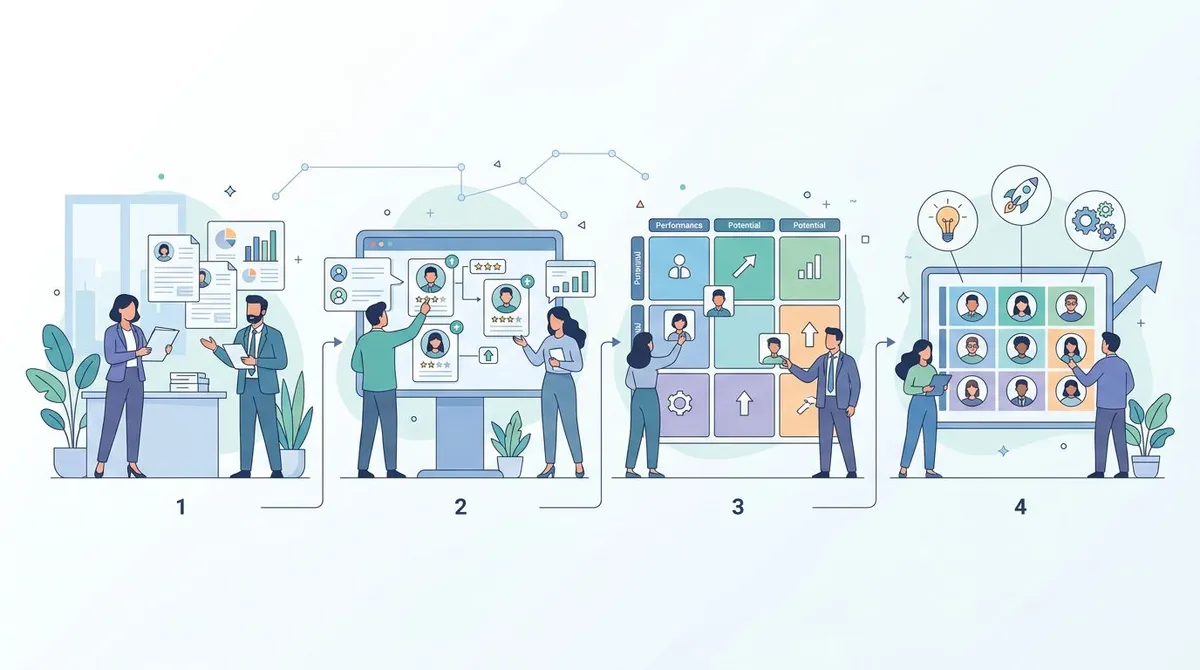
Step 1: Define Performance Criteria
Pick clear metrics for what "good performance" looks like. Use a mix of hard and soft measures.
Hard metrics include goals met, sales closed, and projects shipped on time. Soft metrics include teamwork, communication, and reliability.
Use a simple 1-to-3 scale. A 3 means "exceeds expectations." A 2 means "meets expectations." A 1 means "needs improvement." Keep the scale simple so managers can apply it fast.
Step 2: Define Potential Criteria
Potential is harder to pin down. Focus on things you can observe.
Look for learning speed and curiosity. Check for leadership ability and influence. See if they think beyond their current tasks. Note their ambition and cultural fit.
Use the same 1-to-3 scale. A 3 means "ready for a bigger role within a year or two."
Step 3: Gather Data From Multiple Sources
Do not rely on just one person's opinion. Collect data from several sources to get a fair picture.
Pull data from performance reviews. Add peer feedback and self-assessments. Include input from the direct manager. The more angles you cover, the fairer the result will be.
Step 4: Run a Calibration Session
Get team leaders in a room together. Compare their ratings side by side. Talk through the edge cases.
This step is critical. It removes personal bias. It also aligns standards across teams and departments. Write down the final placements. Note the reasoning behind each one.
Step 5: Create Action Plans
Each box needs a different approach. Stars need promotion paths. Poor fits need improvement plans. Core players need training paths.
Set clear timelines and milestones for every plan. Assign an owner for each action item. Review progress at 30, 60, and 90 days. Do not skip the follow-up. The grid is useless without action.
Using the 9-Box Grid for Succession Planning
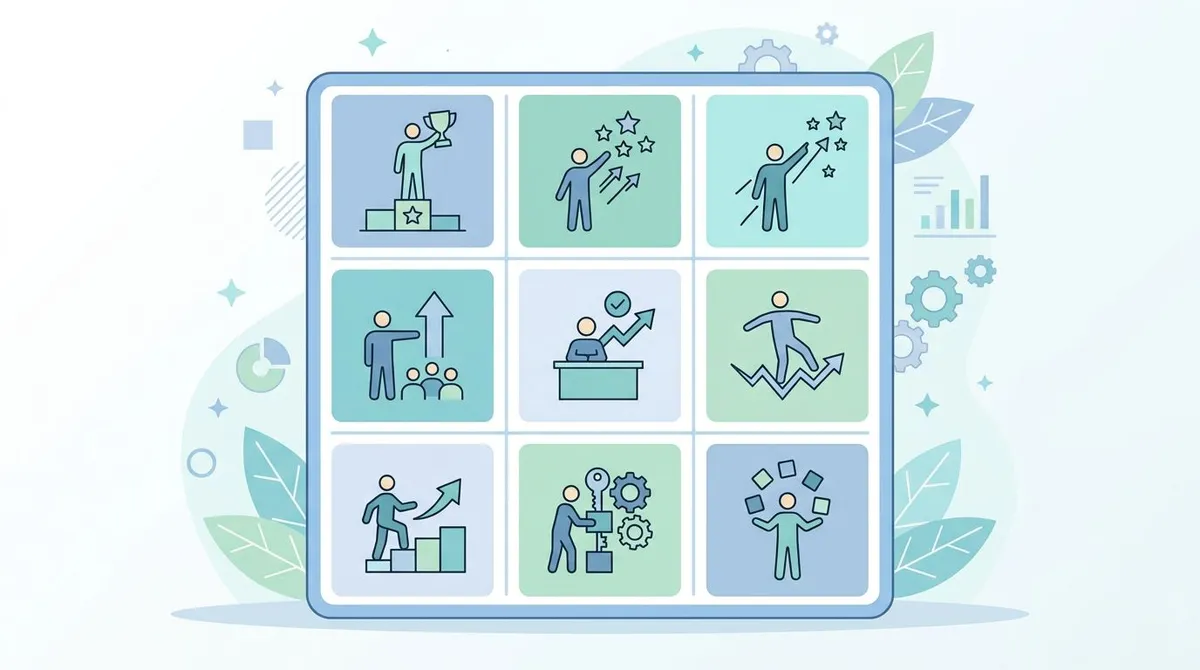
The grid shows you who can fill key roles next. Stars are your best candidates right now. Rising stars join the pipeline for one to three years out.
Start by mapping your current leaders. An org chart tool makes this visual and easy to share. Then overlay your 9-box results on top. Gaps in the pipeline become obvious fast.
How to spend your development budget:
- Stars: Executive coaching, leadership programs, board exposure
- Rising Stars: Mentoring, stretch assignments, targeted training
- Solid Performers: Lateral moves, specialization courses
- Rough Diamonds: Intensive coaching, role changes, extra support
Focus your biggest investments on the top-right corner of the grid. That is where you get the highest return.
Common Challenges and How to Fix Them
Manager Bias
Different managers rate people differently. One manager's "high" may be another's "medium." This skews the entire grid.
Fix: Run calibration sessions every cycle. Train managers on the exact criteria. Use feedback from multiple people, not just one boss.
Everyone Lands in the Middle
Some managers avoid tough calls. They rate everyone as "medium." The grid loses all its value when this happens.
Fix: Require some spread across the ratings. Give clear examples for each level. Reward managers who give honest and fair assessments.
Potential Is Hard to Measure
It is subjective by nature. Two managers can disagree on the same person. This causes frustration and arguments.
Fix: Define specific traits to look for. Track past growth patterns as evidence. Use at least three raters for each person.
No Follow-Through After the Assessment
The team builds the grid. Then it sits in a folder and nothing happens. This is the most common failure.
Fix: Tie every action plan to a real budget. Assign owners who are held accountable. Review progress every quarter. For remote teams, schedule virtual check-ins to stay on track.
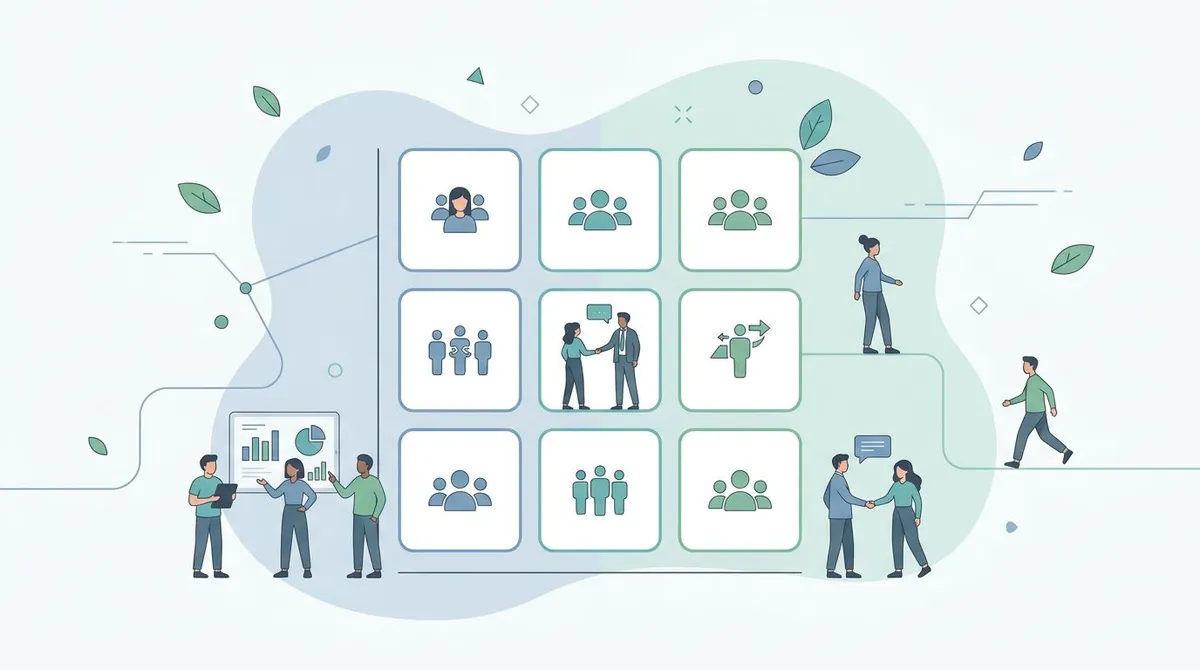
9-Box Grid Template
Here is a quick template you can use today. Rate each employee on these traits.
Performance (1-3 scale):
- Goal achievement
- Work quality
- Teamwork and collaboration
- Communication skills
- Problem-solving ability
Potential (1-3 scale):
- Learning speed
- Leadership ability
- Big-picture thinking
- Ambition and drive
- Cultural fit
Average each set of scores. Plot the result on the grid. Then write an action plan for each person based on their box.
Keep your employee directory up to date with roles, skills, and review dates. It makes the whole process run smoother when data is in one place.
How to Measure If the Grid Works
Track these metrics over time to see the impact:
- Pipeline strength: How many ready successors exist for each key role?
- Retention: Do stars stay longer after getting development plans?
- Promotion success: Do promoted employees perform well in their new roles?
- Box movement: Are people shifting to better boxes over time?
- Time to fill: Do internal promotions reduce hiring timelines?
Review your grid at least twice a year. Update it when big changes happen. Treat it as a living tool. It should grow with your team.
Tips for Better 9-Box Grid Results
Here are some quick tips that make the process better.
Keep it simple at first. Do not over-engineer your first grid. Use basic criteria. You can refine later after your first cycle.
Make it a conversation, not a form. The real value comes from the discussion between managers. The grid is just a visual aid for that talk.
Update it regularly. People grow and change. A grid from six months ago may not reflect reality. Refresh it at least twice a year.
Pair it with one-on-one meetings. Use grid insights to guide your regular check-ins. Talk about growth paths and next steps with each team member.
Do not use it as a weapon. The grid should drive development, not punishment. Frame every conversation around growth and support.
Frequently Asked Questions
How often should we update the 9-box grid?
Twice a year works for most teams. Fast-growing companies may want quarterly updates. The key is keeping data fresh without causing assessment fatigue.
Should employees know their box placement?
It depends on your company culture. Many teams share the broad category, like "high potential." Few share the exact box position. Focus discussions on growth, not labels.
What if an employee disagrees with their rating?
Listen to them first. Use specific examples to explain the rating. Gather more input if you need to. Frame it as a growth talk, not a final judgment.
What if most people end up in the middle?
Check your criteria first. Then train managers to make clearer distinctions. Some clustering is normal. Too much means the tool is not working well.
How do we reduce bias in assessments?
Use structured criteria that are written down. Collect input from at least three people. Run calibration sessions with all managers. Focus on observable actions, not gut feelings.
Does the 9-box grid work for small teams?
Yes, it does. Even a five-person team can benefit. Keep the process simple. Skip the big templates. Focus on the conversation about each person's growth.
Wrapping Up
The 9-box grid is a simple and powerful tool. It helps you spot stars. It finds rising talent. And it helps you plan for the future.
But the key is follow-through. Do not just build the grid and forget it. Create real development plans. Review them on a regular schedule. Hold managers accountable for their action items.
Tiny Team makes this easier with built-in performance reviews and people management tools. You can track goals, run review cycles, and manage your whole team in one place. No complex enterprise software needed.