Employee retention strategies are systematic approaches to keeping valuable team members engaged, satisfied, and committed to your organization long-term. For small businesses and startups, losing even one key employee can disrupt operations and cost thousands in replacement and training expenses.
The average cost of replacing an employee ranges from 50% to 200% of their annual salary, according to Society for Human Resource Management (SHRM) research. For a $60,000 employee, that's $30,000-$120,000 in direct and indirect costs—money that small businesses can't afford to lose.
This guide provides 20 proven retention strategies specifically designed for founders and small teams operating with limited budgets but unlimited creativity.
Why Employee Retention Matters for Small Businesses
Small businesses face unique retention challenges that make keeping good employees both more difficult and more critical than in large corporations:
Limited Career Advancement: With fewer hierarchical levels, promotion opportunities are scarce, making employees feel stuck in their current roles.
Resource Constraints: Small budgets limit salary increases and benefit offerings compared to larger competitors.
Workload Intensity: Smaller teams often mean wearing multiple hats, leading to burnout and stress.
Despite these challenges, small businesses have significant advantages in the retention game: personal relationships, flexibility, meaningful work impact, and faster decision-making capabilities.
Consider a 12-person design agency in Portland that lost two senior designers in a single quarter. The founder spent four months recruiting replacements, turned down three client projects during the gap, and watched remaining team members burn out covering the extra workload. Total cost: roughly $180,000 in lost revenue and recruiting fees—nearly 15% of annual revenue. That experience prompted her to build a structured retention plan, and the agency hasn't lost a team member involuntarily in two years since.

The Hidden Costs of Employee Turnover
Before diving into retention strategies, founders need to understand the true cost of losing employees:
Direct Costs
- Recruiting expenses: Job postings, recruiter fees, background checks
- Interview time: Manager and team time spent screening candidates
- Onboarding costs: Training materials, equipment setup, HR processing
- Lost productivity: New hires typically take 3-6 months to reach full productivity
For a small 15-person team, losing 3 employees annually costs approximately $150,000-$300,000—money that could fund significant business growth instead.
Indirect Costs
The less obvious expenses often hurt even more than the direct ones:
- Knowledge drain: Departing employees take institutional knowledge, client relationships, and undocumented processes with them
- Team morale impact: Remaining employees question their own future when they see colleagues leaving, creating a contagion effect
- Cultural disruption: Every departure and new hire shifts team dynamics, sometimes weakening the culture you've carefully built
- Customer experience decline: New employees need time to understand client preferences, leading to temporary service quality drops
According to the U.S. Department of Labor, small businesses with high turnover rates consistently underperform their stable-team competitors in revenue growth and customer satisfaction metrics.
20 Proven Employee Retention Strategies
1. Create Clear Career Development Paths
Even in small companies, employees need to see growth opportunities. Document potential career progression routes and share them openly through performance review cycles.
Action Steps:
- Map out 2-3 potential career paths for each role
- Set specific skill requirements for advancement
- Provide monthly development check-ins
- Offer stretch projects that build promotional qualifications
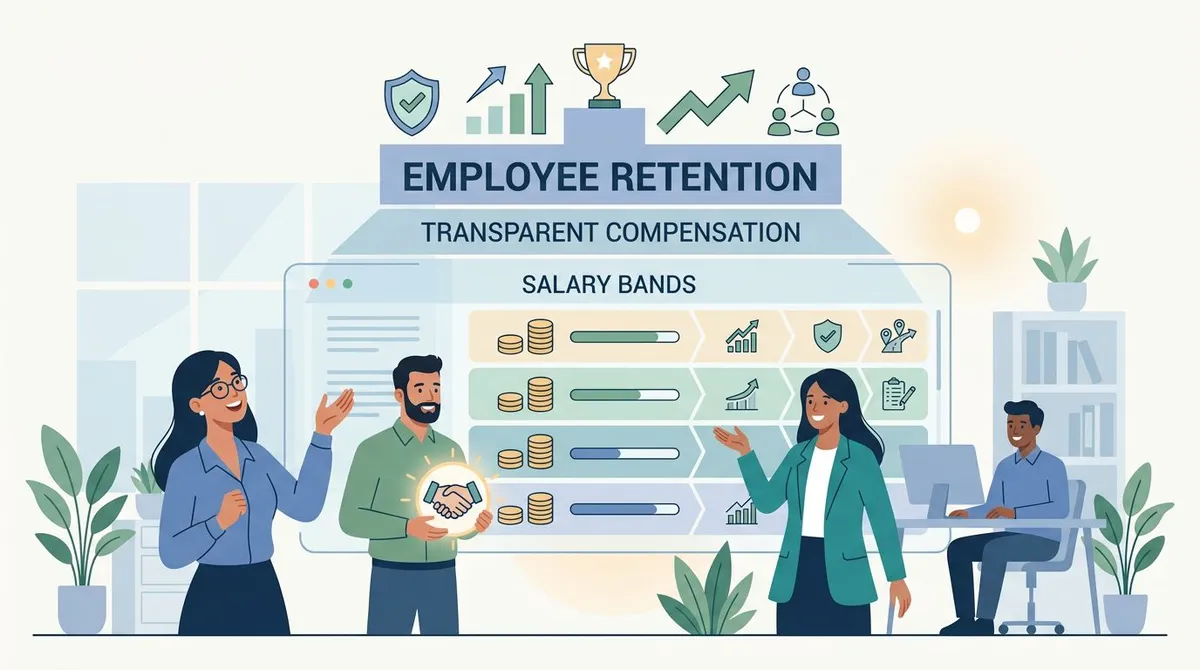
2. Implement Competitive, Transparent Compensation
Small businesses can't always match corporate salaries, but transparency and fairness go a long way. Consider using compensation tracking features to maintain fair and transparent pay structures.
Compensation Strategies:
- Conduct annual market rate analyses for all positions
- Create clear salary bands and share them with employees
- Offer performance bonuses tied to company success
- Consider equity participation for key employees
Research by Harvard Business Review shows that pay transparency increases employee satisfaction even when salaries can't be increased immediately.
3. Offer Flexible Work Arrangements
Flexibility is often more valuable than salary increases for many employees. Use team calendar systems to manage flexible schedules effectively.
Flexibility Options:
- Hybrid work schedules (2-3 days in office)
- Flexible start/end times
- Compressed work weeks (4x10 hours)
- Unlimited PTO with minimum usage requirements
- Family-friendly policies for school events and emergencies
4. Invest in Professional Development
Education and skill building demonstrate long-term commitment to employee growth.
Development Investments:
- Annual training budgets ($1,000-$2,500 per employee)
- Conference attendance with knowledge sharing requirements
- Internal lunch-and-learn sessions
- Online course subscriptions (LinkedIn Learning, Coursera, etc.)
Learn more about creating comprehensive employee development programs that drive retention.
5. Build a Strong Company Culture
Culture beats compensation for many employees, especially millennials and Gen Z workers who prioritize purpose and values alignment. Share updates and celebrate wins through company timeline features.
Culture Building Actions:
- Define and live company values consistently
- Regular team building activities and social events
- Celebrate both professional and personal milestones
- Create traditions and rituals that build team identity
- Maintain open, honest communication from leadership
6. Recognize and Reward Achievements
Regular recognition keeps employees engaged and motivated without significant financial investment.
Recognition Programs:
- Weekly team shout-outs in meetings
- Quarterly achievement awards with small prizes
- Peer nomination systems
- Public recognition on company social media
- Anniversary celebrations with personalized gifts
Research Insight: Gallup studies show that employees who receive regular recognition are 2.7x more likely to be highly engaged at work.

7. Provide Autonomy and Decision-Making Authority
Employees stay longer when they feel trusted and empowered to make meaningful decisions about their work.
Empowerment Strategies:
- Give employees budgets they can manage independently
- Allow team members to choose their own tools and processes
- Create project ownership with minimal micromanagement
- Encourage experimentation and calculated risk-taking
8. Foster Strong Manager-Employee Relationships
The saying "people don't quit jobs, they quit managers" remains true. Invest in manager training and relationship building with structured 360-degree feedback processes.
Manager Development:
- Train managers on effective one-on-one meetings
- Provide coaching on difficult conversations
- Set expectations for regular feedback delivery
- Monitor manager-employee relationship health through surveys
9. Create Meaningful Work Connections
Help employees understand how their daily tasks contribute to larger company goals and customer impact.
Connection Strategies:
- Share customer success stories that highlight employee contributions
- Provide visibility into company metrics and growth
- Connect individual projects to business outcomes
- Create impact reports showing how each role drives results
10. Support Work-Life Balance
Burnout is a leading cause of employee turnover, especially in small businesses where workloads can be intense.
Balance Initiatives:
- Enforce vacation time usage—no work contact during PTO
- Respect after-hours boundaries (no non-emergency emails)
- Provide mental health resources and support
- Offer sabbatical programs for long-term employees

11. Improve Communication and Transparency
Keep employees informed about company direction, challenges, and successes to build trust and engagement.
Communication Practices:
- Monthly all-hands meetings with Q&A sessions
- Quarterly business reviews sharing financial health
- Regular employee surveys with action plan responses
- Open-door policies with leadership
12. Address Workplace Conflicts Quickly
Unresolved conflicts poison team dynamics and drive good employees away. Develop conflict resolution processes.
Conflict Resolution Steps:
- Address issues within 24-48 hours of awareness
- Meet with involved parties separately first
- Facilitate mediated conversations when appropriate
- Document agreements and follow-up requirements
13. Provide Comprehensive Benefits
Even small businesses can offer creative benefits that support employee well-being.
Benefit Ideas:
- Health savings account contributions
- Life insurance and disability coverage
- Commuter benefits or parking allowances
- Gym membership reimbursements
- Professional membership dues
14. Create Internal Mobility Opportunities
When vertical promotions aren't available, offer lateral moves that expand skills and prevent stagnation.
Mobility Options:
- Cross-training programs in different departments
- Project rotation assignments
- Temporary leadership roles for special initiatives
- Skills exchange programs between team members
15. Use Technology to Streamline HR Processes
Efficient HR systems reduce employee frustration with administrative tasks. Modern platforms like Tiny Team centralize employee information, streamline time-off requests, and automate routine HR tasks.
HR Technology Benefits:
- Simplified PTO requests and approval workflows
- Centralized employee document storage
- Performance review tracking and scheduling
- Team calendar visibility and coordination

16. Conduct Stay Interviews
Stay interviews are one of the most underused retention tools available to small businesses. Unlike exit interviews—which gather insights after you've already lost someone—stay interviews happen while employees are still engaged and can influence outcomes. Schedule them quarterly for your highest-performing team members, and annually for everyone else. Keep the conversation informal, like a coffee chat rather than a formal review. The key is creating psychological safety so employees share honest concerns without fear of repercussions.
Stay Interview Questions:
- What motivates you to stay with our company?
- What would tempt you to leave for another opportunity?
- What aspects of your job would you like to change?
- How can we better support your career goals?
17. Build Diverse and Inclusive Teams
Diverse teams perform better and create environments where all employees feel valued and included.
D&I Initiatives:
- Implement bias-free hiring processes using structured hiring workflows
- Create employee resource groups or affinity networks
- Provide unconscious bias training for all managers
- Set diversity goals and track progress publicly
18. Offer Equity and Ownership Opportunities
Give employees a financial stake in company success through equity programs or profit sharing.
Ownership Options:
- Employee stock option plans (ESOPs)
- Profit-sharing bonuses tied to company performance
- Performance equity grants for key contributors
- Annual retention bonuses for critical employees
19. Create Mentorship and Coaching Programs
Pair experienced employees with newer team members to accelerate development and build internal relationships.
Mentorship Structure:
- Formal mentor-mentee matching based on skills and goals
- Monthly coaching sessions with structured agendas
- Cross-departmental mentoring for broader perspective
- External coaching stipends for high-potential employees
20. Monitor and Measure Retention Success
Track retention metrics and employee satisfaction to identify problems before they become departures.
Key Metrics to Track:
- Turnover rate: Percentage of employees leaving annually
- Time to fill: How long open positions remain vacant
- Exit interview insights: Common themes from departing employees
- Employee Net Promoter Score: Likelihood to recommend company as employer
Building a Retention-Focused Culture
Leadership Commitment
Retention starts at the top. Founders and executives must model the behaviors and values they want to see throughout the organization.
Leadership Actions:
- Spend time with employees at all levels
- Share personal stories and vulnerabilities
- Admit mistakes and show how you learn from them
- Celebrate employee successes publicly
Manager Training
First-line managers have the most direct impact on employee satisfaction and retention. Check out our guide on performance review best practices for manager development ideas.
Essential Manager Skills:
- Active listening and empathy
- Effective feedback delivery
- Goal setting and performance management
- Career development planning
Employee Feedback Systems
Create multiple channels for employees to share concerns, suggestions, and feedback.
Feedback Mechanisms:
- Anonymous suggestion boxes (physical or digital)
- Regular pulse surveys on engagement topics
- Skip-level meetings between senior leaders and individual contributors
- Exit interviews with action plan follow-ups
The ROI of Employee Retention
Investing in retention strategies provides measurable returns that justify the effort and expense:
Cost Savings
- Reduced recruiting costs: Less spending on job postings, recruiters, and screening
- Lower training expenses: Experienced employees need minimal onboarding
- Improved productivity: Long-term employees work more efficiently
Revenue Growth
- Better customer relationships: Experienced employees build stronger client connections
- Higher quality output: Seasoned team members make fewer mistakes
- Innovation increase: Stable teams have bandwidth for creative problem-solving
Calculating Your Retention ROI
Use this formula to measure retention investment effectiveness:
ROI = (Cost of Turnover Prevented - Investment in Retention) / Investment in Retention × 100
Example: Company with 20 employees invests $50,000 in retention programs and prevents 3 departures that would have cost $150,000 to replace. ROI = ($150,000 - $50,000) / $50,000 × 100 = 200%
Common Retention Mistakes to Avoid
Over-Relying on Salary Increases
While competitive compensation matters, throwing money at retention problems without addressing underlying issues rarely works long-term.
Better Approach: Conduct exit interviews to understand why people leave, then address root causes systematically.
Ignoring High Performers
Star employees often receive less attention because they seem self-sufficient, but they're usually prime targets for competitors.
Better Approach: Schedule regular check-ins with top performers to discuss career goals and potential concerns.
Reactive vs. Proactive Retention
Waiting until someone gives notice to address their concerns is usually too late.
Better Approach: Use stay interviews, regular surveys, and ongoing dialogue to identify and address issues early.
Frequently Asked Questions
What's the most cost-effective employee retention strategy?
Regular recognition and appreciation typically provide the highest ROI for retention investments. A simple "thank you" culture costs nothing but significantly impacts employee satisfaction and engagement.
How often should we conduct employee engagement surveys?
Quarterly pulse surveys work well for most small businesses, providing regular feedback without survey fatigue. Annual comprehensive surveys can supplement quarterly check-ins for deeper insights.
Should we offer counter-offers when employees give notice?
Counter-offers rarely work long-term and can create resentment among remaining team members. Focus on proactive retention rather than reactive counter-offers.
What retention strategies work best for remote employees?
Communication, flexibility, and virtual relationship building are crucial for remote retention. Provide clear expectations, regular check-ins, and opportunities for social connection with team members.
How do we retain employees when we can't compete on salary?
Focus on non-monetary benefits like flexibility, growth opportunities, company culture, and meaningful work. Many employees, especially younger workers, prioritize these factors over salary alone.
When should we start implementing retention strategies?
Start retention efforts during the hiring process by setting clear expectations and demonstrating your commitment to employee success. Early retention efforts are more effective than trying to save employees who are already considering leaving.
Conclusion
Employee retention strategies for small businesses require creativity, consistency, and genuine care for your team members' success and well-being. While you may not be able to match every corporate benefit package, your size provides advantages in flexibility, personal attention, and meaningful work impact that larger companies struggle to replicate.
The key is implementing multiple retention strategies systematically rather than relying on any single approach. Start with the highest-impact, lowest-cost strategies like recognition and communication, then gradually add more comprehensive programs as your business grows.
For founders ready to implement comprehensive retention strategies, consider tools like Tiny Team that centralize employee information, streamline HR processes, and provide the organizational foundation needed for effective retention programs. When your administrative burden is reduced, you can focus on what matters most: building relationships and creating an environment where your best people want to stay.
The investment you make in retention today pays dividends in reduced turnover costs, improved team performance, and sustainable business growth tomorrow.