Best Performance Review Software (2026): Tools That Actually Work
Performance review software streamlines employee evaluations, eliminates paperwork, and helps managers provide better feedback. But with dozens of tools claiming to revolutionize performance management, finding the right solution feels overwhelming.
The reality? Most performance review platforms are either too complex for small teams or too basic for meaningful feedback. After analyzing 30+ tools, tracking user reviews, and comparing pricing models, we've identified the solutions that actually deliver results in 2026.
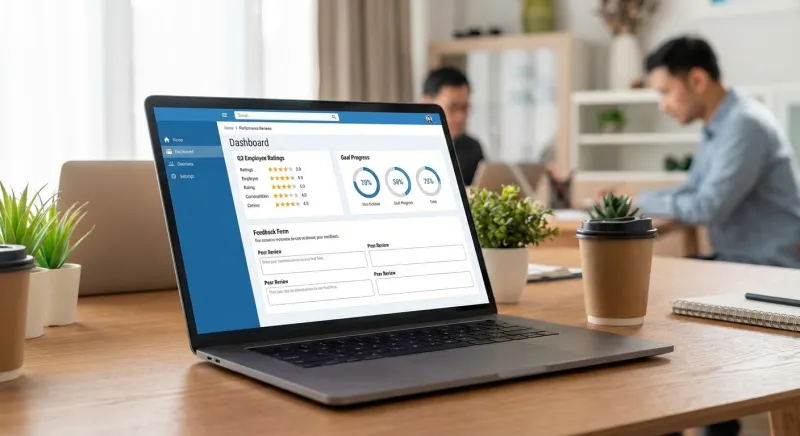
What Makes Good Performance Review Software?
The best performance review platforms share five core characteristics that separate effective tools from expensive disappointments.
Intuitive Interface Design Your managers shouldn't need training to write a review. The best tools guide users through the process with clear prompts, auto-save features, and mobile accessibility. If your team dreads using the software, reviews become rushed afterthoughts instead of meaningful conversations.
Flexible Review Cycles Growing companies need flexibility. Some teams run quarterly check-ins, others prefer annual cycles with mid-year updates. Top-tier software adapts to your schedule without forcing rigid templates or timelines.
Goal Integration and Tracking Performance reviews work best when connected to clear objectives. Leading platforms let you set SMART goals, track progress throughout the year, and automatically pull goal data into review conversations. This creates continuity between what employees work on and how they're evaluated.
Multi-Source Feedback Capability Modern performance management goes beyond manager-to-employee reviews. The best tools support 360-degree feedback, peer reviews, and self-evaluations. This multi-perspective approach creates more balanced, fair assessments.
A 2024 study from the Society for Human Resource Management (SHRM) found that companies using 360-degree feedback saw 12% higher employee engagement compared to traditional top-down reviews.

Analytics and Reporting Smart HR leaders want data on performance trends, review completion rates, and goal achievement across departments. Quality software provides dashboard insights without overwhelming users with unnecessary metrics.
Top 10 Performance Review Tools for 2026
Here's our detailed analysis of the leading performance review platforms, based on features, pricing, and real user experiences.
1. Lattice - Best Overall Performance Platform
Lattice dominates the performance management space with robust features and enterprise-grade reliability. Their platform excels at connecting performance reviews with ongoing goal tracking and employee development planning.
Key Features:
- Customizable review cycles and templates
- OKRs (Objectives and Key Results) integration
- 360-degree feedback and peer nominations
- Performance analytics and trend reporting
- Integration with popular HR tools (Slack, BambooHR, Workday)
Pricing: Starting at $11 per employee per month (annual billing)
Best For: Mid-size to large companies (50+ employees) wanting comprehensive performance management
Pros:
- Excellent user experience and interface design
- Strong goal-setting and tracking capabilities
- Robust reporting and analytics dashboard
- Regular product updates and new features
Cons:
- Expensive for smaller teams
- Can be overwhelming for simple review needs
- Limited customization for unique review processes
2. 15Five - Best for Continuous Feedback
15Five pioneered the weekly check-in approach to performance management. Their platform encourages ongoing conversations rather than annual review surprises.
Key Features:
- Weekly pulse surveys and check-ins
- OKR goal tracking and alignment
- Peer recognition and kudos system
- Manager coaching tools and resources
- Custom survey builder
Pricing: Starting at $7 per employee per month
Best For: Teams prioritizing continuous feedback and regular manager-employee communication
Real-World Example: Marketing agency Wpromote used 15Five to increase manager-employee one-on-one meetings by 300% and improve employee satisfaction scores by 23% over 18 months.
3. Culture Amp - Best for Employee Development
Culture Amp combines performance reviews with employee engagement surveys and learning recommendations. Their focus on development planning sets them apart from review-only tools.
Key Features:
- Performance review cycles with development planning
- Employee engagement and culture surveys
- Skills gap analysis and learning recommendations
- Manager effectiveness scoring
- Diversity and inclusion reporting
Pricing: Custom pricing (typically $5-15 per employee per month)
Best For: Companies prioritizing employee development and culture measurement
4. BambooHR Performance Management
BambooHR's performance module integrates seamlessly with their core HR platform, making it attractive for companies already using BambooHR for employee records and time-off management.
Key Features:
- Performance review cycles and templates
- Goal setting and progress tracking
- Competency-based evaluations
- 360-degree feedback options
- Integration with BambooHR's full HR suite
Pricing: $8 per employee per month (requires BambooHR core platform)
Best For: Existing BambooHR customers wanting integrated performance management
5. Tiny Team Performance Reviews - Best Value for Small Teams
For growing teams up to 50 people, Tiny Team offers performance review functionality within their comprehensive HR platform at a fraction of typical per-employee costs.
Key Features:
- Customizable review cycles and templates
- Goal setting and progress tracking
- Manager and peer feedback collection
- Performance trend reporting
- Integration with employee records and compensation data
Pricing: Free for teams up to 10 people; $79/month flat for teams up to 50 people (all features, not per-seat). The paid plan includes a 30-day free trial that requires a credit card; the free plan for up to 10 people needs no credit card.
Best For: Small to mid-size teams wanting performance management without per-employee pricing
Unlike traditional performance tools that charge $7-15 per employee monthly, Tiny Team's flat $79/month pricing makes it especially cost-effective for teams of 25+ people. A 50-person team would pay $79/month flat (about $948 per year) compared to $4,200+ with most competitors.
6. Workday Peakon Employee Voice
Workday's performance platform emphasizes real-time feedback and employee sentiment tracking alongside traditional review processes.
Key Features:
- Performance review and calibration tools
- Real-time feedback and pulse surveys
- Talent mobility and succession planning
- Advanced analytics and predictive insights
- Integration with Workday HCM
Pricing: Part of Workday HCM (enterprise pricing)
Best For: Large enterprises already using Workday's ecosystem
7. Namely Performance Management
Namely combines performance reviews with their broader HR platform, focusing on mid-market companies that need integrated solutions.
Key Features:
- Performance review cycles and 360 feedback
- Goal management and check-ins
- Calibration tools for manager alignment
- Performance analytics dashboard
- Integration with Namely's payroll and benefits
Pricing: $25 per employee per month (includes full HR platform)
Best For: Mid-market companies (100-1000 employees) wanting all-in-one HR solutions
8. Leapsome - Best for European Companies
Leapsome offers performance management with strong privacy controls and GDPR compliance, making it popular with European companies.
Key Features:
- Performance reviews and 360-degree feedback
- Learning and development recommendations
- Employee engagement surveys
- Manager coaching resources
- GDPR-compliant data handling
Pricing: Starting at €8 per employee per month
Best For: European companies or those prioritizing data privacy compliance
9. Cornerstone OnDemand Performance
Cornerstone focuses on performance management within their larger talent management suite, emphasizing skills development and career pathing.
Key Features:
- Performance review and calibration
- Skills assessment and gap analysis
- Career development planning
- Succession planning tools
- Learning management integration
Pricing: Custom enterprise pricing
Best For: Large enterprises wanting integrated talent management
10. Small Improvements (acquired by Okta)
Small Improvements offers straightforward performance reviews without overwhelming complexity, though development has slowed since the Okta acquisition.
Key Features:
- Simple performance review cycles
- 360-degree feedback collection
- Basic goal tracking
- Review analytics
- Integration with popular tools
Pricing: $7 per employee per month
Best For: Teams wanting simple performance reviews without advanced features
Performance Review Software Comparison Table
| Tool | Starting Price | Best For | Key Strength | Limitations |
|---|---|---|---|---|
| Lattice | $11/employee/mo | Mid-large companies | Comprehensive features | Expensive for small teams |
| 15Five | $7/employee/mo | Continuous feedback | Weekly check-ins | Limited review templates |
| Culture Amp | $5-15/employee/mo | Employee development | Learning integration | Complex setup |
| BambooHR | $8/employee/mo | Existing users | HR integration | Requires core platform |
| Tiny Team | Free up to 10 · $79/mo up to 50 | Small teams | Flat-rate pricing | Up to 50 employees max |
| Workday | Enterprise only | Large enterprises | Advanced analytics | High complexity |
| Namely | $25/employee/mo | Mid-market | All-in-one HR | Expensive for reviews only |
| Leapsome | €8/employee/mo | European teams | GDPR compliance | Limited US features |
How to Choose the Right Performance Review Software
Selecting performance review software requires balancing your team's current needs with future growth plans. Here's a framework for making the right decision.
Start with Your Review Philosophy Do you believe in annual reviews, quarterly check-ins, or continuous feedback? Some tools excel at structured annual cycles, while others support ongoing conversations. Match the software to your performance management philosophy, not the other way around.
Consider Your HR Ecosystem If you already use BambooHR for employee records, their performance module makes integration sense. Similarly, companies using Slack extensively might prefer Lattice's Slack integration for seamless feedback collection.
Calculate Total Cost of Ownership Per-employee pricing adds up quickly. A 40-person team using Lattice at $11/month pays $5,280 annually. Compare this to flat-rate options like Tiny Team at $79/month flat (about $948/year) for up to 50 employees – an 82% cost savings.
Plan for Growth Some tools become prohibitively expensive as you scale, while others offer better economics at larger team sizes. Factor in your 2-3 year hiring plans when evaluating pricing models.
Test Integration Capabilities Performance reviews work best when connected to goal tracking, compensation planning, and employee development. Ensure your chosen tool integrates with existing systems or provides native functionality for these needs.
360-Degree Feedback: When It Works (and When It Doesn't)
360-degree feedback – collecting input from managers, peers, and direct reports – promises more balanced performance assessments. But implementation matters more than theory.
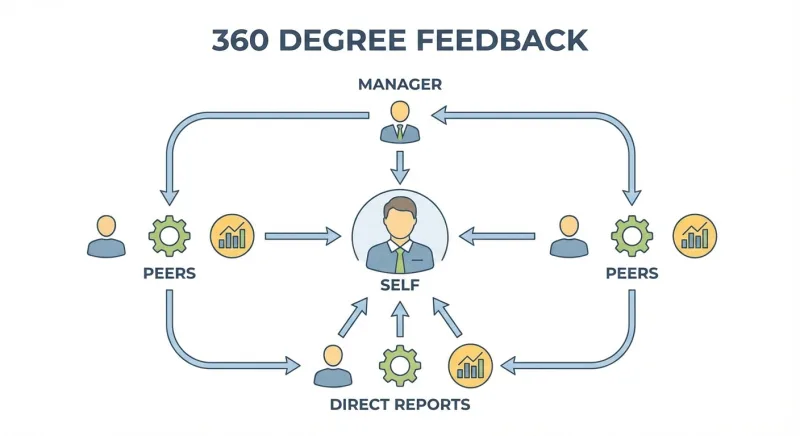
When 360 Reviews Add Value:
- Teams with collaborative work styles where peer input matters
- Leadership development programs for emerging managers
- Organizations with established feedback cultures
- Roles where cross-functional collaboration is critical
When to Skip 360 Reviews:
- Newly formed teams without established working relationships
- Highly competitive environments where peers might game the system
- Companies without clear feedback guidelines and training
- Teams under 15 people where anonymity becomes difficult
A Harvard Business Review study found that 360-degree feedback improved performance by 8% when implemented with proper training and follow-up coaching. Without support systems, the same feedback actually decreased performance by 3%.
Best Practices for 360 Implementation:
- Start with manager and self-evaluations before adding peer feedback
- Train participants on giving constructive feedback
- Ensure anonymity and psychological safety
- Focus on development, not just evaluation
- Provide coaching support for processing feedback
Performance Analytics: Metrics That Actually Matter
Performance review software generates countless reports, but most organizations focus on the wrong metrics. Here's what successful HR leaders actually track:
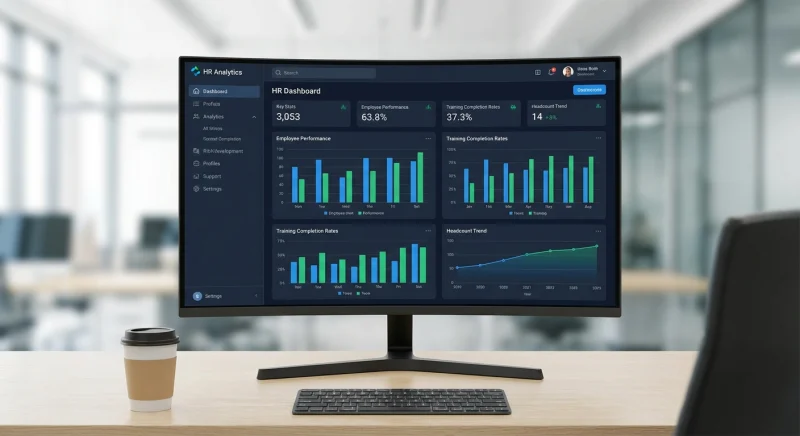
Review Completion Rates by Department If engineering consistently misses review deadlines while marketing completes theirs early, you've identified a process problem, not a people problem. This metric reveals where additional training or simplified workflows might help.
Goal Achievement Distribution Healthy organizations see roughly 70-80% goal achievement rates. Much higher suggests goals are too easy; much lower indicates unrealistic expectations or resource constraints.
Time-to-Complete Reviews Reviews taking weeks to complete often indicate unclear processes or overwhelming templates. The best tools show average completion times and identify bottlenecks.
Manager Calibration Consistency When similar performers receive dramatically different ratings from different managers, calibration training becomes critical. Advanced tools identify these discrepancies automatically.
Performance Review Templates: What Actually Works
The most effective performance review templates balance structure with flexibility. Here are proven approaches across different organizational needs:
Competency-Based Reviews Best for: Established companies with clear role definitions. Rate employees on 4-6 core competencies plus role-specific skills (e.g., Communication, Problem-Solving, Leadership, Technical Skills, Customer Focus). For specific language to use, check out our performance review examples.
Goal + Behavior Reviews
Best for: Results-oriented organizations wanting balanced evaluation. Structure as 60% goal achievement, 40% behavioral demonstration. Works well for sales, marketing, and project management roles.
Development-Focused Reviews Best for: Companies prioritizing employee growth and retention. Cover accomplishments, growth areas, career development goals, and manager support needed. Use our employee review template as a starting point.
Frequently Asked Questions
How often should we conduct performance reviews?
The optimal review frequency depends on your organization's pace of change and employee preferences. Most successful companies use one of three approaches:
- Annual reviews with quarterly check-ins: Traditional approach working well for stable roles and established companies
- Continuous feedback with formal reviews twice yearly: Balances ongoing communication with structured evaluation
- Monthly 1-on-1s with annual summary reviews: Best for high-growth companies and remote teams needing regular alignment
Research from Deloitte suggests quarterly reviews produce 31% better performance outcomes than annual-only reviews, but implementation complexity increases significantly.
What's the ROI of performance review software?
Quality performance review software typically pays for itself through three primary benefits:
- Time savings: Automated workflows save 2-4 hours per review cycle per manager
- Better feedback quality: Structured templates and prompts improve review consistency and usefulness
- Improved retention: Employees receiving regular, quality feedback are 43% less likely to leave within 12 months
For a 50-person company, these benefits often justify $3,000-5,000 annual software investment through reduced turnover costs alone.
Should small companies invest in performance review software?
Companies under 20 employees can often manage performance reviews through simple templates and manual processes. However, software becomes valuable when:
- Multiple managers need consistency in review processes
- You want to track performance trends over time
- Goal tracking and progress monitoring become complex
- Remote team members need centralized feedback collection
Flat-rate pricing tools like Tiny Team make software economically viable for smaller organizations without per-employee cost concerns. For teams also evaluating leave management or onboarding workflows, an all-in-one platform can consolidate these needs.
How do we handle poor performers in software-based reviews?
Performance review software doesn't solve poor performance issues – it documents them more effectively. For struggling employees:
- Use software to create clear improvement timelines and expectations
- Document coaching conversations and support provided
- Track progress on specific improvement goals
- Maintain consistent feedback tone and timing
The key benefit is creating paper trails that protect both employees and employers while focusing on development opportunities.
Can performance review software integrate with our existing HR tools?
Most modern performance review platforms offer integrations with popular HRIS, payroll, and communication tools. Before selecting software:
- List your current HR technology stack
- Identify which integrations are "must-have" vs. "nice-to-have"
- Test integration functionality during free trials
- Understand data sync limitations and manual workarounds needed
Integration quality varies significantly between tools, so hands-on testing is essential.
What happens to our data if we switch performance review software?
Data portability varies dramatically between providers. Before committing:
- Understand export options for historical review data
- Confirm file formats available for data downloads
- Test the export process during trials when possible
- Plan transition timing to minimize data loss
Some providers offer migration assistance for new customers, while others provide limited export functionality designed to increase switching costs.
Choosing the right performance review software sets the foundation for meaningful employee development and fair evaluation processes. Whether you need enterprise-grade analytics or simple review workflows, the tools listed above represent the best options available in 2026.
For growing teams prioritizing cost-effectiveness without sacrificing functionality, platforms like Tiny Team offer comprehensive performance management within broader HR solutions. For established organizations needing advanced features and integrations, tools like Lattice and 15Five provide robust capabilities worth their higher price points.
The key is matching software capabilities to your actual needs, not aspirational processes you might implement someday. Start with clear requirements, test thoroughly, and choose tools that make performance conversations better, not just more frequent.