An employee review template is a structured document that guides managers through the performance evaluation process, ensuring consistency, fairness, and comprehensive feedback across your organization.

In this guide, you'll find 15 free employee review templates covering annual reviews, 360-degree feedback, self-evaluations, and more. Each template includes practical examples and customization tips to help you build an effective performance review process.
What Makes an Employee Review Template Effective?
The best employee review templates balance structure with flexibility, providing clear frameworks while allowing managers to tailor feedback to individual employees. Research from the Society for Human Resource Management (SHRM) shows that well-structured performance reviews increase employee engagement by 80% when they include specific, actionable feedback.
An effective template should capture three core elements: past performance assessment, goal-setting for the future, and development planning. Quality templates guide conversations that help employees understand exactly where they stand and how they can grow within your organization.
15 Free Employee Review Templates
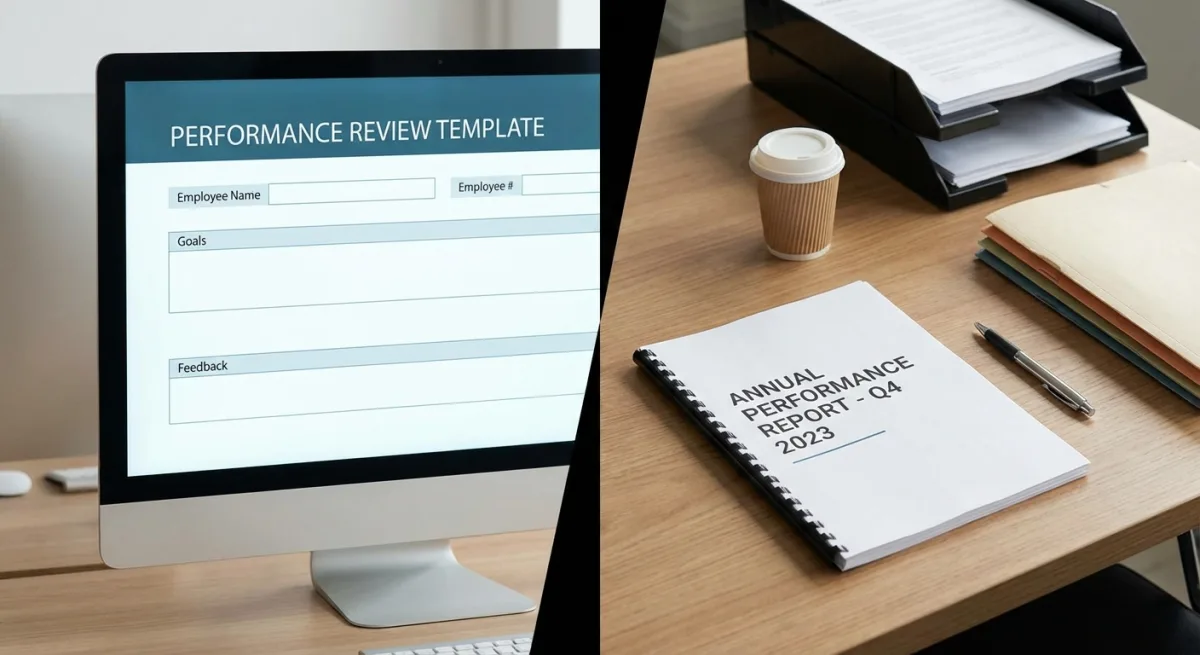
1. Annual Performance Review Template
Best for: Comprehensive yearly evaluations covering all aspects of performance
# Annual Performance Review: [Employee Name]
**Review Period:** [Start Date] - [End Date]
**Manager:** [Manager Name]
**Date:** [Review Date]

## Job Performance Assessment

### Core Responsibilities
Rate performance on primary job duties (1-5 scale):
- [Responsibility 1]: ___/5
- [Responsibility 2]: ___/5
- [Responsibility 3]: ___/5

**Comments:** [Specific examples of achievements and areas for improvement]

### Quality of Work
**Rating:** ___/5
**Examples:** [Specific instances of high/low quality work]

### Productivity & Efficiency
**Rating:** ___/5
**Comments:** [Volume of work completed, time management skills]

## Goal Achievement Review

### Last Year's Goals
| Goal | Target Date | Status | Comments |
|------|-------------|--------|----------|
| [Goal 1] | [Date] | Achieved/Partial/Not Met | [Details] |
| [Goal 2] | [Date] | Achieved/Partial/Not Met | [Details] |

## Professional Development

### Skills Demonstrated This Year
- [Skill 1]: Evidence and examples
- [Skill 2]: Evidence and examples

### Areas for Growth
1. **[Skill/Area]:** Development plan and timeline
2. **[Skill/Area]:** Development plan and timeline

## Goals for Next Year

### Primary Goals
1. **[Goal 1]** - Specific outcome, timeline, resources needed
2. **[Goal 2]** - Specific outcome, timeline, resources needed

## Overall Rating: ___/5

**Employee Signature:** _________________________ **Date:** _____________
**Manager Signature:** _________________________ **Date:** _____________
This comprehensive template provides structured documentation while maintaining flexibility for personalized feedback. For organizations using dedicated performance review software, these templates can be easily digitized and tracked over time.
2. Quarterly Review Template
Best for: Regular check-ins focusing on recent performance and short-term goals
# Quarterly Review: [Employee Name]
**Quarter:** Q[X] [Year]
**Manager:** [Manager Name]

## This Quarter's Achievements

### Major Accomplishments
1. [Achievement 1 with specific metrics]
2. [Achievement 2 with specific metrics]
3. [Achievement 3 with specific metrics]

### Goal Progress Review
| Goal | Target | Actual Progress | Status |
|------|--------|-----------------|--------|
| [Goal 1] | [Target] | [Progress %] | On Track/Behind/Ahead |
| [Goal 2] | [Target] | [Progress %] | On Track/Behind/Ahead |

## Areas of Focus

### What's Working Well
- [Strength 1 with example]
- [Strength 2 with example]

### Areas for Improvement
- [Area 1]: Specific suggestion
- [Area 2]: Specific suggestion

## Next Quarter Goals
1. **[Goal 1]:** [Specific, measurable outcome]
2. **[Goal 2]:** [Specific, measurable outcome]

## Support Needed
- [Resource, training, or support needed]

---
**Next Review Date:** [Date]
3. 360-Degree Feedback Template
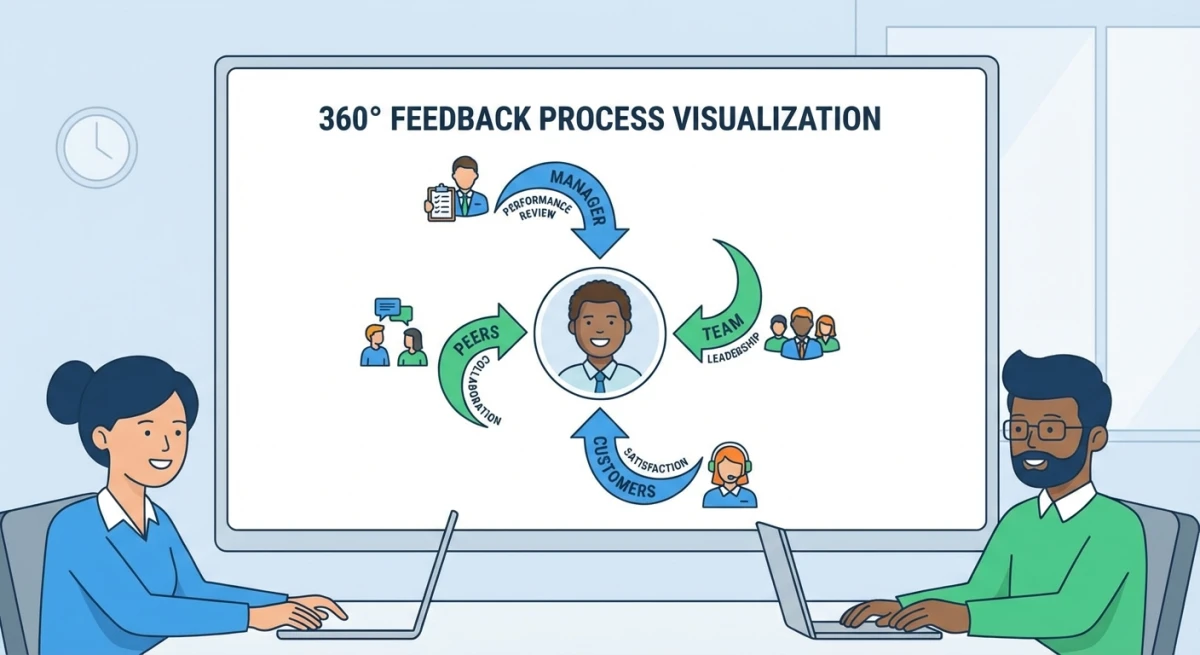
Best for: Senior roles or employees working across multiple teams
# 360-Degree Feedback: [Employee Name]
**Position:** [Title]
**Review Coordinator:** [HR/Manager Name]

**Reviewers:** Manager, 2-3 Peers, 2-3 Direct Reports, 1-2 Internal Customers

## Performance Areas

### Communication Skills
**Rating (1-5):** Manager ___ | Peers ___ | Reports ___ | Customers ___
- **Strengths:** [Specific examples]
- **Development Areas:** [Specific examples]

### Leadership & Influence
**Rating (1-5):** Manager ___ | Peers ___ | Reports ___ | Customers ___
- **Strengths:** [Examples of strong leadership]
- **Development Areas:** [Areas for improvement]

### Collaboration & Teamwork
**Rating (1-5):** Manager ___ | Peers ___ | Reports ___ | Customers ___
- **Strengths:** [Examples of excellent teamwork]
- **Development Areas:** [Areas for improvement]

## Development Recommendations

### Continue Doing (Top Strengths)
1. [Behavior/skill to continue]
2. [Behavior/skill to continue]

### Start Doing (New Behaviors)
1. [New behavior to adopt]
2. [New behavior to adopt]

### Stop Doing (Behaviors to Change)
1. [Behavior to modify or eliminate]

**Development Priorities for Next 6 Months:**
1. [Priority 1 with action steps]
2. [Priority 2 with action steps]

---
**Follow-up Date:** [Date for progress check]
4. Employee Self-Evaluation Template
Best for: Empowering employees to reflect before manager discussions
# Self-Evaluation: [Employee Name]
**Review Period:** [Dates]
**Position:** [Title]

## Performance Self-Assessment

### Job Responsibilities
Rate yourself (1-5) and provide examples:

**[Responsibility 1]:** ___/5
*Examples of success:* [Specific achievements]
*Areas for improvement:* [What you could do better]

### Major Achievements
1. **[Achievement 1]** - Impact and skills demonstrated
2. **[Achievement 2]** - Impact and skills demonstrated

### Goal Review
| Goal | Status | Evidence |
|------|--------|----------|
| [Goal 1] | Fully/Partially/Not Met | [Results] |
| [Goal 2] | Fully/Partially/Not Met | [Results] |

## Professional Development

### Skills Developed This Period
1. **[Skill 1]:** How developed and evidence
2. **[Skill 2]:** How developed and evidence

### Future Goals
1. **[Goal 1]:** Specific outcome and timeline
2. **[Goal 2]:** Specific outcome and timeline

### Support Needed from Manager
- [Training, resources, or guidance needed]
5. New Employee 90-Day Review Template
Best for: Evaluating new hires during probationary period
# 90-Day Review: [Employee Name]
**Start Date:** [Date] | **Position:** [Title]
**Manager:** [Manager Name] | **Review Date:** [Date]

## Onboarding Progress
### Training Completion
| Module | Completion Date | Assessment |
|--------|----------------|-------------|
| [Module 1] | [Date] | Pass/Needs Work |
| [Module 2] | [Date] | Pass/Needs Work |

### Job Performance
**Key Responsibilities Mastered:**
✓ [Responsibility 1] - Fully competent
◐ [Responsibility 2] - Developing
○ [Responsibility 3] - Still learning

**Quality Rating:** ___/5
**Learning Curve:** ___/5

## Development Plan for Next 90 Days
### Immediate Priorities (30 Days)
1. [Skill/responsibility to focus on]
2. [Skill/responsibility to focus on]

### Support & Resources Needed
- Training: [Specific needs]
- Mentoring: [Assignment if needed]
- Tools: [Required resources]

**Overall Assessment:**
☐ Exceeds expectations ☐ Meets expectations
☐ Below expectations ☐ Needs improvement plan

---
**Next Review Date:** [180-day or annual cycle]
6. Performance Improvement Plan Template
Best for: Employees requiring structured improvement guidance
# Performance Improvement Plan: [Employee Name]
**Manager:** [Name] | **Start Date:** [Date] | **Review Date:** [30/60/90 days]

## Performance Issues Identified
### Issue 1: [Specific Problem]
**Current Performance:** [Specific description]
**Expected Performance:** [Clear success criteria]
**Business Impact:** [How this affects team/company]

## Improvement Goals & Action Steps
### Goal 1: [Measurable target]
**Timeline:** [Deadline]
**Action Steps:**
1. [Specific action required]
2. [Specific action required]

**Manager Support:** [Resources/assistance provided]
**Measurement:** [How success will be evaluated]

## Check-in Schedule
- Week 2: Progress check-in
- Week 4: Formal progress review
- Week 8: Final evaluation

**Success Criteria:** [Specific requirements for successful completion]

**Consequences:** Clear outcomes for success/failure

---
**Signatures:** Employee, Manager, HR (Date)
7-15. Additional Specialized Templates
The remaining templates address specific organizational needs:
Peer Review Template - Team-based feedback focusing on collaboration
Manager Review Template - Upward feedback for supervisory skills
Remote Employee Review - Virtual work performance and communication
Executive Review Template - Strategic leadership and vision assessment
Sales Performance Review - Revenue, quota, and pipeline metrics
Customer Service Review - Client satisfaction and resolution rates
Technical Skills Review - Role-specific competencies and certifications
Project-Based Review - Contract worker and temporary staff evaluation
Internship Review Template - Student development and learning outcomes
Each template maintains consistent rating scales and documentation standards while addressing role-specific performance indicators and industry requirements.
Using Templates with HR Technology
Modern HR software for small businesses can automate much of the review process. Digital platforms allow you to:
- Set automated review reminders
- Track completion rates across departments
- Store historical performance data
- Generate performance analytics and trends
For growing teams, integrating these templates with your existing people management system ensures consistency and reduces administrative overhead. Many organizations find that digital reviews increase completion rates by 40% compared to paper-based processes.
Best Practices for Implementation

Customization for Your Industry
These templates work across industries but should be adapted to reflect your specific needs. A technology startup might emphasize innovation and learning agility, while a healthcare organization might focus on compliance and patient safety metrics.
Training Managers Effectively
Even excellent templates fail without proper training. Ensure your managers understand how to:
- Give specific, actionable feedback rather than vague observations
- Set SMART goals connected to business objectives
- Document performance fairly across different personality types
Making Reviews Conversational
The most effective performance reviews feel like collaborative planning sessions. Send employees their self-evaluation examples before meetings to help them prepare for meaningful dialogue about growth and career goals.
Legal and Compliance Considerations
While performance evaluations aren't legally required under the Fair Labor Standards Act, consistent documentation protects your organization in employment decisions.
Focus on specific, observable behaviors and measurable outcomes rather than subjective impressions. Document examples: instead of "poor attitude," write "interrupted colleagues three times during the March 15 team meeting."
For comprehensive guidance on building your review process, check out our performance review examples and consider how performance reviews fit into your broader employee handbook template.
Measuring Review Program Success
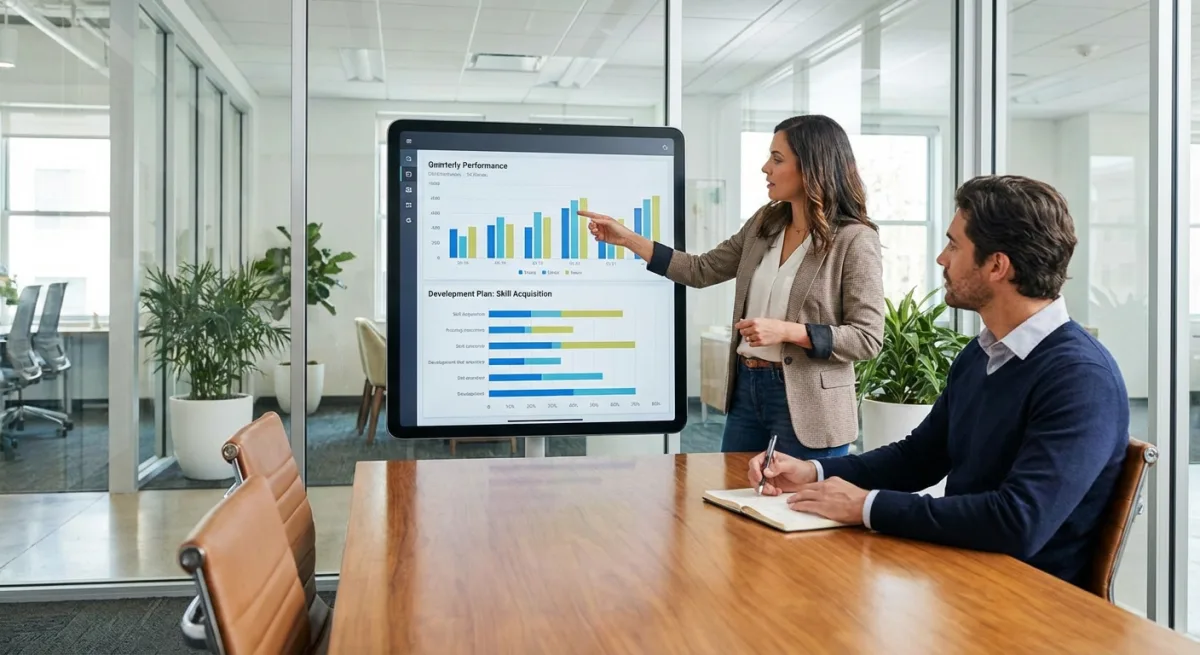
Track these metrics to ensure your review program drives results:
- Completion Rate: Percentage of reviews completed on time
- Goal Achievement: Percentage of performance goals met
- Employee Engagement: Survey scores before/after review cycles
- Retention Correlation: Performance ratings vs. turnover rates
- Manager Confidence: Training feedback and completion quality
Organizations using structured review processes see 25% higher employee engagement and 30% better goal achievement compared to ad-hoc feedback approaches.
Integration with Onboarding and Offboarding
Performance reviews work best as part of a comprehensive employee lifecycle. Connect your review templates to your new hire onboarding checklist to ensure new employees understand expectations from day one.
Similarly, review data informs exit interview conversations and helps identify patterns in employee departure reasons.
Frequently Asked Questions
How often should employee reviews be conducted?
Most organizations benefit from annual comprehensive reviews supplemented by quarterly check-ins. New employees should receive reviews at 30, 90, and 180 days. Consistency matters more than frequency—regular, predictable feedback is more valuable than sporadic lengthy reviews.
What's the difference between performance reviews and performance management?
Performance reviews are formal evaluation events, typically annual or quarterly. Performance management is the ongoing process of setting expectations, providing feedback, and supporting employee development throughout the year. These templates support both formal reviews and informal coaching conversations.
How long should a performance review take to complete?
Plan for 60-90 minutes for comprehensive annual reviews, including preparation time. Quarterly reviews typically take 30-45 minutes. Focus more on discussion than documentation—aim for 70% conversation and 30% paperwork.
Who should participate in employee performance reviews?
At minimum, the employee and their direct manager. For senior roles, include peer feedback through 360-degree reviews. HR should participate in reviews involving performance improvement plans or significant career development discussions.
How do you handle disagreements during performance reviews?
Focus on specific examples and observable behaviors rather than opinions. If disagreements persist, involve HR or a senior manager. Document both the manager's assessment and the employee's response—reviews should capture multiple viewpoints when there are significant differences.
What should you do if an employee refuses to sign their performance review?
An employee's signature indicates they've received the review, not agreement with it. If someone refuses to sign, note their refusal and have a witness confirm the review was presented. Include language like "Signature indicates receipt of review, not agreement with content."
Building Your Performance Review System
Employee review templates are foundational tools for building a performance-driven culture. The most successful organizations use these templates as part of a broader philosophy emphasizing development over evaluation, focusing on future potential rather than past mistakes.
When implemented consistently, these templates create clearer goal alignment, improved employee engagement, and stronger overall team performance. Start with one template that fits your immediate needs, customize it for your organization's culture, and iterate based on feedback from both managers and employees.
Remember that great performance reviews feel more like career coaching sessions than report cards. Use these templates to facilitate genuine conversations about growth, challenges, and aspirations—that's where real performance improvement happens.